Showing posts with label mobile. Show all posts

Saturday, December 09, 2006

A special edition of Jargon Watch brought to you in association with Research In Motion: makers of the BlackBerry


BlackBerry Orphan - children who suffer from mental neglect because their parents are continually occupied with their mobile email device

Adult pacifier - mobile email device

Is Jim the most evil man on this planet? One of BlackBerry's biggest defenders, Jim Balsillie, the chairman of Research In Motion, says children should ask themselves, "Would you rather have your parents 20% not there or 100% not there?"

I can't believe that he went on record with that quote.

Thanks to
Wall Street Journal: BlackBerry Orphans by Katherine Rosman (December 8, 2006).

Wednesday, December 06, 2006

Jargon Watch

PICT0008.JPG


GAMEY
- Google, Apple, Microsoft, eBay, Yahoo!. VC-speak for the group of companies expected to buy up the creme of Silicon Valley start-ups. Thanks to
CNN Money.

Generation Cash - Generation Content getting paid through sites like citizen journalist photo agency Scoopt, and video sites like Revver, eefoof and Flixya splitting ad revenue. This content for cash game has gone mobile; mobile operator 3 pays video creators per download through its SeeMeTV initative and MyNumo rewards the creators of ringtones, videos and wallpapers through a revenue share approach.

The concept also extends to the black economy trading on eBay and those people operating as part of the Fon wi-fi network and the big cash prizes offered by the likes of Intel and Netflix for customer-generated innovation. It's Alvin Toffler's prosumer concept made good. Thanks to Trendwatching.

Saturday, December 02, 2006

Exodus

Opera Mini


Exodus: Alright. Movement of Jah people! Oh-oh-oh, yea-eah!....

When Nokia launched their latest version of the Internet browser it looked very promising, having used it extensively on my E61 I have found that that demonstration put lipstick on a usability pig.

My friend Ian Wood has been a long time advocate of the Opera browser. I had previously tried to use it on a Nokia 6111 with no success but gave it a second chance whilst at home in Liverpool since my web withdrawl symptoms were that acute.


Unlike the first time with the 6111, both application packages installed with no hassle at all. The application was easy to configure to get on the web.

So far I have found that pages get rendered much faster and more faithfully than the Nokia browser. The picture above shows how Opera rendered the top of this blog on my E61.

More information here on Opera Mini.

Sunday, November 26, 2006

Feels like Siberia

I have come home to Birkenhead just across the Mersey from Liverpool. I have found it hard to find a decent cup of coffee and a wi-fi hotspot. In fact I have had to go down the M53 to find a Starbucks at a large retail park in Ellesmere Port.

Connectivity is 5GBP for 60 minutes, which reminds me of the old cyber cafe near James Street station that I used to check my emails in nine years ago before moving to London.

Understandably, I won't be posting again until I get back home, I am still getting email on my phone via a patchy GPRS connection and I am sure that my newsreader will be overflowing by the time I get back online again.


I had a look at 3G data cards, but at the moment they don't support the ExpressCard socket on the MacBook Pro.

Feels like Siberia.

Wednesday, November 22, 2006

Blackberry is Bond-approved


Sony Ericsson must be steaming, after going to the trouble of doing their product placements for the new Bond film, BlackBerry ended up stealing the ultimate endorsement from Daniel Craig according to The Metro (November 21, 2006) - The Green Room column by Neil Sean.


Daniel Craig may earn his millions but he still enjoys freebies. The blond Bond caused a fuss at the Casino Royale premiere because only his goodie bag was missing a Blackberry phone.

Why didn't Sony Ericsson have its products in the goodie bag instead?

Monday, October 23, 2006

Memories of Q

I was looking an advert (pictured) for the new Motorola Q smartphone whilst on the New York Times website. What struck me was not the original Speak n Spell-type buttons or the styling but the letter Q in the name. A red Q in fact and my immediate reaction was Compaq.

Motorola Q

For those of you too young to remember: Compaq was a company who reverse engineered the IBM PC and then build a luggable version called the Compaq Portable. The company did very well selling portable and desktop computers and even had a popular line in servers. At one time the Compaq supplied more computers than anyone else in the world.

The company acquired two other computing greats Tandem Computers famous for their fault-tolerant NonStop server line and Digital Equipment Corporation (DEC) the mini-computer pioneers.

Compaq 'merged' with HP in 2002 and the Compaq brand has been progressively been erased from the product lines.
Compaq's Q
The letter Q was a key part of the company's brand identity, indeed IT news website The Register used to call the company The Big Q (as opposed to Big Blue, IBM's nick name). In the space of four years Motorola and Verizon now feel sufficiently confident to use a Red Q without incurring an association with the Compaq brand.

Indeed this may been a deliberate move as the Motorola Q device may want tap into the karma of Compaq's original iPAQ Windows PDA device, which were all the rage with management consultants (many of whom were given them for free) some six years ago.

Friday, October 13, 2006

Cool Marketing Campaign and the Palm News


I noticed a clever marketing campaign in this evenings thelondonpaper whilst on the train home. The print advertising campaign and marketing website features life coach Pete Cohen.

Many of the people who will move to a CapitalOne card will be in a bit of a bind and looking to consolidate debt at a lower interest rate. The marketing campaign tries to catch prospective consumers in more positive frame of mind by targeting those people who are looking to transform their lives. Its a smart move and helps to remove some of the parasitic nature that has tainted consumer perceptions of the CapitalOne brand.

The credit card industry has usually been based on blitzkrieg direct mail campaigns and cut-throat promotional rates that create customer churn.

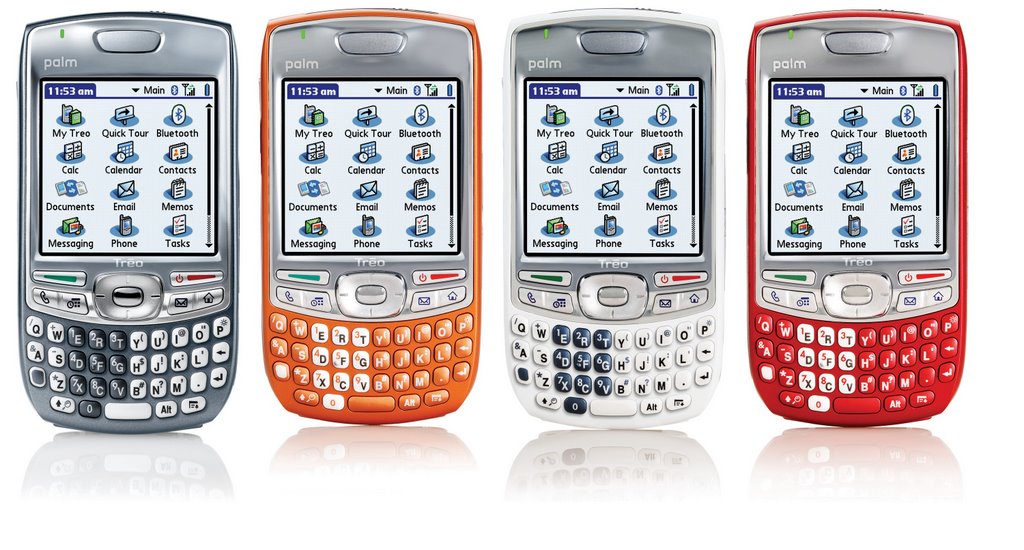
Palm have belatedly entered the middle market with a cheaper smartphone. According to CoolHunting the phone corrects many of the deficiencies of the Treo 650. Engadget has a blow-by-blow account of the press conference and there was some interesting omissions:
  • No price announced for the device
  • No wi-fi
  • No Skype (but then carriers will block VoIP running over GPRS, EDGE or 3G so no point)
  • No news on Mac synchronisation

Some tie-ins with Yahoo! Music, Google and eBay, but no tie-in with Flickr or PhotoBucket so it probably features the usual Palm crapmera.

The lack of an aerial and curves improve the tactile nature of the phone, but the materials and finish still look cheap. Palm could take some lessons in product design from Nokia or Apple to get the look and feel of materials improved.

Its a step in the right direction, but there are better PalmOS devices out there. Details from Palm of the Treo 680 here, image courtesy of Palm.

Sunday, October 01, 2006

Mobile Internet fast facts

Some interesting details on mobile data usage from the Mobile Data Association via the Mobile Monday London mailing list:


Mobile Internet Usage in the UK on the rise
Posted by: "Anuj Khanna" anuj_rk@yahoo.com anuj_rk
Date: Fri Sep 29, 2006 2:28 am (PDT)

MDA Mobile Internet usage stats released in September
2006 (FYI)

MOBILE INTERNET USAGE ON THE RISE

The number of subscribers accessing the internet via mobile phones is continuing to grow. According to figures announced today by the Mobile Data Association (MDA), a total of 13.2 million people used their phones for downloads and browsing the mobile internet in the UK during July 2006, in line with an upward global trend.

Accordingly, the MDA have looked at what sites consumers are visiting and have compiled a top 10 of the types of pages most accessed across the UK via a mobile device during July:

1. Google
2. Chat sites (including operator sites)
3. WAP Directories (eg Twilightwap)
4. Other search sites (eg Yahoo)
5. BBC
6. Games/Wallpapers/Ringtones
7. Mobile entertainment sites (eg celebrity news
information)
8. MSN
9. Mobile communities/blogging (eg Jumbuck)
10. Shopping sites (eg Ebay)

Predictably, users appear to be accessing mobile versions of the most popular internet sites, but with a growing number of ‘mobile community’ websites appearing for use on mobile handsets, where users can create their own web pages for example, the UK’s
increasing passion for blogging and sharing information looks set to be indulged further via the mobile internet.

For information on how to set up your phone to use the mobile internet and for a list of sites to visit on your handset, please visit:
http://www.text.it/mobileweb/tips.cfm

~ends~

Notes to Editors –
WAP user definition as agreed by four GSM Network operators (O2, T-Mobile, Vodafone and Orange) is as follows: the number of unique customers who are accessing the internet on a mobile device via any portal at least once in the reporting month.

The MDA plan to issue mobile internet user figures on a monthly basis, having previously issued figures relating to the number of WAP page impressions viewed. The method for counting has been revised to give a clearer picture of how many people are accessing the service each month. Top 10 site information not weighted by usage – aggregate information taken from UK network operators.
Figures exclude mobile intranet for business usage (eg mobile e-mail)


About the Mobile Data Association and www.text.it -

November 2005 marked the launch of Phase 3 of the MDA’s generic awareness campaign to promote the advantages of the mobile internet across all networks, and provide a current information service through the text.it website for both consumers and business users.

The Mobile Data Association (MDA) was established in 1994 to increase awareness of mobile data amongst users and their advisers. The MDA acts as a focal point for its members, (vendors and users) and outside parties interested in knowing more about the industry

The MDA announces the total number of mobile internet users on behalf of the UK GSM Network operators on a monthly basis. These figures are announced during the fourth week of the following month. Also UK text messaging figures are released by the MDA during the
third week of the following month.

For further information visit the MDA website at www.themda.org or the Text It Campaign web site at www.text.it Mike Short, MDA Chairman is available for comment.

Anatomy of a train wreck


BenQ is pulling the plug on the Siemens mobile business that it bought about 12 months ago.

The blogosphere is strarting to analyse the business. It is a tragedy for the people employed by the company and a sad way to see the Siemens brand disappear.

It is bad for consumers in that it concentrates power in fewer and fewer hands and robs the market of a player who came up with some of the most interesting product designs; from the rotating keyboard of the SK65 to the SL series of slider phones that Nokia aped with the 6111.

Siemens was known for its good quality low-end phones and to be honest I can't ever recall seeing any of their business-orientated phones in action. Maybe their distribution was patchy in the UK.

BenQ however didn't bring the necessary skills set to the table: products were delayed, the product design of many of the new BenQ phones isn't very impressive and to external audiences they didn't seem to have a clue about consumer marketing.

BenQ's great skill is in the process of manufacturing mobile phones not selling them. Someone like Ningbo Bird who have some consumer marketing smarts would have been a better partner. BenQ will continue on in the mobile business as a vassal of the big manufacturers who need products manufactured on their behalf to their own designs.

Where BenQ will have a problem is with German consumers. Germany is the largest IT market in Europe and its consumers love their gadgets. They are one of the key target markets for BenQ's other offerings for value-conscious consumers, although now the BenQ brand is tainted.

Monday, September 25, 2006

Lock-in that citrus flavour


My ability to send emails on my dumb phone was halted by Orange on Friday. They had changed the process for logging into their SMTP server without notifying customers like me. Whereas before you just pointed your outbox at smtp.orange.net, now you need to get an orange email address to use it, even if you don't use Orange as your email provider.

Orange in common with most consumer ISPs force you to use their SMTP server, as they block access to other providers.

If you have similar problems then call the Orange customer services people on 156 from your handset.

Also is it me or has their website architecture gone down the pan since they have been crashed into Wanadoo?

Picture courtesy of Wikipedia (yes its a tangerine, but that's part of the Orange family).


Sunday, September 24, 2006

Palm for sale


The blogosphere have a reiteration of speculation that has been happening for years that someone (insert favorite supplier here) is going to buy Palm. This time the rumor is about Motorola following on from its Symbol acquisition to purchase Palm. Whilst this could be highly desirable for Palm's shareholders, one does have to look at the motivations of the potential buyers (usually Motorola or Apple are cited):
  • Product design: both Motorola and Apple have enough smarts in this area, as has Nokia, RIM and Sony Ericsson. In addition, players like HTC mean that companies can now buy in ‘iconic’ design a la T-Mobile. In addition Palm is said to be relying heavily on a Chinese design company for its new cheap Treo, not exactly what you'd expect from a company with a strong product design team
  • The brand: the Palm brand lives on though it was built on machines made six plus years ago based on a software platform and user experience that Palm has since read the last rights to as it continues its Windows migration. The Treo brand is a valuable competitor brand to RIM, and may be attractive to aggresive entrants into the US marketplace like Nokia, Samsung, LG or one of the many hungry Chinese(both Taiwan and communist China) players Ningbo Bird, BenQ, Lenovo or Acer
  • Software: Palm has burnt the biggest asset the UI with its sale to Access, however the company does have useful experience for a Chinese buyer in localisation for carriers and a shiny new Dublin centre for European market entry. For Motorola a purchase of Access the current owner of PalmSource would be more likely as this would fit in with the company's ambitions to grow market share in Asia and be a progressive move for its existing Linux phone offering in China
  • Distribution and carrier relationships: Handspring invested a lot of time building carrier relationships in the face of strong competition from traditional handset manufacturers. These relationships would be invaluable for a new entrant player. In addition, Palm used to have a wide (though sometimes ineffective) retail reach for its devices. Six years ago, Palm products were the number one selling item in Dixons (DSG) stores airside at British airports and on Virgin Atlantic flights

If you want to know who is most likely to buy Palm, look East.


UPDATE (26/9/2006)

I have just read the transcript from Palm's latest financial analyst briefing and it didn't fill me with confidence. From what I could see, Access are disengaging from the OS business, Palm moving rapidly to becoming a Windows only shop with little differentiation. The company is milking loyal Palm customers as a cash-cow but not offering them much in return. This is like Apple circa 1997, but without the happy ending.

Saturday, September 23, 2006

User experience


I went to see two films this morning with Steve; DOA and Children of Men.

DOA is a film based on a game, that looks like a game, has a game-like plot and visual language with level-transition splash screens but no interactivity - what can only be described as a poor user experience.

The film is awash with acrobatic young women, CGI and wire work.

Unfortunately the film does not have the complex cues and social interplay now prevalent in popular script so comes across as a hyperactive childrens programme. Whilst DOA stands for Dead or Alive, it could also easily stand for Dead on Arrival (at the box office).

We also talked about the challenges I was facing getting the SMTP server connection on my mobile phone over the Orange network and led on to an interesting discussion about user experience.

Later I touched base with my friend Uri in Israel to wish him a happy new year and catch-up with his activity. He had been with Orca Interactive at IBC in Amsterdam promoting a music channel and interface that allowed access in one-click - a state that many companies would love to match.

Uri mentioned an interesting and revealing statement that 'user experience' was a specialist area and expensive to do, yet we are all users and have all felt the painpoints of home video equipment that is hard to programme, used a poorly designed website or the struggle to master new features on a cell phone?

There seems to be a disconnect between products that we would like to use and products that we want to build for customers. Why?

Children of Men is a dark film that hits on many of the themes that V for Vendetta hit upon and that Bruce Sterling has discussed in a short story for the latest edition of New Scientist. It is worthwhile seeing for for Michael Caine's best performance in years as a weed-growing hippie pensioner with a wife suffering from Alzheimers.

Tuesday, September 19, 2006

The new garden fence


Freud Communications have put together a well-resourced research led campaign called MobileLife 2006 for Carphone Warehouse. Apparently this was originally put up at the end of July, but it only came to my attention yesterday when a story about most 10-year olds having a phone started to appear in the media.

The site has a couple of downloadable reports focusing on mobile usage in the UK in general and a particular report looking at generation Y.

In a PR-by-numbers section there is a mobile tribes document so readers can see which group they fall into as well as some good quality essays that probe child care and family life.

Tabloid readers will be delighted to hear that only 13 per cent turn their mobile off during sex. The report thankfully does not say how many of the 87 per cent use the switched-on phone as an improvised marital aid (ooh aahh
Daily Star).

Despite its PR roots the reports deserve to be downloaded and read from cover-to-cover, I particularly liked the essay by Kate Fox of the Social Issues Research Centre that described the mobile phone as the modern-day garden fence and then showed how text messages fulfilled the same role of sociability, yet at the same time the mobile phone could be used as a social barrier by women to discourage predatory males (mainly because predatory bunnyboiling females ignore such obvious non-verbal cues to sling their hook).

Carsten Sorensen of the LSE has an interesting take on UK mobile etiquette: whilst we were not likely to turn the mobile off at a leisure activity like the cinema or a theatre, we would turn the phone off in a restaurant or at night. The subtext being that we are bunch of selfish *!^@s who will only shut our mobile phone off if it inconveniences us or we are more likely to get busted and face the social consequences.

Something for the Freud communications wash-up report: must proof URLs listed in any client written material to ensure they actually work ie: http://personal.lse.ac.co.uk/sorensen should be http://personal.lse.ac.uk/sorensen ;-).

Kudo to Ian for some pointers.

Monday, August 07, 2006

Mobile Marketing 2.0


eWeek have a good feature The Age of Sell Phones by Evan Schuman on mobile marketing and more pertinently how mobile marketing can be improved to make it so much better.

Targeted SMS marketing can bring a response of 50 per cent, which is much cheaper and a better response rate than traditional direct marketing.

What is missing is an interactive element in case the offer isn't interesting for the consumer, this would require integration with a more sophisticated CRM system and point-of-sale systems where appropriate.


There is a fear that location-based marketing would be too instrusive and Big Brother-like.

There is an interesting discussion on the future of the phone and the need for smartphones which mobile marketers would find very useful but no corresponding reasons were put forward on why consumers would want one.

Opt-in agreements are full of risks because consumers may not be fully cognisant of what they are signing up for. Its not like email marketing where an email, is an email, is an email.

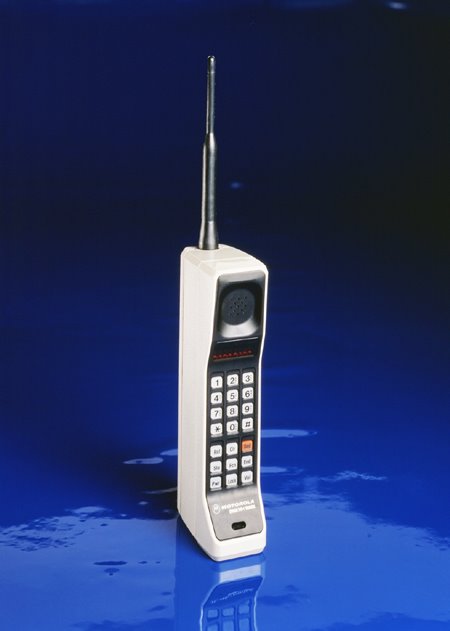
Picture courtesy of the nice people at Motorola.

Monday, July 10, 2006

Links of the day


Interesting survey over at Duncan Chapple's blog over which analyst houses have the most influence.

Whilst the split may may change depending on what tech sector your client is in, its an interesting piece of research; particularly when you see the dominance of US focused players.

And the fact that a good third of the most influential analysts are in the other category indicating a large amount of fragmented trusted expertise.

Meanwhile the GSM Association have a handy site that allows you to compare roaming charges when you visit different countries in Europe.

I tried it using Orange post paid as my settings to have a look at different carriers. What I found interesting was that in the countries that I sampled (Germany, Ireland, Spain, France) there was not price differential between the carriers. Of course this was an unscientific test isn't at all indicative of price fixing is it?


Saturday, July 08, 2006

New Orange experiential marketing / advertising thing


I got this in my inbox this morning if you are interested in participating click here.

Thursday, June 29, 2006

Major Malfunction


I got tired of my Palm playing up decided to move away from the platform as their quality control has gone out the window. I picked up a Nokia E61. Nokia have crafted together a nice looking no-nonsense Treo competitor and its priced competitively as well from what I see on the interweb.

In terms of product design Nokia have made a damn sexy piece of kit, most of the shell is metal (I am guessing aluminum or an alloy), with a nice big screen and the nicest responding keys that I have felt on a handheld device.

Where things start to go wrong is the software. The Nokia E61 cannot take much more than 1,000 contacts - that's right its a business phone and yet when I synched over 5,000 contacts into it I started to get memory full messages.

I spoke to Nokia support and they claim that its a firmware issue and they are working on writing an update but they don't know when it will be fixed. . In order to get the update I will need to have my phone reflashed at a Nokia Service Point.

I know its unbelievable, so I will run this past you again: the Nokia E61 has a known fault that will directly affect business users because it will not hold as many contacts as a chavtastic Palm Zire PDA. It has sailed into production and they are only now thinking about fixing it.

And in order to further inconvenience their long-suffering customer base the firmware update when it becomes available can only be installed at a Nokia Service Point, leaving the customer without their phone. Nice, this makes the device about as much use as a liberal arts intern in a PR agency.

Monday, June 26, 2006

Social Networking and Sidekick deflation


Over at Jupitermedia CEO Alan Meckler talks about the death of social networking, as he is now starting to become numb to the concept. Alan obviously has more staying power than many of the rest of us.

I don't think that social networking as a concept is dead, I think that it will become an invisible technology like electricity, you know when its missing but don't notice any longer when its there submerged as part of the hygiene functionality of other web services.

The concept of another email provider or photo sharing service doesn't fill me with excitement but demand for these services continue to grow and yet you will only hear about them when the service goes pear-shaped like the Yahoo! Mail worm debacle recently.


The San Jose Mercury News VC section asks
can the Sidekick finally hit the big time?

I reckon no, the product has been too long and too close to T-Mobile for any of the other carriers to want to issue it in the US or Europe.
In addition I suspect that it is about to become the Macintosh of the phone world as Windows Mobile commoditises the smart phone industry and Nokia reasserts itself in the more sophisticated European mobile marketplace.

What Sidekick needs is a content provider like AOL or Yahoo! to act as a middle man/reseller channel and aggregate users across carrier, but that's as likely to happen as Tom Cruise renouncing Scientology.


Finally as the city fathers of San Jose build apartment blocks and cultural attractions to attract young people to live there, they need a new marketing campaign, my suggestion: San Jose - It doesn't suck.

Sunday, June 18, 2006

Sunday Miscellany


Stephen sent over this great link from Philips which explains the benefits of their new body hygiene shaver, best appreciated with the volume turned to 11. Meanwhile Wired have a reasonable top-level summary of the happenings at O'Reilly Media's Where 2.0 conference.

And finally the Japanese telecoms sector is trying to catch up with the Chinese lead on Linux in mobile phones with the announcement of a
new talking shop/ collaboration.

Thursday, May 04, 2006

Jargon Watch


Phantom phone rings - Mistaking everyday sounds for your cell phone ringing and then responding in a Pavlovian manner to the stimuli by checking your phone.

Apparently advertisers are using this in a deliberate manner to prevent audiences from tuning out to their messages.
Mobile phone ring tones occur in an attention sweet spot of 1,000 to 6, 000 Hertz (babies crying also hit in this range).

The solution? Get a piece of music as your ring tone.

From The New York Times (May 4, 2006) I Hear Ringing and There's No One There. I Wonder Why by Brenda Goodman.