Showing posts with label product design. Show all posts

Sunday, November 05, 2006

Jargon Watch


Creation Nets - Where hundreds and even thousands of participants from diverse institutional settings collaborate to create new knowledge, to learn from one another, and to appropriate and build on one another's work—all under the guidance of a network organiser. From the McKinsey Quarterly article Creation nets: Getting the most from open innovation by Hagel and Seely-Brown.

Saturday, October 14, 2006

Crystal Clarity


The first thing that you need to do when you get an iPod is get rid of the earphones. Now the latest iPod earphones sound pretty good, but they attract petty criminals like flies to one of them zapper lights.

The second reason for me is that I usually wear my iPod on the tube going about my business. I need headphones that can cope with the high ambient noise of the train and still give me a decent sound.

Decent active noise reduction pairs an ok set of headphones with an inconvenient electronics package, requiring an extra battery. My previous favourite earphone of choice Sony's MDR-EX71SLB worked by providing a variety of silicone gaskets to best match the fit of your ear canal. They provided a good quality sound.

I nipped in to HMV when my previous set fell to pieces and went to the counter to purchase a new set. Since the store wasn't that busy the shop assistant on duty recommended the Sennheiser CX300 instead.

To be honest I wasn't convinced, in the packaging they look like a Chinese rebadge job to capitalise on the Sennheiser name arranged by some know nothing marketing person, probably made by 13-year old kids serving as indentured labour in a sweatshop.

I still don't know how they are made, but they sound amazing, (I've used them with soul, jazz, funk and house music tracks) greatly reduce the high noise level of the tube and are a subtle and understated design.

The product design is pretty smart as well; they feature a j-cable: where one headphone lead is longer than the other so it can go around the back of your neck and keep everything in place whilst you take your headphones off. However with most headphones the cable slides easily over your collar and you lose your headphones on the floor, the Sennheisers have a slightly tacky cable cord to keep them in place.

In terms of their robustness compared to the Sony headphones, only time will tell, but if you want an ideal partner for your iPod get out and buy a set now.

Saturday, September 30, 2006

Cool packaging

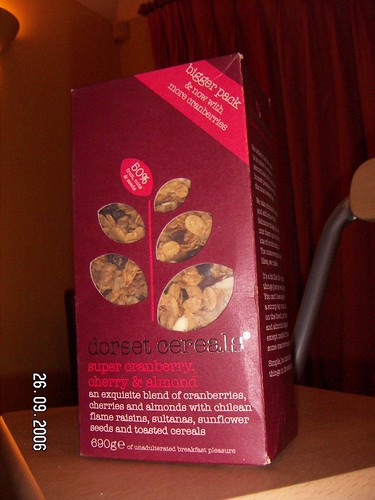
Cool cereal packaging

Usually Budgens is a desert for cool consumerism but my faith was restored with this fantastic packaging form Dorset Cereals. Gone are the day glow colours, literal illustrations and wack cartoon characters. There is no stock photography of women exercising that ends up being used on feminine hygiene product advertising as well.

Instead the simple but reassuring design with dye cut windows and foil print on quality matt card provides a quality ensemble. Its a cereal equivalent of Innocent Smoothies.

Thursday, September 28, 2006

Road warrior envy


Business travellers usually carry a range of cables, connectors and swanky IT kit around with them so my dumb phone and MacBook Pro seldom get a second glance. However, my travel adaptor turns heads. Its a green semi-translucent plastic number thats branded Fuji (as in Fuji film) and a really neat piece of product design.

I am sure that Fuji just had a canny buyer who got several thousand knocked out by an anonymous smoke-stack business in China, the design is one that the factory probably does for serveral people under different brands.

Despite the adaptors humble origins, its unknown product designer who deserves some proper recognition.

I lucked out when I found my first one at a Dixons store airside at Heathrow on my way to San Francisco. No more carting around stubby pieces of white fragile plastic that interconnect into one and other, instead one small block that does everything.

When I flew to Dresden this month, my trusty adaptor went with me, however you have no idea of the horror I had when I left it in a hotel room by accident. The cleaning staff didn't hand it in so I had a frantic hunt around the web for a new one, after trawling through Froogle and Shopping.com Kelkoo came good with a reasonably priced item by Misco.

Now I keep a close eye on my new one, I have already had a couple of American clients looking at it enviously. It just goes to show, good design sells.

Saturday, August 26, 2006

Design Matters


A nice video interview by VNUnet.com with HP about product design. The interview puts a particular focus on a consistent user experience across all their devices from kiosks, living room PC remote controls, rack systems to cameras and printers. They are looking to create a HP look-and-feel. Much of their challenge seems to be constantly re-learning the wheel and trying to provide the kind of vertical sense that Apple can drive in their business.

HP thinks that the experience should be shared across over between the business and consumer space. This common experience is designed to help them to go and do battle with Dell. I am looking forward to have my SuperDome media center.

The elephant in the room they don't seem to have addressed in the interview is their PC OS ;-)

Saturday, April 22, 2006

KultureVulture


I went to the V&A in South Kensington with Stephen and David to check out the Modernist movement exhibition that is currently on.

Modernism: Designing a new world 1914 - 1939 speaks to a more continental European experience than a British one. Much of the modernist work that I most like (such as the work of Charles and Ray Eames) was post-war.


The exhibition has been well put together, highlights include an original Tatra saloon, though the exhibition is 'disrupted' by the exhibitors not wanting to address modernism in Fascist-era Europe. An exception to this is a statue that takes the profile of Musolini and rotated through 360 degrees so that it gives it an abstract but recognisable shape.

Monday, March 13, 2006

Nice Design Site


The Goethe Institute has a selection of what it considers to be great German product and industrial design including the Fischer wall plug, the Nivea pot, Rimowa cases and Leibniz butter biscuits.

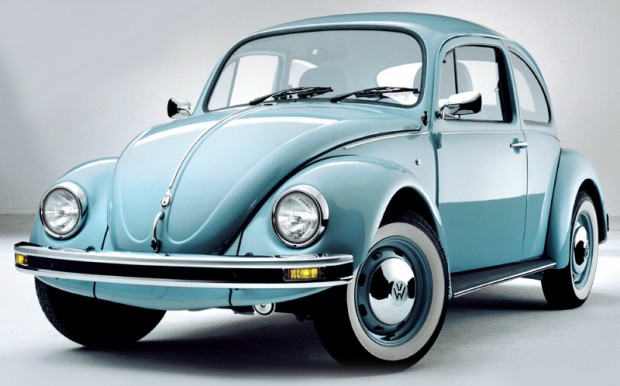
For obvious reasons they leave off the Volkswagen Beetle, but do include the
Porsche 911. Have an exploration of their selection here.

Tuesday, March 07, 2006

Origami - hype and the non-launch


If you live on planet tech you can't help but notice the fuss that the blogosphere has been worked into about a Microsoft project called Origami. Its the biggest thing to hit the street since Apple's fun announcement last week.

Ok, so let's debunk some of the hype:
  • Origami is a new product launch: something called the ultra mobile personal computer (UMPC). UMPC has been touted by Intel at developers conferences for a while: so its not really news. In fact you can read here how Intel has already demoed a device last August. And if that's not enough Microsoft launched UMPC devices last April. On another note wouldn't Tablets from the likes of Motion Computing count as a UMPC by their very nature?
  • Ah, but this is a new product: no it isn't OQO have had their UMPC device out for over a year. The product design is actually quite nice, in fact if it ran a decent Linux distribution and worked with iSync core services I would be interested in getting one
  • Its a new paradigm in computing: err no. Sub-notebooks have existed for years and are very popular in Japan, PDAs do the same job in a more energy and space efficient way, Nokia has the uber cool but hard-to-find 770 device and Psion had a cracking device called the NetBook.
In reality UMPC devices is putting lipstick on a pig. Tablet PCs haven't flourished and the best way to make them cheaper (hence making them more likely to be purchased) is by reducing cost. You can do this by using lower performance parts in the name of energy efficiency, smaller capacity hard drives and smaller displays.

From a marketing point of view I love it, get manufacturers to pay for a full Windows licence which will be dearer than what they would pay for Windows Mobile, reduce the price point of the device and the component cost, give them little point of differentiation and watch them beat each other the price poiint to a pulp and potentially make a new market segment for you. And from a PR person it is a story well-spun; but it's a shame that it doesn't stand up to much examination.

Picture from Expansys.com of the OQO device mentioned earlier.

Sunday, October 30, 2005

Crossing Swords

I've contributed an article about Palm's investment in Europe over at Palm Addicts. In the news this week Palm announced that it was opening a new development centre in Swords County Dublin (you can read about it here at the Palm Addicts blog), what does it mean for European Palm users?

What is surprising is that Palm has not made this move sooner, given the focus on the Treo range as the primary play for the future. With the exception of some notable exceptions like Italy the market for mobile phones is dominated by subsidised handsets provided by the carriers. Given that the carriers invest 100USD or more per user, they need to guarantee their return somehow by trying to improve the average revenue per user (ARPU). This means locking consumers in with tightly integrated services. Part of the reason why Nokia's crown slipped was because the company would not bend to the carriers will.

In the UK, five years ago the Nokia brand got bigger than the mobile phone company because of its legendary ease-of-use and iconic chocolate bar format. Club Nokia was the straw that broke the camels back threatening carriers ability to earn money from ringtones and wallpapers.

Vodafone suddenly dropped Nokia from its roster of handsets and took up with Japanese handsets by Sharp and Panasonic; the carriers learned their inherent power. The market has become more competitive for mobile phone devices. Most technology companies that we know are really marketing organisations. Their logistics are outsourced, their products are based on reference designs and sometimes the only cosmetic change is the badge on the front of the device. OEMs like HTC are no longer happy making for other manufacturers, but with Microsoft's assistance have started selling direct to the carriers. Mobile phone companies had the marketing savvy, they had a brand and they had distribution. T-Mobile and Orange pioneered this approach carrier-side.

Palm entered a market where it has had to dance with the carriers and the first few times it has got it wrong. The Orange implementation of the Treo 600 allegedly had some of its functionality curtailed to help sell 'push-to-talk' services. The implementation meant that Orange had lots of dissatisfied users and people like me went out and bought the carrier neutral version of the device instead, so Orange probably sold less services, not more like they would have expected.


Palm can't let this happen in the future. Europe has a level of mobile phone penetration is higher than the US, Europeans change their phones every 12 - 18 months rather than the 2 years or so for a Verizon customer in the US. Europe is rolling out UMTS / 3G services, but despite the hype there are no killer apps, partly because the handsets aren't great: so for Palm there is a real market opportunity. Even though Palm is a Microsoft licensee it will still be competing against established handset manufacturers like Motorola, HTC and Sagem. Microsoft's motives are further complicated because the company wants an end-to-end play. Telecoms back-end systems, transactions, service provision, media creation and playback, instant messaging, user experience, enterprise applications and information security all running on Microsoft platforms. Would they burn Palm to improve their overall interest? No question about it.

Look to the PC marketplace, Steve Jobs has said on numerous occasions there are two PC manufacturers making a profit - Dell and Apple. Other players stay in the marketplace for strategic reasons, but Microsoft makes money on each Windows box, whatever happens to the manufacturer.


Then there are aggressive Asian players like Siemens/BenQ, and is likely to be joined by Chinese newcomers like Haier or Ningbo Bird. Chinese manufacturers have a lot of work going into embedded Linux devices that are constantly improving. US manufacturer Danger, who make the Hip-Top devices had both Orange and T-Mobile as investors, the tight integration including storing user data like address books on the network and large screen suitable for multimedia makes it an interesting proposition.

Fellow Palm licensee Qool Labs have a fantastic Palm powered product that has not been distributed in the West. European handset manufacturers with entrenched relationships and brand equity like Sony Ericsson and Nokia are unlikely to lie down either. Indeed Nokia's 9X00 series and the E61 are exceptionally well-designed competitive devices. Palm needs to have an R&D / localisation facility close to the customer base filled with talented people.


Trying to do the carrier-specific development from Silicon Valley or Asia puts them on a different working day from the clientele, placing a strain on project management and close cooperative client working. It is not conducive to supplying the kind of carrier integration needed to supply large-scale orders that Palm needs in order to achieve critical mass in the market.

Palm's expansion of its Dublin logistics and operations site to include localisation is a statement of intent that they are now going to get serious about Europe, hopefully ensuring an even better user experience and favourable subsidies for Treo users.

Wednesday, October 19, 2005

Its all gone horribly Pete Tong

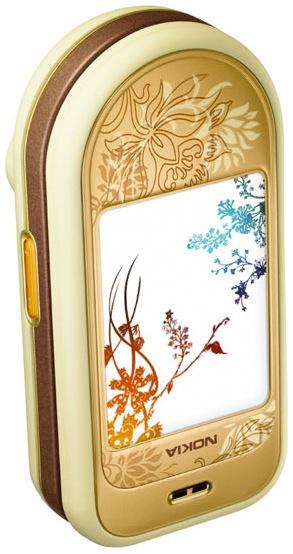
Nokia has gone after mobile phone purchasing women with its Lamour range. They seem to have made a classic mistake. Unlike Samsung and Motorola who have engineered small or slim phones to attract style conscious women,

Nokia has taken its inspiration from Portabello market with a mobile phone range that have received henna tattoos (or so it seems). Gasp in amazement at the chunkiness of the phones such as the 7370 pictured, be amazed by their superficially attractive designs. Hope that Nokia can do much better like it has with the 8800.