Showing posts with label quality. Show all posts

Monday, October 16, 2006

Blogging, customer service and cool marketing campaign


OK, so everyone is talking (alright having a conversation with some naked guy) about the Edelman blog for a Wal-Mart sponsored puppet organisation.

Whilst I would like to be exploitative and steal some of their business, I feel for the people at Edelman. When you put yourself in a pioneer position, some of your mistakes can end up being very public.

Anyway some thoughts on it all:
  • There but for the grace of God go I: it was bound to happen sooner rather than later. Yes it was pretty dumb and demonstrated the kind of strategic thinking that PRs often get slated for. But I would put good money on it that a number of managers of other large PR agencies had a similar reaction to the post. I am sure that they would love to nail Edelman to the cross in an effort to shake some of their clients loose, but it could just as easily been another large agency instead
  • Crisis management 101: Where Edelman did go wrong was in not keeping the channel of communications as open as they could. Both Rubel and Richard Edelman kept their counsel until they had done an internal inquiry. Really they should have told the blogosphere what they were doing and then went ahead and did it. What is needed now is for the agency to demonstrate that they have learned from the mistake by telling the inside story rather than just committing to it never happening again
  • Sloooow response leads to message amplification: This story seemed to get legs really fast, yet Edelman seemed to take a long time getting a handle on it, allowing the story to gain momentum. Blogs are like an echo chamber, allowing themes to reverberate around -and-around, rather than quickly die like the news agenda for print or broadcast media
  • The only crime is getting caught: Many years ago for a brief time I used to stack clothes in a garment factory. I was very young and there was a van driver called Joey. Joey had been an unsuccessful villain who used to rob payroll deliveries and post offices in the 1970s and used to tell us about the old days. Usually the tale would end with him getting put away and would end with a few factors that had they gone the other way would have saved his bacon. If the client hadn't been Wal-Mart and the blog done a bit more subtly would they have got away with a good corporate reputation exercise? How many people have got away with the same trick before Edelman and Wal-Mart got caught?
  • Living in a glass house: What made the situation worse is the Wal-Mart puppet sponsored site Paid Critics which is a platform to attack paid critics of the retail behemoth
  • Chose your clients carefully: Wal-Mart is considered by its detractors to be exploitative, abusive and the best example of corporate evil in the western world today (though I am sure that environmentalists would argue that ExxonMobil could give Wal-Mart a good run for their money in the corporate evil sweepstake). To borrow from George Lucas: it's corporate body is viewed by critics like the Galactic Empire, and each store a corporate death star with Sam Walton as its Emperor Palpatine. There comes a time when a client is perceived to be so morally repugnant (like tobacco firms have become) that you have to draw the line and turn away their business. Wal-Mart is pushing that boundary. (Hell, I don't mind its scandalous record on the way it treats staff, its exportation of manufacturing jobs on a previously unheard of scale or its treatment of suppliers, but Wal-Mart is so wrong that it wants to hijack the smiley and own it for itself). Oi, Wal-Mart NO! You cannot hijack a cultural icon and get away with it. Bottom line: Edelman's campaign would not have drawn as much scrutiny or criticism but for the emotive association with Wal-Mart
If anybody wants to comment on the Edelman side of the story, or if you are a masochist defend Wal-Mart's smiley hijack, the blog comments section at the bottom of this post is there for you.

No sooner had I blogged about how customer experience was an intrinsic part of brand experience than my MacBook Pro got damaged. My home and contents insurance won't cover it and taking it in to get it serviced at Apple's retail locations means running the gauntlet of its online lottery for the genius bar.

I took my machine to Square Group instead where it will take two weeks for my computer to be looked at an at least another week for parts. The representatives at Square Group admitted that they were overrun in their service department, probably because so many Apple users have had to make the same trip from Apple Store Regent Street to their offices on New Oxford Street.


This service experience lacks quality and I don't mean that in a small way I mean that in a big way.

Apple often compares itself to BMW as a brand, yet BMW has a well defined very efficient customer service machine that is based on traditional values, attention to detail and an understanding of customer needs. Apple obviously doesn't have this heritage and understanding which is the reason why its service model lacks a soul. Slick retail design is merely emperor's new clothes for being a premium brand.


Finally on a more positive note, Absolut Vodka have an interesting marketing campaign called the 100 Absoluts. Participants passions are tapped, they are asked to contribute their opinions and images (user generated content) on the following items. It's a clever campaign that extends itself beyond online to PR and advertising. I only wish that I had thought of it!

THE ABSOLUTE BAG
THE ABSOLUTE BAND
THE ABSOLUTE BLOG
THE ABSOLUTE CHEF
THE ABSOLUTE COCKTAIL OCCASION
THE ABSOLUTE COFFEE JOINT
THE ABSOLUTE COLOR
THE ABSOLUTE COMEDY MOVIE
THE ABSOLUTE DESIGNER
THE ABSOLUTE DIRECTOR
THE ABSOLUTE DRINK MIXER
THE ABSOLUTE FLAGSHIP STORE
THE ABSOLUTE FURNITURE
THE ABSOLUTE GAY ICON
THE ABSOLUTE HAIRCUT
THE ABSOLUTE HORROR MOVIE
THE ABSOLUTE IMAGE
THE ABSOLUTE JOB
THE ABSOLUTE JOURNALIST
THE ABSOLUTE KILLER HEELS
THE ABSOLUTE LITTLE BLACK DRESS
THE ABSOLUTE LOVE SONG
THE ABSOLUTE MOVIE KISS
THE ABSOLUTE MUSEUM
THE ABSOLUTE NOSE
THE ABSOLUTE ONLINE FILM CLIP
THE ABSOLUTE OPERATING SYSTEM
THE ABSOLUTE PAINTING
THE ABSOLUTE PLAY
THE ABSOLUTE PRE-DINNER DRINK
THE ABSOLUTE QUOTE
THE ABSOLUTE RESTAURANT
THE ABSOLUTE RETRO VIDEO GAME
THE ABSOLUTE ROMANTIC COMEDY
THE ABSOLUTE SIGNATURE SCENT
THE ABSOLUTE SITCOM
THE ABSOLUTE SOFTWARE
THE ABSOLUTE STREET
THE ABSOLUTE TECH DEAD END
THE ABSOLUTE TOILET POETRY
THE ABSOLUTE TYPEFACE
THE ABSOLUTE VICE
THE ABSOLUTE WEB BROWSER


THE ABSOLUTE BAND NAME
THE ABSOLUTE BAR
THE ABSOLUTE BURGER
THE ABSOLUTE CITY
THE ABSOLUTE COCKTAIL
THE ABSOLUTE COLLECTOR
THE ABSOLUTE COMEDIAN
THE ABSOLUTE CUISINE
THE ABSOLUTE DINER
THE ABSOLUTE DISPLAY WINDOW
THE ABSOLUTE EGO BOOSTER
THE ABSOLUTE FLOWER
THE ABSOLUTE GANGSTER FLICK
THE ABSOLUTE GIF BANNER
THE ABSOLUTE HOBBY
THE ABSOLUTE HOTEL
THE ABSOLUTE INVENTION
THE ABSOLUTE JOKE
THE ABSOLUTE JUICE
THE ABSOLUTE LIP PLUMPER
THE ABSOLUTE LONG DRINK
THE ABSOLUTE METAL BAND
THE ABSOLUTE MOVIE VILLAIN
THE ABSOLUTE MUSIC VIDEO
THE ABSOLUTE NOVEL
THE ABSOLUTE ONLINE GAME
THE ABSOLUTE ORIGINAL SOUNDTRACK
THE ABSOLUTE PICKUP LINE
THE ABSOLUTE PODCAST
THE ABSOLUTE PUBLIC ART
THE ABSOLUTE RECORD SLEEVE
THE ABSOLUTE RESTROOM
THE ABSOLUTE ROCK STAR
THE ABSOLUTE SCI-FI MOVIE
THE ABSOLUTE SINGER/SONGWRITER
THE ABSOLUTE SNEAKER
THE ABSOLUTE SPAM
THE ABSOLUTE TATTOO
THE ABSOLUTE TECH GADGET
THE ABSOLUTE T-SHIRT PRINT
THE ABSOLUTE URBAN LEGEND
THE ABSOLUTE WALLPAPER
THE ABSOLUTE WRISTWATCH
----------------------------------------------------------------------------------------------------------------------------------------
UPDATE (October 22, 2006)

Edelman have outed two more fake blogs for Wal-Mart. Also Wal-Mart have retired the smiley from their campaigns, now I am hoping that they will park their ridculous claim jumping efforts on the smiley as well.
----------------------------------------------------------------------------------------------------------------------------------------

Sunday, October 15, 2006

Off the deep end


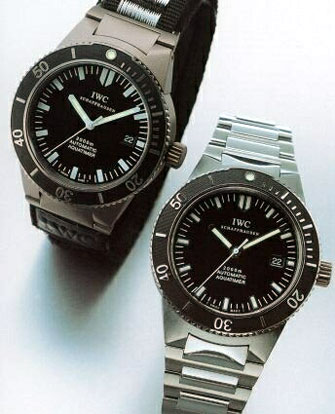
I had to take my IWC watch back to get it fixed.

Cynics may say what's the point of having a decent watch when it'll break just like a bargain basement Casio? What you don't get with a Casio is close on a years worth of precision engineering in the watch.

The watch is also supported by a comprehensive service organisation. Rather than having to argue the toss with a couple of school leavers, I spoke with a professional who sorted out getting the watch fixed with no quibble.

It brought home to me how quality goes beyond the product itself to encompass the whole experience behind it. Its all the other touch points on the customer's mental score card the make up a brand experience.

It doesn't matter how good new brands get at making a product, putting that infrastructure in to support it is going to be the hard part. It is the structure that supports the dominance of LVMH and Richemont in luxury brands.

It also shows the serious investment and learning curve that new global brands like Samsung or LG and the young Turks biting at their heels like Bird International have yet to do, if they are to become more than just the vassals for more established western brands. Thoughts?

Thursday, September 28, 2006

Road warrior envy


Business travellers usually carry a range of cables, connectors and swanky IT kit around with them so my dumb phone and MacBook Pro seldom get a second glance. However, my travel adaptor turns heads. Its a green semi-translucent plastic number thats branded Fuji (as in Fuji film) and a really neat piece of product design.

I am sure that Fuji just had a canny buyer who got several thousand knocked out by an anonymous smoke-stack business in China, the design is one that the factory probably does for serveral people under different brands.

Despite the adaptors humble origins, its unknown product designer who deserves some proper recognition.

I lucked out when I found my first one at a Dixons store airside at Heathrow on my way to San Francisco. No more carting around stubby pieces of white fragile plastic that interconnect into one and other, instead one small block that does everything.

When I flew to Dresden this month, my trusty adaptor went with me, however you have no idea of the horror I had when I left it in a hotel room by accident. The cleaning staff didn't hand it in so I had a frantic hunt around the web for a new one, after trawling through Froogle and Shopping.com Kelkoo came good with a reasonably priced item by Misco.

Now I keep a close eye on my new one, I have already had a couple of American clients looking at it enviously. It just goes to show, good design sells.

Saturday, September 23, 2006

User experience


I went to see two films this morning with Steve; DOA and Children of Men.

DOA is a film based on a game, that looks like a game, has a game-like plot and visual language with level-transition splash screens but no interactivity - what can only be described as a poor user experience.

The film is awash with acrobatic young women, CGI and wire work.

Unfortunately the film does not have the complex cues and social interplay now prevalent in popular script so comes across as a hyperactive childrens programme. Whilst DOA stands for Dead or Alive, it could also easily stand for Dead on Arrival (at the box office).

We also talked about the challenges I was facing getting the SMTP server connection on my mobile phone over the Orange network and led on to an interesting discussion about user experience.

Later I touched base with my friend Uri in Israel to wish him a happy new year and catch-up with his activity. He had been with Orca Interactive at IBC in Amsterdam promoting a music channel and interface that allowed access in one-click - a state that many companies would love to match.

Uri mentioned an interesting and revealing statement that 'user experience' was a specialist area and expensive to do, yet we are all users and have all felt the painpoints of home video equipment that is hard to programme, used a poorly designed website or the struggle to master new features on a cell phone?

There seems to be a disconnect between products that we would like to use and products that we want to build for customers. Why?

Children of Men is a dark film that hits on many of the themes that V for Vendetta hit upon and that Bruce Sterling has discussed in a short story for the latest edition of New Scientist. It is worthwhile seeing for for Michael Caine's best performance in years as a weed-growing hippie pensioner with a wife suffering from Alzheimers.

Tuesday, September 19, 2006

The new garden fence


Freud Communications have put together a well-resourced research led campaign called MobileLife 2006 for Carphone Warehouse. Apparently this was originally put up at the end of July, but it only came to my attention yesterday when a story about most 10-year olds having a phone started to appear in the media.

The site has a couple of downloadable reports focusing on mobile usage in the UK in general and a particular report looking at generation Y.

In a PR-by-numbers section there is a mobile tribes document so readers can see which group they fall into as well as some good quality essays that probe child care and family life.

Tabloid readers will be delighted to hear that only 13 per cent turn their mobile off during sex. The report thankfully does not say how many of the 87 per cent use the switched-on phone as an improvised marital aid (ooh aahh
Daily Star).

Despite its PR roots the reports deserve to be downloaded and read from cover-to-cover, I particularly liked the essay by Kate Fox of the Social Issues Research Centre that described the mobile phone as the modern-day garden fence and then showed how text messages fulfilled the same role of sociability, yet at the same time the mobile phone could be used as a social barrier by women to discourage predatory males (mainly because predatory bunnyboiling females ignore such obvious non-verbal cues to sling their hook).

Carsten Sorensen of the LSE has an interesting take on UK mobile etiquette: whilst we were not likely to turn the mobile off at a leisure activity like the cinema or a theatre, we would turn the phone off in a restaurant or at night. The subtext being that we are bunch of selfish *!^@s who will only shut our mobile phone off if it inconveniences us or we are more likely to get busted and face the social consequences.

Something for the Freud communications wash-up report: must proof URLs listed in any client written material to ensure they actually work ie: http://personal.lse.ac.co.uk/sorensen should be http://personal.lse.ac.uk/sorensen ;-).

Kudo to Ian for some pointers.

Monday, September 18, 2006

Picnic with the greys

Rose Street alien Slate has an interesting article about how modern computer game design is out of touch with the gaming demographic.

Games are becoming deeper, increasing in complexity and the time required to complete them. Yet the average age of a computer gamer is now 33 years old. That means commitments and time poverty, not exactly conducive to spending 40-plus hours completing a state-of-the-art game.

This sounds like the Nintendo Wii with is more casual approach could be coming out ahead by better understanding and providing for their clients needs.

However there is lessons that all game designers could learn from modern television programmes like CSI or 24, particularly the way that complex experiences are broken down into bite-sized chunks of time. More here.

Sunday, September 03, 2006

Labo(u)r and web 2.0


I was discussing blogging with a prospective client during a pitch on Friday and blogging came up as a topic of discussion as it is the subject d'jour.

The person was grappling with the challenges of monitoring the blog, motivating internal people to write the posts, how to keep it interesting, and how to respond to comments in a timely manner.

A further matter of interest was the way that the company had an IT policy which banned RSS feeds, making the potential task so much harder.

The key theme that ran through was labour either in terms of staffing up to handle the project internally or motivating contributions and spare cycles outside of the PR and marketing department.
It is this labour-intensive aspect of web 2.0 which makes Google's take up of the ESP game for its own ends interesting.

As a wise man once said "Someone that truly enjoys their job, never does a days work in their life". Carnegie Mellon's ESP game seems to have taken this saying to heart.

It has two random competitors guess what the other is tagging random pictures, so it builds consensus via the tags on what the pictures mean. Google has borrowed the concept wholesale to improve its image search.

In this way it has the potential to building up more universally meaningful tags than say flickr or Yahoo! MyWeb. It also gets around the key objection of tagging nay sayers of what is in it for consumers, beyond the early majority and hardcore content creators.

On a geeky note will we see a more social search based offering from Google in the future or is this an exercise to train some sort of machine learning system?

Thursday, August 31, 2006

Virus in a bottle


This is the second day that I've received this message from people in my Yahoo! Instant Messenger friend list. It is pretty poorly designed from a social engineering perspective since there is no compelling reason to click on it (think about the I Love You virus back in the day).

Whilst Kevin Mitnick would not be impressed at this poorly constructed malware, you've been warned just to be on the safe side.

Thursday, June 29, 2006

Major Malfunction


I got tired of my Palm playing up decided to move away from the platform as their quality control has gone out the window. I picked up a Nokia E61. Nokia have crafted together a nice looking no-nonsense Treo competitor and its priced competitively as well from what I see on the interweb.

In terms of product design Nokia have made a damn sexy piece of kit, most of the shell is metal (I am guessing aluminum or an alloy), with a nice big screen and the nicest responding keys that I have felt on a handheld device.

Where things start to go wrong is the software. The Nokia E61 cannot take much more than 1,000 contacts - that's right its a business phone and yet when I synched over 5,000 contacts into it I started to get memory full messages.

I spoke to Nokia support and they claim that its a firmware issue and they are working on writing an update but they don't know when it will be fixed. . In order to get the update I will need to have my phone reflashed at a Nokia Service Point.

I know its unbelievable, so I will run this past you again: the Nokia E61 has a known fault that will directly affect business users because it will not hold as many contacts as a chavtastic Palm Zire PDA. It has sailed into production and they are only now thinking about fixing it.

And in order to further inconvenience their long-suffering customer base the firmware update when it becomes available can only be installed at a Nokia Service Point, leaving the customer without their phone. Nice, this makes the device about as much use as a liberal arts intern in a PR agency.

Sunday, June 18, 2006

Nape


Nape
Originally uploaded by renaissancechambara.
A Bathing Ape's trainers were inspired by Nike's Air Force One designs.

Now Nike has returned the complement co-opting Bape's use of bright candy colour pastels and patent leather type finishes in its summer limited editions for sneaker freakers.

Seen at Size? in Covent Garden.

Saturday, June 03, 2006

Oprah Time and the elemental truths


Over my lifetime I have had a number of moments when I felt like I saw things with crystalline clarity: one time was when I was in the library doing a job search in the papers (this is pre-Monster.com kids).

I suddenly came to the conclusion that even if I got a job that I would be in the same cycle soon again and I needed to get out of the blue-collar roles, even if it meant leaving vast tracts of my life behind.


The next one was in April 2000, the internet business had gone mental, the PR agency I was employed in was in mid-flow of the dot.com boom and all the mini-bubbles that went alongside it like the Java boom, the Linux boom, the broadband boom, the web business marketplace boom, the mobile web boom and rise of the PDA.

In fact, about the only thing that we didn't promote was micro-scooters, though we did employ a German freelancer who commuted in from Brighton and rode one everywhere he had to go around London.

Anyway, things got so busy that we had to interview clients and decide whether we wanted to work for them. I met a gentleman from an incubator fund and quickly decided that they were start-up roadkill, but I couldn't work out why this man who was obviously a lot more clever than me was involved in the enterprise.

I asked him what made his companies offering different, to which replied "Ged, I am surprised that you asked that, we are trying to move at internet-speed, so aren't thinking about things like that." I had a sudden jolt of crystalline vision and saw how horribly it was all going to end and that my pension fund wasn't worth squat. The elemental truth in this moment is that common sense trumps eloquent words and intellect every time.

Which brings me on to 8vo On the outside by Mark Holt and Hamish Muir. Steve bought this for me as a Christmas present and up until my apparent non-redundancy and move back to agency life I hadn't really had a chance to read the book in full.

The book charts the rise and fall of the design agency 8vo, their work and puts into context their pivotal role in modern UK graphic design.

The book is a collaborative work written by 8vo, former employees, former clients and industry observers. It is part history lesson focusing on design and the business of design, part a tale of technological change and part catalogue.

The way the book is written it is almost as if it is therapy for Hamish Muir and Mark Holt, I found it in turns fascinating and uncomfortable as they progressed through their work and found some elemental truths in their approach to design.

Much of their style of work has been co-opted by their modern day peers, so it is no longer remarkable, however what their peers lack is a good understanding of their approach to work.

Iain Tait over at Crackunit had a link to an interesting interview with Eric Reiss who learned the same elemental truths as 8vo, but via a different road: in his case Vinterberg and Von Tier's Dogme 95 rules for film making.

  • Anything that exists only to satisfy the internal politics of the site owner must be eliminated.
  • Anything that exists only to satisfy the ego of the designer must be eliminated.
  • Anything that is irrelevant within the context of the page must be eliminated.
  • Any feature or technique that reduces the visitor's ability to navigate freely must be reworked or eliminated.
  • Any interactive object that forces the visitor to guess its meaning must be reworked or eliminated.
  • No software, apart from the browser itself, must be required to get the site to work correctly.
  • Content must be readable first, printable second, downloadable third.
  • Usability must never be sacrificed for the sake of a style guide.
  • No visitor must be forced to register or surrender personal data unless the site owner is unable to provide a service or complete a transaction without it.
  • Break any of these rules sooner than do anything outright barbarous.

Oh one completely useless piece of information that I found out today, the ZIP in ZIP code stands for Zone Improvement Program.

Tuesday, March 07, 2006

Origami - hype and the non-launch


If you live on planet tech you can't help but notice the fuss that the blogosphere has been worked into about a Microsoft project called Origami. Its the biggest thing to hit the street since Apple's fun announcement last week.

Ok, so let's debunk some of the hype:
  • Origami is a new product launch: something called the ultra mobile personal computer (UMPC). UMPC has been touted by Intel at developers conferences for a while: so its not really news. In fact you can read here how Intel has already demoed a device last August. And if that's not enough Microsoft launched UMPC devices last April. On another note wouldn't Tablets from the likes of Motion Computing count as a UMPC by their very nature?
  • Ah, but this is a new product: no it isn't OQO have had their UMPC device out for over a year. The product design is actually quite nice, in fact if it ran a decent Linux distribution and worked with iSync core services I would be interested in getting one
  • Its a new paradigm in computing: err no. Sub-notebooks have existed for years and are very popular in Japan, PDAs do the same job in a more energy and space efficient way, Nokia has the uber cool but hard-to-find 770 device and Psion had a cracking device called the NetBook.
In reality UMPC devices is putting lipstick on a pig. Tablet PCs haven't flourished and the best way to make them cheaper (hence making them more likely to be purchased) is by reducing cost. You can do this by using lower performance parts in the name of energy efficiency, smaller capacity hard drives and smaller displays.

From a marketing point of view I love it, get manufacturers to pay for a full Windows licence which will be dearer than what they would pay for Windows Mobile, reduce the price point of the device and the component cost, give them little point of differentiation and watch them beat each other the price poiint to a pulp and potentially make a new market segment for you. And from a PR person it is a story well-spun; but it's a shame that it doesn't stand up to much examination.

Picture from Expansys.com of the OQO device mentioned earlier.

Saturday, March 13, 2004

Are we too complex

Submitted another entry to Alwayson Network regarding the thoughts of Dan Geer, which you can view it here.

Dan's ideas are interesting because they make sense to the man in the street. For instance the more complex you make something, the more likely it is to go wrong. This makes sense whether it is a sophisticated mechanical device or a piece of software. I looped his thinking into my own because I believe there is a 'sweet spot' for technology sophistication and usability Videoplus remote controls, pre-Symbian Nokia phones, Palm Vx and the iPod occupy the sweet spot. Most PC software and operating systems probably dont.

Dan points out that our ability to use computers as individuals is not increasing as the same rate as computing power and storage. For the past seven years I surfed the web. listened to music and churned out documents on behalf of my clients. The only difference is now that I use a more powerful Unix based workstation laptop (my Apple iBook) to do the same thing. What's the point? I am not more efficient or effective.