Gym Box recently did a tube station give-away, providing fitness fanatic masks, ideal for doing a payroll truck (now get your 'ead down you slaaaag and 'and over the money) .
Blogger Beta's flakiness on FireFox. I have managed to cure it by going to Camino instead. Weird city.
Posts on quality, life, culture, the media, news & tech with a twist & a slice of Limey. I moved my blog to http://renaissancehambara.jp in December 2006, go there for the latest content.
Showing posts with label marketing. Show all posts
Tuesday, November 21, 2006
Monday, November 20, 2006
Weekend away
Blogger has been flaky all weekend. The problem seems to be only with Firefox, however it gets tiresome when you have to clear the cache, cookies and browser history several times in one session just to log in.
I managed to get the time to do some reading and can recommend Breaking Vegas
by Ben Mezrich, it treads on similar territory to his previous books but is written in a more mature style without losing some of the tension.
I noticed an interesting point-of-purchase at a Starbucks, the company is rolling out a global loyalty and payment infrastructure. The potential of the card and the scale of ambition on this is impressive.
Basically Starbucks have their own payment infrastructure like PayPal which could be used to sell more than a granola bar and venti half-decaf-soya-latte with a shot of caramel on the side. It would be handy for road-warriors, exchange students and travellers.
A second element is the Tesco Clubcard-like loyalty card data wrapped into it, feeding back into a database that feeds into a global database.
I managed to get the time to do some reading and can recommend Breaking Vegas
I noticed an interesting point-of-purchase at a Starbucks, the company is rolling out a global loyalty and payment infrastructure. The potential of the card and the scale of ambition on this is impressive.
Basically Starbucks have their own payment infrastructure like PayPal which could be used to sell more than a granola bar and venti half-decaf-soya-latte with a shot of caramel on the side. It would be handy for road-warriors, exchange students and travellers.
A second element is the Tesco Clubcard-like loyalty card data wrapped into it, feeding back into a database that feeds into a global database.
Labels:
books,
consumer behaviour,
literature,
marketing,
oprah time,
payments,
starbucks
Wednesday, November 08, 2006
Disintegrated marketing
Last Friday I sung the praises of Starbucks joined-up thinking for their big Christmas push, however looking more closely the wheels look as if they have come off the Starbucks marketing wagon:
Sort out a visual theme for Christmas marketing push. Nice
Order in merchandise from the Far East. Looking good.
Register domain name for integrated online element of the campaign. Like your thinking
Integrate domain name into artwork for maximum customer engagement. Sweet, most of this web 2.0 thing was started in coffee shops like ours with wi-fi connections, we might even sell some overpriced hotspot time. ;-)
Launch Christmas campaign into shops with supporting web presence....
Why?
- Poor project management?
- A web site that didn't meet the client brief?
- Scared of a possible clash with Product Red?
On the bright side I guess the marketers at least know that people pay attention to their packaging. Anybody else got any good marketing campaign disconnects? Put the details in the comments section.
If there was a site there, it hasn't been up for the past two days, up to early this evening the page said Plesk instead.
Labels:
integration,
marketing,
online,
project management,
starbucks,
train wreck
Saturday, November 04, 2006
Nice idea, shame about the execution
We have a Benjy's around the corner from the office and they serve a humungous cup of joe for a measily 99p. I have two cups a day to keep me running. I noticed an advertising campaign for chip giant Intel by tabletalkmedia.

The idea of advertising on coffee holders in central London was really clever, unfortunately the execution didn't match the idea. This was an advert aimed at consumers so where does it go wrong?
- The image on the left that Intel went to the both of printing in full colour is a blown up silicon die and no Joe Public probably doesn't know what it is or the significance of it
- The strapline is ambiguous 'It's all about energy'. What does it mean?
- Why should you the consumer care?
- What about the usual association of energy and beverages (Lucazade, Red Bull etc)?
Labels:
advertising,
ambient advertising,
Intel,
marketing,
train wreck
Monday, October 30, 2006
The red brand of China

Brandchannel have an interesting article about the challenges that Chinese brands face to make it successfully in the West. The article doesn't cover the recent BenQ Siemens disaster. More details here (PDF document Preview.app or Adobe Acrobat reader required).
Monday, October 16, 2006
Blogging, customer service and cool marketing campaign

OK, so everyone is talking (alright having a conversation with some naked guy) about the Edelman blog for a Wal-Mart sponsored puppet organisation.
Whilst I would like to be exploitative and steal some of their business, I feel for the people at Edelman. When you put yourself in a pioneer position, some of your mistakes can end up being very public.
Anyway some thoughts on it all:
No sooner had I blogged about how customer experience was an intrinsic part of brand experience than my MacBook Pro got damaged. My home and contents insurance won't cover it and taking it in to get it serviced at Apple's retail locations means running the gauntlet of its online lottery for the genius bar.
I took my machine to Square Group instead where it will take two weeks for my computer to be looked at an at least another week for parts. The representatives at Square Group admitted that they were overrun in their service department, probably because so many Apple users have had to make the same trip from Apple Store Regent Street to their offices on New Oxford Street.
This service experience lacks quality and I don't mean that in a small way I mean that in a big way.
Apple often compares itself to BMW as a brand, yet BMW has a well defined very efficient customer service machine that is based on traditional values, attention to detail and an understanding of customer needs. Apple obviously doesn't have this heritage and understanding which is the reason why its service model lacks a soul. Slick retail design is merely emperor's new clothes for being a premium brand.
Finally on a more positive note, Absolut Vodka have an interesting marketing campaign called the 100 Absoluts. Participants passions are tapped, they are asked to contribute their opinions and images (user generated content) on the following items. It's a clever campaign that extends itself beyond online to PR and advertising. I only wish that I had thought of it!
THE ABSOLUTE BAG
THE ABSOLUTE BAND
THE ABSOLUTE BLOG
THE ABSOLUTE CHEF
THE ABSOLUTE COCKTAIL OCCASION
THE ABSOLUTE COFFEE JOINT
THE ABSOLUTE COLOR
THE ABSOLUTE COMEDY MOVIE
THE ABSOLUTE DESIGNER
THE ABSOLUTE DIRECTOR
THE ABSOLUTE DRINK MIXER
THE ABSOLUTE FLAGSHIP STORE
THE ABSOLUTE FURNITURE
THE ABSOLUTE GAY ICON
THE ABSOLUTE HAIRCUT
THE ABSOLUTE HORROR MOVIE
THE ABSOLUTE IMAGE
THE ABSOLUTE JOB
THE ABSOLUTE JOURNALIST
THE ABSOLUTE KILLER HEELS
THE ABSOLUTE LITTLE BLACK DRESS
THE ABSOLUTE LOVE SONG
THE ABSOLUTE MOVIE KISS
THE ABSOLUTE MUSEUM
THE ABSOLUTE NOSE
THE ABSOLUTE ONLINE FILM CLIP
THE ABSOLUTE OPERATING SYSTEM
THE ABSOLUTE PAINTING
THE ABSOLUTE PLAY
THE ABSOLUTE PRE-DINNER DRINK
THE ABSOLUTE QUOTE
THE ABSOLUTE RESTAURANT
THE ABSOLUTE RETRO VIDEO GAME
THE ABSOLUTE ROMANTIC COMEDY
THE ABSOLUTE SIGNATURE SCENT
THE ABSOLUTE SITCOM
THE ABSOLUTE SOFTWARE
THE ABSOLUTE STREET
THE ABSOLUTE TECH DEAD END
THE ABSOLUTE TOILET POETRY
THE ABSOLUTE TYPEFACE
THE ABSOLUTE VICE
THE ABSOLUTE WEB BROWSER
THE ABSOLUTE BAND NAME
THE ABSOLUTE BAR
THE ABSOLUTE BURGER
THE ABSOLUTE CITY
THE ABSOLUTE COCKTAIL
THE ABSOLUTE COLLECTOR
THE ABSOLUTE COMEDIAN
THE ABSOLUTE CUISINE
THE ABSOLUTE DINER
THE ABSOLUTE DISPLAY WINDOW
THE ABSOLUTE EGO BOOSTER
THE ABSOLUTE FLOWER
THE ABSOLUTE GANGSTER FLICK
THE ABSOLUTE GIF BANNER
THE ABSOLUTE HOBBY
THE ABSOLUTE HOTEL
THE ABSOLUTE INVENTION
THE ABSOLUTE JOKE
THE ABSOLUTE JUICE
THE ABSOLUTE LIP PLUMPER
THE ABSOLUTE LONG DRINK
THE ABSOLUTE METAL BAND
THE ABSOLUTE MOVIE VILLAIN
THE ABSOLUTE MUSIC VIDEO
THE ABSOLUTE NOVEL
THE ABSOLUTE ONLINE GAME
THE ABSOLUTE ORIGINAL SOUNDTRACK
THE ABSOLUTE PICKUP LINE
THE ABSOLUTE PODCAST
THE ABSOLUTE PUBLIC ART
THE ABSOLUTE RECORD SLEEVE
THE ABSOLUTE RESTROOM
THE ABSOLUTE ROCK STAR
THE ABSOLUTE SCI-FI MOVIE
THE ABSOLUTE SINGER/SONGWRITER
THE ABSOLUTE SNEAKER
THE ABSOLUTE SPAM
THE ABSOLUTE TATTOO
THE ABSOLUTE TECH GADGET
THE ABSOLUTE T-SHIRT PRINT
THE ABSOLUTE URBAN LEGEND
THE ABSOLUTE WALLPAPER
THE ABSOLUTE WRISTWATCH
----------------------------------------------------------------------------------------------------------------------------------------
UPDATE (October 22, 2006)
Edelman have outed two more fake blogs for Wal-Mart. Also Wal-Mart have retired the smiley from their campaigns, now I am hoping that they will park their ridculous claim jumping efforts on the smiley as well.
----------------------------------------------------------------------------------------------------------------------------------------
Whilst I would like to be exploitative and steal some of their business, I feel for the people at Edelman. When you put yourself in a pioneer position, some of your mistakes can end up being very public.
Anyway some thoughts on it all:
- There but for the grace of God go I: it was bound to happen sooner rather than later. Yes it was pretty dumb and demonstrated the kind of strategic thinking that PRs often get slated for. But I would put good money on it that a number of managers of other large PR agencies had a similar reaction to the post. I am sure that they would love to nail Edelman to the cross in an effort to shake some of their clients loose, but it could just as easily been another large agency instead
- Crisis management 101: Where Edelman did go wrong was in not keeping the channel of communications as open as they could. Both Rubel and Richard Edelman kept their counsel until they had done an internal inquiry. Really they should have told the blogosphere what they were doing and then went ahead and did it. What is needed now is for the agency to demonstrate that they have learned from the mistake by telling the inside story rather than just committing to it never happening again
- Sloooow response leads to message amplification: This story seemed to get legs really fast, yet Edelman seemed to take a long time getting a handle on it, allowing the story to gain momentum. Blogs are like an echo chamber, allowing themes to reverberate around -and-around, rather than quickly die like the news agenda for print or broadcast media
- The only crime is getting caught: Many years ago for a brief time I used to stack clothes in a garment factory. I was very young and there was a van driver called Joey. Joey had been an unsuccessful villain who used to rob payroll deliveries and post offices in the 1970s and used to tell us about the old days. Usually the tale would end with him getting put away and would end with a few factors that had they gone the other way would have saved his bacon. If the client hadn't been Wal-Mart and the blog done a bit more subtly would they have got away with a good corporate reputation exercise? How many people have got away with the same trick before Edelman and Wal-Mart got caught?
- Living in a glass house: What made the situation worse is the Wal-Mart puppet sponsored site Paid Critics which is a platform to attack paid critics of the retail behemoth
- Chose your clients carefully: Wal-Mart is considered by its detractors to be exploitative, abusive and the best example of corporate evil in the western world today (though I am sure that environmentalists would argue that ExxonMobil could give Wal-Mart a good run for their money in the corporate evil sweepstake). To borrow from George Lucas: it's corporate body is viewed by critics like the Galactic Empire, and each store a corporate death star with Sam Walton as its Emperor Palpatine. There comes a time when a client is perceived to be so morally repugnant (like tobacco firms have become) that you have to draw the line and turn away their business. Wal-Mart is pushing that boundary. (Hell, I don't mind its scandalous record on the way it treats staff, its exportation of manufacturing jobs on a previously unheard of scale or its treatment of suppliers, but Wal-Mart is so wrong that it wants to hijack the smiley and own it for itself). Oi, Wal-Mart NO! You cannot hijack a cultural icon and get away with it. Bottom line: Edelman's campaign would not have drawn as much scrutiny or criticism but for the emotive association with Wal-Mart
No sooner had I blogged about how customer experience was an intrinsic part of brand experience than my MacBook Pro got damaged. My home and contents insurance won't cover it and taking it in to get it serviced at Apple's retail locations means running the gauntlet of its online lottery for the genius bar.
I took my machine to Square Group instead where it will take two weeks for my computer to be looked at an at least another week for parts. The representatives at Square Group admitted that they were overrun in their service department, probably because so many Apple users have had to make the same trip from Apple Store Regent Street to their offices on New Oxford Street.
This service experience lacks quality and I don't mean that in a small way I mean that in a big way.
Apple often compares itself to BMW as a brand, yet BMW has a well defined very efficient customer service machine that is based on traditional values, attention to detail and an understanding of customer needs. Apple obviously doesn't have this heritage and understanding which is the reason why its service model lacks a soul. Slick retail design is merely emperor's new clothes for being a premium brand.
Finally on a more positive note, Absolut Vodka have an interesting marketing campaign called the 100 Absoluts. Participants passions are tapped, they are asked to contribute their opinions and images (user generated content) on the following items. It's a clever campaign that extends itself beyond online to PR and advertising. I only wish that I had thought of it!
THE ABSOLUTE BAG
THE ABSOLUTE BAND
THE ABSOLUTE BLOG
THE ABSOLUTE CHEF
THE ABSOLUTE COCKTAIL OCCASION
THE ABSOLUTE COFFEE JOINT
THE ABSOLUTE COLOR
THE ABSOLUTE COMEDY MOVIE
THE ABSOLUTE DESIGNER
THE ABSOLUTE DIRECTOR
THE ABSOLUTE DRINK MIXER
THE ABSOLUTE FLAGSHIP STORE
THE ABSOLUTE FURNITURE
THE ABSOLUTE GAY ICON
THE ABSOLUTE HAIRCUT
THE ABSOLUTE HORROR MOVIE
THE ABSOLUTE IMAGE
THE ABSOLUTE JOB
THE ABSOLUTE JOURNALIST
THE ABSOLUTE KILLER HEELS
THE ABSOLUTE LITTLE BLACK DRESS
THE ABSOLUTE LOVE SONG
THE ABSOLUTE MOVIE KISS
THE ABSOLUTE MUSEUM
THE ABSOLUTE NOSE
THE ABSOLUTE ONLINE FILM CLIP
THE ABSOLUTE OPERATING SYSTEM
THE ABSOLUTE PAINTING
THE ABSOLUTE PLAY
THE ABSOLUTE PRE-DINNER DRINK
THE ABSOLUTE QUOTE
THE ABSOLUTE RESTAURANT
THE ABSOLUTE RETRO VIDEO GAME
THE ABSOLUTE ROMANTIC COMEDY
THE ABSOLUTE SIGNATURE SCENT
THE ABSOLUTE SITCOM
THE ABSOLUTE SOFTWARE
THE ABSOLUTE STREET
THE ABSOLUTE TECH DEAD END
THE ABSOLUTE TOILET POETRY
THE ABSOLUTE TYPEFACE
THE ABSOLUTE VICE
THE ABSOLUTE WEB BROWSER
THE ABSOLUTE BAND NAME
THE ABSOLUTE BAR
THE ABSOLUTE BURGER
THE ABSOLUTE CITY
THE ABSOLUTE COCKTAIL
THE ABSOLUTE COLLECTOR
THE ABSOLUTE COMEDIAN
THE ABSOLUTE CUISINE
THE ABSOLUTE DINER
THE ABSOLUTE DISPLAY WINDOW
THE ABSOLUTE EGO BOOSTER
THE ABSOLUTE FLOWER
THE ABSOLUTE GANGSTER FLICK
THE ABSOLUTE GIF BANNER
THE ABSOLUTE HOBBY
THE ABSOLUTE HOTEL
THE ABSOLUTE INVENTION
THE ABSOLUTE JOKE
THE ABSOLUTE JUICE
THE ABSOLUTE LIP PLUMPER
THE ABSOLUTE LONG DRINK
THE ABSOLUTE METAL BAND
THE ABSOLUTE MOVIE VILLAIN
THE ABSOLUTE MUSIC VIDEO
THE ABSOLUTE NOVEL
THE ABSOLUTE ONLINE GAME
THE ABSOLUTE ORIGINAL SOUNDTRACK
THE ABSOLUTE PICKUP LINE
THE ABSOLUTE PODCAST
THE ABSOLUTE PUBLIC ART
THE ABSOLUTE RECORD SLEEVE
THE ABSOLUTE RESTROOM
THE ABSOLUTE ROCK STAR
THE ABSOLUTE SCI-FI MOVIE
THE ABSOLUTE SINGER/SONGWRITER
THE ABSOLUTE SNEAKER
THE ABSOLUTE SPAM
THE ABSOLUTE TATTOO
THE ABSOLUTE TECH GADGET
THE ABSOLUTE T-SHIRT PRINT
THE ABSOLUTE URBAN LEGEND
THE ABSOLUTE WALLPAPER
THE ABSOLUTE WRISTWATCH
----------------------------------------------------------------------------------------------------------------------------------------
UPDATE (October 22, 2006)
Edelman have outed two more fake blogs for Wal-Mart. Also Wal-Mart have retired the smiley from their campaigns, now I am hoping that they will park their ridculous claim jumping efforts on the smiley as well.
----------------------------------------------------------------------------------------------------------------------------------------
Labels:
apple,
brand,
customer service,
evil,
marketing,
pr,
quality,
train wreck,
user experience,
viral,
wal-mart
Sunday, October 15, 2006
Off the deep end

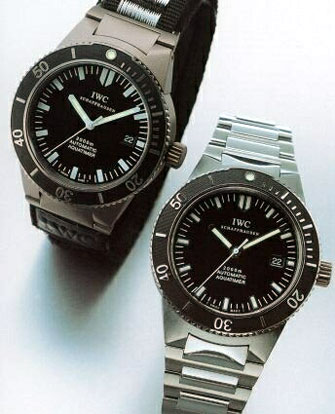
I had to take my IWC watch back to get it fixed.
Cynics may say what's the point of having a decent watch when it'll break just like a bargain basement Casio? What you don't get with a Casio is close on a years worth of precision engineering in the watch.
The watch is also supported by a comprehensive service organisation. Rather than having to argue the toss with a couple of school leavers, I spoke with a professional who sorted out getting the watch fixed with no quibble.
It brought home to me how quality goes beyond the product itself to encompass the whole experience behind it. Its all the other touch points on the customer's mental score card the make up a brand experience.
It doesn't matter how good new brands get at making a product, putting that infrastructure in to support it is going to be the hard part. It is the structure that supports the dominance of LVMH and Richemont in luxury brands.
It also shows the serious investment and learning curve that new global brands like Samsung or LG and the young Turks biting at their heels like Bird International have yet to do, if they are to become more than just the vassals for more established western brands. Thoughts?
Cynics may say what's the point of having a decent watch when it'll break just like a bargain basement Casio? What you don't get with a Casio is close on a years worth of precision engineering in the watch.
The watch is also supported by a comprehensive service organisation. Rather than having to argue the toss with a couple of school leavers, I spoke with a professional who sorted out getting the watch fixed with no quibble.
It brought home to me how quality goes beyond the product itself to encompass the whole experience behind it. Its all the other touch points on the customer's mental score card the make up a brand experience.
It doesn't matter how good new brands get at making a product, putting that infrastructure in to support it is going to be the hard part. It is the structure that supports the dominance of LVMH and Richemont in luxury brands.
It also shows the serious investment and learning curve that new global brands like Samsung or LG and the young Turks biting at their heels like Bird International have yet to do, if they are to become more than just the vassals for more established western brands. Thoughts?
Friday, October 13, 2006
Cool Marketing Campaign and the Palm News

I noticed a clever marketing campaign in this evenings thelondonpaper whilst on the train home. The print advertising campaign and marketing website features life coach Pete Cohen.
Many of the people who will move to a CapitalOne card will be in a bit of a bind and looking to consolidate debt at a lower interest rate. The marketing campaign tries to catch prospective consumers in more positive frame of mind by targeting those people who are looking to transform their lives. Its a smart move and helps to remove some of the parasitic nature that has tainted consumer perceptions of the CapitalOne brand.
The credit card industry has usually been based on blitzkrieg direct mail campaigns and cut-throat promotional rates that create customer churn.
Palm have belatedly entered the middle market with a cheaper smartphone. According to CoolHunting the phone corrects many of the deficiencies of the Treo 650. Engadget has a blow-by-blow account of the press conference and there was some interesting omissions:
Some tie-ins with Yahoo! Music, Google and eBay, but no tie-in with Flickr or PhotoBucket so it probably features the usual Palm crapmera.
The lack of an aerial and curves improve the tactile nature of the phone, but the materials and finish still look cheap. Palm could take some lessons in product design from Nokia or Apple to get the look and feel of materials improved.
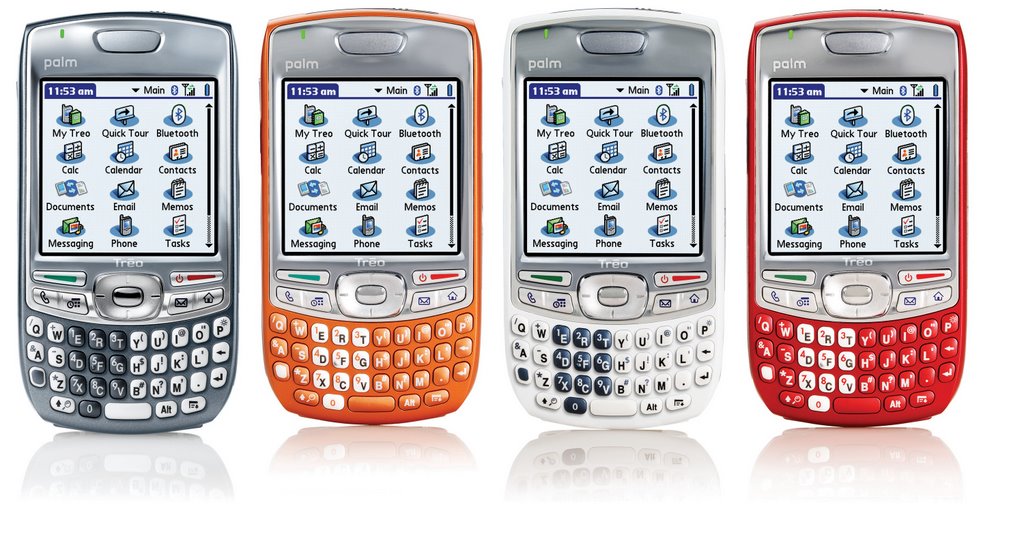
Its a step in the right direction, but there are better PalmOS devices out there. Details from Palm of the Treo 680 here, image courtesy of Palm.
Many of the people who will move to a CapitalOne card will be in a bit of a bind and looking to consolidate debt at a lower interest rate. The marketing campaign tries to catch prospective consumers in more positive frame of mind by targeting those people who are looking to transform their lives. Its a smart move and helps to remove some of the parasitic nature that has tainted consumer perceptions of the CapitalOne brand.
The credit card industry has usually been based on blitzkrieg direct mail campaigns and cut-throat promotional rates that create customer churn.
Palm have belatedly entered the middle market with a cheaper smartphone. According to CoolHunting the phone corrects many of the deficiencies of the Treo 650. Engadget has a blow-by-blow account of the press conference and there was some interesting omissions:
- No price announced for the device
- No wi-fi
- No Skype (but then carriers will block VoIP running over GPRS, EDGE or 3G so no point)
- No news on Mac synchronisation
Some tie-ins with Yahoo! Music, Google and eBay, but no tie-in with Flickr or PhotoBucket so it probably features the usual Palm crapmera.
The lack of an aerial and curves improve the tactile nature of the phone, but the materials and finish still look cheap. Palm could take some lessons in product design from Nokia or Apple to get the look and feel of materials improved.
Its a step in the right direction, but there are better PalmOS devices out there. Details from Palm of the Treo 680 here, image courtesy of Palm.
Labels:
advertising,
financial services,
gadgets,
hardware,
marketing,
mobile,
palm,
wireless
Monday, October 09, 2006
Tyranny of an even smaller minority

When I worked at Yahoo! Europe, I had the chance to meet Eckart Walther on a press trip to the corporate mother ship in Sunnyvale. When discussing the difference between conventional web search and social search provided by the likes of Yahoo! My Web, del.icio.us and Digg; he talked about the tyranny of the minority.
The tyranny of the minority is where webmasters via their outlinks to other sites processed through Google's page rank and other similar processes determine what sites we see when we use web search.
Social search was supposed to lead to a tyranny of the majority were user-generated outlinks provide a form of consumer emancipation. However, having listened to Peter Morville's speech at O'Reilly Emerging Tech conference over at IT Conversations, I started to think about this concept again.
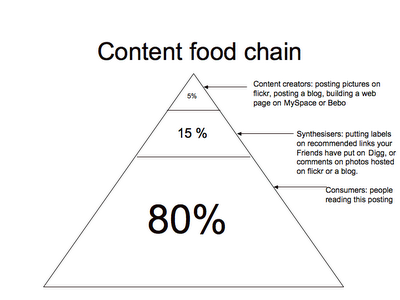
Social search is still the tyranny of the minority, possibly even a smaller minority. I heard Bradley Horowitz break down web users into three broad groups: consumers, synthesisers and creators, which he presented via the image I have recreated above. So we have replaced a theoretical minority with a constituency of five per cent or less with one that draws on up to 20 per cent of the online population.
However, like Google page rank were not all votes are created equal, but links from important sites carry more weighting you get a similar effect social search. This is the reason why Jason Calacanis was interested in poaching the top 12 Digg-ers for the new social search component of Netscape.com.
Social networks are built around people who are super-connected, in addition if you get some of these super-connectors who are also creators or synthesisers then you have a much more heavily weighted vote.
For example BoingBoing has a readership of over well over a million every day. I will bookmark some of the sites that they recommend, as will many of the other people who use MyWeb so that you will have tens or hundreds of people with the same book mark. That isn't a heavy vote, its swinging an electoral ward like Boss Daley in Chi-town.
Or that the top ten Digg users are responsible for 30 per cent of home page stories. Or the network of emails that flies around between prominent bloggers with ideas and links for each other.
No I am not saying that there isn't value in social search, but I wonder how much there is for Joe Six-Pack who isn't a web early adopter? Does it mean in real terms that public web will get smaller as millions of pages of content are ignored?
From a PR perspective it means that we have a new media - influentials that are considerably less numerous than journalists, who may not realise their status for a particular area and that we may have trouble getting in touch with.
It is easier to contact bloggers because they can be found but how do you get in touch with your most influential linker on del.icio.us, Digg or reddit? What is ethical behaviour and what inducements can be offered?
Labels:
influencers,
marketing,
media,
online,
pr,
social search,
technology
Wednesday, September 27, 2006
Cool Stuff
NBC's new TV show Heroes is being promoted with a graphic novel online here. Check it out.
See Nokia's launch of the N95 in New York, it has a great video interview featuring luminaries including Ben Hammersley. I love the speakers line: "it has GPS, it has HSDPA it has blah, blah, blah, blah. You thing of any acronym in the industry the N95 has it" - Finnish humour at it's best (or too much vodka.)
Labels:
advertising,
marketing,
media,
viral
Sunday, September 24, 2006
Palm for sale

The blogosphere have a reiteration of speculation that has been happening for years that someone (insert favorite supplier here) is going to buy Palm. This time the rumor is about Motorola following on from its Symbol acquisition to purchase Palm. Whilst this could be highly desirable for Palm's shareholders, one does have to look at the motivations of the potential buyers (usually Motorola or Apple are cited):
- Product design: both Motorola and Apple have enough smarts in this area, as has Nokia, RIM and Sony Ericsson. In addition, players like HTC mean that companies can now buy in ‘iconic’ design a la T-Mobile. In addition Palm is said to be relying heavily on a Chinese design company for its new cheap Treo, not exactly what you'd expect from a company with a strong product design team
- The brand: the Palm brand lives on though it was built on machines made six plus years ago based on a software platform and user experience that Palm has since read the last rights to as it continues its Windows migration. The Treo brand is a valuable competitor brand to RIM, and may be attractive to aggresive entrants into the US marketplace like Nokia, Samsung, LG or one of the many hungry Chinese(both Taiwan and communist China) players Ningbo Bird, BenQ, Lenovo or Acer
- Software: Palm has burnt the biggest asset the UI with its sale to Access, however the company does have useful experience for a Chinese buyer in localisation for carriers and a shiny new Dublin centre for European market entry. For Motorola a purchase of Access the current owner of PalmSource would be more likely as this would fit in with the company's ambitions to grow market share in Asia and be a progressive move for its existing Linux phone offering in China
- Distribution and carrier relationships: Handspring invested a lot of time building carrier relationships in the face of strong competition from traditional handset manufacturers. These relationships would be invaluable for a new entrant player. In addition, Palm used to have a wide (though sometimes ineffective) retail reach for its devices. Six years ago, Palm products were the number one selling item in Dixons (DSG) stores airside at British airports and on Virgin Atlantic flights
If you want to know who is most likely to buy Palm, look East.
UPDATE (26/9/2006)
I have just read the transcript from Palm's latest financial analyst briefing and it didn't fill me with confidence. From what I could see, Access are disengaging from the OS business, Palm moving rapidly to becoming a Windows only shop with little differentiation. The company is milking loyal Palm customers as a cash-cow but not offering them much in return. This is like Apple circa 1997, but without the happy ending.
Wednesday, September 20, 2006
Here comes the rain
Yahoo! has warned that online media sales were on the low side. I must admit the new marketing campaign to give a K-Mart-style voucher for a cup of joe from Dunkin' Donuts in order to win viewers away from Google, YouTube and MySpace seemed a bit lame - I bet Soho Square and Ogilvy got paid a mint for that one.
I can see how it effectively communicates the 'human, fun, irreverent, simple, modern, approachable, trustworthy and striving' brand values of Yahoo! (not).
Word to the wise, people who clip coupons for a cup of coffee are not likely to be the most attractive users for advertisers or personify the funky image you want to portray - think time-rich, cash-poor blue-collar grandparents or security guards.
Merits of the campaign aside, it also indicates that bottomless growth is no longer the vogue in internet land. Couple that with larger than healthy inventories for the semiconductor sector and you have indicators of a technology slowdown or recession early next year.
Only yesterday it seemed like 1998 again, now it seems like November 2000.
I can see how it effectively communicates the 'human, fun, irreverent, simple, modern, approachable, trustworthy and striving' brand values of Yahoo! (not).
Word to the wise, people who clip coupons for a cup of coffee are not likely to be the most attractive users for advertisers or personify the funky image you want to portray - think time-rich, cash-poor blue-collar grandparents or security guards.
Merits of the campaign aside, it also indicates that bottomless growth is no longer the vogue in internet land. Couple that with larger than healthy inventories for the semiconductor sector and you have indicators of a technology slowdown or recession early next year.
Only yesterday it seemed like 1998 again, now it seems like November 2000.
Labels:
advertising,
business,
economics,
marketing,
online,
social media
Wednesday, August 30, 2006
I am curious oranj

El Reg has caught up with Orange's mod your mobile campaign. I am sure the programme is designed to crank up the ARPU (average revenue per user) amongst Orange users and get some positive word-of-mouth karma about the brand.
Mobification - the art of modifying your phone: from painting it to adding a screen cleaner and Hello Kitty pendants, a Reebok lanyard from Romford market or a new ringtone is sweeping the chav nation.
With almost 90 per cent of those surveyed (for a press release) admitting to at least altering their ring tone.
Iain Tait of Poke London has been involved in running an online campaign to highlight the MaxPower version of mobification for Orange here.
Mobification - the art of modifying your phone: from painting it to adding a screen cleaner and Hello Kitty pendants, a Reebok lanyard from Romford market or a new ringtone is sweeping the chav nation.
With almost 90 per cent of those surveyed (for a press release) admitting to at least altering their ring tone.
Iain Tait of Poke London has been involved in running an online campaign to highlight the MaxPower version of mobification for Orange here.
Labels:
branding,
jargon watch,
marketing,
online,
orange
Monday, August 28, 2006
Links of the Day

Some interesting links that I found in my inbox:
Google is launching services for businesses including including your domain branded email and calendars, with a view to moving on to hosted word processors and spreadsheets.
The article thinks that this will hurt Microsoft, I think that the impact to the ecosystem will be much more diffuse. It takes away the need to pirate basic business software and is most likely to hit IT support companies as opposed to Microsoft itself.
In addition if companies are using the web browser as the front door to their applications then they don't need to upgrade desktop and laptop computer hardware quite so often.
Thanks to Bradley Horowitz for the heads up.
In the New York Times there is a great and disturbing article about how the American middle and lower classes are having their wages squeezed. Their wages have declined in real terms. Despite organisations claiming that people are their greatest resource, wages now constitute the lowest percentage of company costs than at any time in the past 50 years.
So even though business is doing very well it will affect consumer spending, consumer confidence and lead to an erosion of political support for incumbent politians. More from the New York Times Real Wages Fail to Match a Rise in Productivity by Stephen Greenhouse and David Leonhardt.
The BBC Click Online team have written a great overview on how technology is bringing ambient and instore advertising into the 21st century. Click here (if you'll forgive the pun).
Google is launching services for businesses including including your domain branded email and calendars, with a view to moving on to hosted word processors and spreadsheets.
The article thinks that this will hurt Microsoft, I think that the impact to the ecosystem will be much more diffuse. It takes away the need to pirate basic business software and is most likely to hit IT support companies as opposed to Microsoft itself.
In addition if companies are using the web browser as the front door to their applications then they don't need to upgrade desktop and laptop computer hardware quite so often.
Thanks to Bradley Horowitz for the heads up.
In the New York Times there is a great and disturbing article about how the American middle and lower classes are having their wages squeezed. Their wages have declined in real terms. Despite organisations claiming that people are their greatest resource, wages now constitute the lowest percentage of company costs than at any time in the past 50 years.
So even though business is doing very well it will affect consumer spending, consumer confidence and lead to an erosion of political support for incumbent politians. More from the New York Times Real Wages Fail to Match a Rise in Productivity by Stephen Greenhouse and David Leonhardt.
The BBC Click Online team have written a great overview on how technology is bringing ambient and instore advertising into the 21st century. Click here (if you'll forgive the pun).
Labels:
advertising,
brand,
branding,
business,
economics,
google,
marketing,
web services
Clients are from Mars, agencies are from Venus

I found this really interesting posting on Tim Dyson's blog. Dyson was discussing the problem that start-ups want to purchase PR, get the creme of PR talent working on their account and pay a pittance.
Andrew, apparently the CMO of a start-up posted the following comment (his text in italics, my own notation in normal text):
Tim has a great post on the multitude of start-ups with $10,000 to spend on a PR agency. OK, I'm one of them. It just seemed like such a nice round number to start with. Somehow it's crept-up a little bit though... Must fix that...
Tim is right (he is right on most things)... we all want PR pros. But I don't want $15,000 dollars worth of service. I don't even know what that is!
I want results. I don't care what it costs or whether an agency has to under or over service to deliver it. I just want results against the agreed budget.
You commit, I commit, we all commit together.
What is more troubling to me as a Valley CMO is:
1) finding a great agency is bloody hard work. They are few and far between. At any billing rate. Few CMOs I know get the value of PR or AR, let alone the value of a good agency... I accept we are part of the problem, but...
2) finding an agency that gets your business and has a real enthusiasm for contributing to the growth of the business - harder still
3) finding an agency that understands that great ideas get funded - near impossible. They are caught in the conundrum or belief that ideas require budget prior to being generated. Bullshit. (and I am talking about real ideas, not those regurgitated from the last pitch)
4) finding a team that can explain why they should get paid more and then associate some kind of outcome with the result - well, if you find them, let me know. The most common justification - "we've been over servicing your business for six months now, you need to pay us more" - is nuts. Nuts!
5) finding an agency - the word is a bit of an oxymoron. It implies some kind of powerhouse of ideas and execution - the strength of a team.
What you generally end-up funding is one very dedicated individual surrounded by some other folks - generally you aren't quite sure what they are doing but they all arrive for meetings and scribble madly into notebooks.
What is needed is a new kind of agency. One not built on billable hours and 10k budgets. Maybe one built on the power of ideas to drive a startup's growth curve? One with the courage and conviction to articulate a value proposition that resonates with the CMO of a start-up and ability to explain what the budget should be.
You see, we live less in the conceptual world of brand and reputation and more in the real world of qualified opportunities, pipeline growth and time to sale. Until then, 10k sounds like a nice round number to start with. Agencies shouldn't let it end there. We will pay more. And I am willing to put my money where my mouth is.
This post was interesting for me as it highlights the huge gulf between clients and agencies:
Andrew, apparently the CMO of a start-up posted the following comment (his text in italics, my own notation in normal text):
Tim has a great post on the multitude of start-ups with $10,000 to spend on a PR agency. OK, I'm one of them. It just seemed like such a nice round number to start with. Somehow it's crept-up a little bit though... Must fix that...
Tim is right (he is right on most things)... we all want PR pros. But I don't want $15,000 dollars worth of service. I don't even know what that is!
I want results. I don't care what it costs or whether an agency has to under or over service to deliver it. I just want results against the agreed budget.
You commit, I commit, we all commit together.
What is more troubling to me as a Valley CMO is:
1) finding a great agency is bloody hard work. They are few and far between. At any billing rate. Few CMOs I know get the value of PR or AR, let alone the value of a good agency... I accept we are part of the problem, but...
2) finding an agency that gets your business and has a real enthusiasm for contributing to the growth of the business - harder still
3) finding an agency that understands that great ideas get funded - near impossible. They are caught in the conundrum or belief that ideas require budget prior to being generated. Bullshit. (and I am talking about real ideas, not those regurgitated from the last pitch)
4) finding a team that can explain why they should get paid more and then associate some kind of outcome with the result - well, if you find them, let me know. The most common justification - "we've been over servicing your business for six months now, you need to pay us more" - is nuts. Nuts!
5) finding an agency - the word is a bit of an oxymoron. It implies some kind of powerhouse of ideas and execution - the strength of a team.
What you generally end-up funding is one very dedicated individual surrounded by some other folks - generally you aren't quite sure what they are doing but they all arrive for meetings and scribble madly into notebooks.
What is needed is a new kind of agency. One not built on billable hours and 10k budgets. Maybe one built on the power of ideas to drive a startup's growth curve? One with the courage and conviction to articulate a value proposition that resonates with the CMO of a start-up and ability to explain what the budget should be.
You see, we live less in the conceptual world of brand and reputation and more in the real world of qualified opportunities, pipeline growth and time to sale. Until then, 10k sounds like a nice round number to start with. Agencies shouldn't let it end there. We will pay more. And I am willing to put my money where my mouth is.
This post was interesting for me as it highlights the huge gulf between clients and agencies:
- Clients are only interested in 'transactional' marketing communications; PR can create awareness, but it isn't direct response in the same way that Google ads or the home shopping television is. PR creates awareness, anything else is a bonus
- These companies often don't need PR, but instead a decent direct response marketing campaign, but PR is viewed as being cheaper and 10,000 USD is a nice number to fit into the start-up's business plan Excel spreadsheet
- Clients want agencies to drink the kool-aid, the amount of time that I have been told that a client's offering is unique when it isn't; is staggering. Many times the differentiator that the company has, provides not benefits to the customer. Consultancies, in order to consult, need to be well informed and objective. Otherwise the advice that we give clients will be flawed
- PR is often seen as a silver bullet that can solve a flawed product or an under-funded product. It can't
- Between 80 and 90 per cent of start-ups will fail, consultancies know this. We know that you are likely to flame out, be sold in a fire-sale, VC funds will often 'merge' start-ups to try and save their dignity
- We know that many of the businesses real product is the business itself. It often isn't about sales, its all about one sale to a particular target customer (Google, Cisco, Yahoo!, IAC, Microsoft: delete as appropriate) as you try and flip your business
- About blind belief: I remember an agency that believed and took equity in its clients including Boo.com as part payment for its services. Its employees were given this equity instead of a pension fund. Not surprisingly the agency went bust and many of its staff got burned in the process
- Brand isn't a conceptual element, however its not PowerPoint-friendly quantitative data that direct response marketing campaigns kick out. It's the reason why many companies include the value of their brands in the goodwill section of their accounts
- Skilled PR practitioners cost money, this is due to demand and an exodus away from the industry during the last dot.com bust, in fact a good PR person is harder to find than a marketer because marketers are jack-of-all-trades but master of none
- Whilst ambulance chasing lawyers will often work on no-win, no-fee; their more reputable colleagues bill on time and materials. Common sense would tell you to get the best lawyer that you can afford. PR is a professional service similar to law in this respect
Saturday, August 26, 2006
PR: getting to gripes

The US Council of PR is about to talk about the thorny issue of client conflict according to Tim Dyson soon, and Edelman a PR company that has a number of conflicted clients under its roof had decided not to renew its membership. Connection?
Some six years ago when I worked at Edelman we used to say that two was a conflict but three was a specialism. This was particularly true with regards to the roster of management consultancies that the technology team had on its books: Arthur D Little, Cap Gemini Ernst & Young and DiamondCluster International. I worked on both Cap Gemini and DiamondCluster at the same time.
It is interesting that Tim Dyson of NextFiveteen mentions Edelman's expertise in conflicts yet fails to mention his own agency Bite, who in London have Samsung, Toshiba and Apple all in the same building.
Indeed I write this not to be critical of Edelman's approach. Instead I just wish there were some clear standards on what was deemed an acceptable way of managing conflicting clients.
Is the expertise of Bite's London office not making it around the network despite Clive Armitage and Judy Wilks moving Stateside over the years? And could this targeting of Edelman have anything to do with Richard spurring some cheque book driven growth with the purchase of A+R Partners? ;-)
As an industry, PR spends a lot of time talking about the value of brand to our clients, but what about our own agency's brand? I had an interesting experience on Thursday evening at the T3 birthday party; ran into a PR person who was reluctant to admit where they worked.
Not the usual banter about being reluctant to admit that they were a paid shill in the company of journalists. Not that they tried to hide the fact that they were an in-house PR person so that I didn't try and beat them into signing a three-year rolling agency-of-record contract with my employer. They were concerned by the reaction of their peers (ok me and my team mate Alex) if they revealed the agency where they worked.
That's pretty poor, how can we as an industry expect to be the brand guardians of our clients when we are reluctant to admit where we work?
UPDATE
I am going to close out further comments on this post now as both sides have made their point and there is no point in having a flame war by proxy. Understandably if you feel that I curtailing the conversation email me at the address listed in the header and I promise to post the best views for and against editiorial censorship on blogs.
Some six years ago when I worked at Edelman we used to say that two was a conflict but three was a specialism. This was particularly true with regards to the roster of management consultancies that the technology team had on its books: Arthur D Little, Cap Gemini Ernst & Young and DiamondCluster International. I worked on both Cap Gemini and DiamondCluster at the same time.
It is interesting that Tim Dyson of NextFiveteen mentions Edelman's expertise in conflicts yet fails to mention his own agency Bite, who in London have Samsung, Toshiba and Apple all in the same building.
Indeed I write this not to be critical of Edelman's approach. Instead I just wish there were some clear standards on what was deemed an acceptable way of managing conflicting clients.
Is the expertise of Bite's London office not making it around the network despite Clive Armitage and Judy Wilks moving Stateside over the years? And could this targeting of Edelman have anything to do with Richard spurring some cheque book driven growth with the purchase of A+R Partners? ;-)
As an industry, PR spends a lot of time talking about the value of brand to our clients, but what about our own agency's brand? I had an interesting experience on Thursday evening at the T3 birthday party; ran into a PR person who was reluctant to admit where they worked.
Not the usual banter about being reluctant to admit that they were a paid shill in the company of journalists. Not that they tried to hide the fact that they were an in-house PR person so that I didn't try and beat them into signing a three-year rolling agency-of-record contract with my employer. They were concerned by the reaction of their peers (ok me and my team mate Alex) if they revealed the agency where they worked.
That's pretty poor, how can we as an industry expect to be the brand guardians of our clients when we are reluctant to admit where we work?
UPDATE
I am going to close out further comments on this post now as both sides have made their point and there is no point in having a flame war by proxy. Understandably if you feel that I curtailing the conversation email me at the address listed in the header and I promise to post the best views for and against editiorial censorship on blogs.
Saturday, August 19, 2006
Marketers kill yourselves, no seriously I mean it
Thanks to Drew who looks after Office Attachments for this great bit of machinima as advertising. Coke and Grand Theft Auto, not an obvious link; which is why this parody works so well. However it does raise some interesting questions for marketers and games developers.
Is it worthwhile for marketers to commission machinima based viral ads? What about the intellectual property rights of the gaming companies of their character likenesses and how would this affect the rights and benefits to in-game sponsors?
Monday, August 07, 2006
Mobile Marketing 2.0

eWeek have a good feature The Age of Sell Phones by Evan Schuman on mobile marketing and more pertinently how mobile marketing can be improved to make it so much better.
Targeted SMS marketing can bring a response of 50 per cent, which is much cheaper and a better response rate than traditional direct marketing.
What is missing is an interactive element in case the offer isn't interesting for the consumer, this would require integration with a more sophisticated CRM system and point-of-sale systems where appropriate.
There is a fear that location-based marketing would be too instrusive and Big Brother-like.
There is an interesting discussion on the future of the phone and the need for smartphones which mobile marketers would find very useful but no corresponding reasons were put forward on why consumers would want one.
Opt-in agreements are full of risks because consumers may not be fully cognisant of what they are signing up for. Its not like email marketing where an email, is an email, is an email.
Picture courtesy of the nice people at Motorola.
Targeted SMS marketing can bring a response of 50 per cent, which is much cheaper and a better response rate than traditional direct marketing.
What is missing is an interactive element in case the offer isn't interesting for the consumer, this would require integration with a more sophisticated CRM system and point-of-sale systems where appropriate.
There is a fear that location-based marketing would be too instrusive and Big Brother-like.
There is an interesting discussion on the future of the phone and the need for smartphones which mobile marketers would find very useful but no corresponding reasons were put forward on why consumers would want one.
Opt-in agreements are full of risks because consumers may not be fully cognisant of what they are signing up for. Its not like email marketing where an email, is an email, is an email.
Picture courtesy of the nice people at Motorola.
Labels:
advertising,
marketing,
media,
mobile
Sunday, August 06, 2006
Perception is reality

Mark Sweney writing for the Media Guardian has an interesting article on major online brands based on data from Hitwise: Google struggles to redefine brand.
First of all the ceveat, Hitwise's data is considered by some within the online space to be less respected than Nielsen Net Ratings and ComScore.
Having examined search term data Hitwise has found that consumer perceptions of the major online brands in the UK are pretty static:
There is also the challenge of breaking learned behaviours like Googling, I have been using Google since 2000.
With Messenger, once you have a set of friends on a messenger service you are unlikely to move. At home I have to use Adium to look after friends that I have spread across GTalk/Jabber, AOL/iChat/ICQ, Yahoo! and MSN and then run Skype separately.
The situation is pretty much the same with email, once people have your address, its a hassle to change it. However my situation is atypical because I have a large loose network of friends and would fit in the early adopter/early majority phase of technological adoption.
It did make me wonder if the online market is now more stratified and mature than online brands realised? Google had made inroads with Video, mainly because this was a new market sector so the switching costs or changes in learning behaviour where not that high. Maybe Yahoo! Answers will be a similar breakthrough product?
I am currently reading Blue Ocean Strategy by W Chan Kim and Renee Mauborgne and will review it on the site once I have finished it; however my initial thoughts are that it outlined processes that the online giants could learn from.
First of all the ceveat, Hitwise's data is considered by some within the online space to be less respected than Nielsen Net Ratings and ComScore.
Having examined search term data Hitwise has found that consumer perceptions of the major online brands in the UK are pretty static:
- Google is associated with search
- Yahoo! with its portal media properties and its affiliate/distribution deal with BT
- MSN with messenger
There is also the challenge of breaking learned behaviours like Googling, I have been using Google since 2000.
With Messenger, once you have a set of friends on a messenger service you are unlikely to move. At home I have to use Adium to look after friends that I have spread across GTalk/Jabber, AOL/iChat/ICQ, Yahoo! and MSN and then run Skype separately.
The situation is pretty much the same with email, once people have your address, its a hassle to change it. However my situation is atypical because I have a large loose network of friends and would fit in the early adopter/early majority phase of technological adoption.
It did make me wonder if the online market is now more stratified and mature than online brands realised? Google had made inroads with Video, mainly because this was a new market sector so the switching costs or changes in learning behaviour where not that high. Maybe Yahoo! Answers will be a similar breakthrough product?
I am currently reading Blue Ocean Strategy by W Chan Kim and Renee Mauborgne and will review it on the site once I have finished it; however my initial thoughts are that it outlined processes that the online giants could learn from.
Labels:
brand,
branding,
marketing,
online,
repositioning
Subscribe to:
Posts (Atom)