Sunday, December 25, 2005

Seasons greetings


Merry Christmas

President of Ireland's Christmas message (thanks to Liam and the team at the Irish Emigrant)


Teachtaireacht na Nollag o Uachtaran na hEireann Ag am seo na Nollag cuirim beannacht om' chroi chugaibh as Aras an Uachtarain. Spreagann spiorad na Nollag muid chun ceiliuradh a dheanamh ar gach rud ata maith agus fonta inar saol, go hairithe sa bhaile, sa phobal agus sa chomharsanacht ina maireann muid. Cuireann daoine stro orthu fein chun teacht le cheile i ngrupai teaghlaigh agus cairde ag an am seo den bhliain, ach is ann doibh siud nach feidir leo. Is mor an togail croi e an oiread sin daoine a fheiceail ag obair go deonach chun solas agus sochas a thabhairt do dhaoine ar an ghannchuid no ar bheagan misnigh. Tharla tubaisti go leor ar fud an domhain i rith na bliana ata direach caite, agus idir iad agus chogadh agus anachain fagadh moran daoine briste bocht. Ach ni raibh muintir na hEireann ar chul lena gcuidiu i gcas ar bith. Ba mhor an chuis mhortais agus mhisnigh e flaithiulacht na nGael i ndiaidh achan tragoide, ba chuma ce chomh mor no ce chomh beag. Smaoinimid anois ar na daoine bochta sin a raibh ar gcuidiu chomh mor sin de dhith orthu i rith na bliana; agus smaoinimid fosta orthu siud a thainig i gcabhair orthu ar bhForsai Cosanta agus ar n-oibrithe deonacha ina measc. Murab ionann agus go leor aiteanna eile ar chlar na cruinne, ta Oilean na hEireann ag eiri nios rathula agus nios suaimhni i rith an ama. Ba mhor an cuidiu e fogra dichoimisiunaithe an IRA Mean Fomhair seo caite chun sochai siochana a chruthu agus a chothu. Mo mhile buiochas le gach uile dhuine agaibh a d'oibrigh ar son na siochana. Go mbaine sibh uilig sult agus su as a bhfuil cruthaithe agaibh. Anois agus muid ag cur smear mhullaigh ar a bhfuil le reiteach againn fa choinne na Nollag, iarraim oraibh a bheith curamach agus tuisceanach ar na boithre agus ar na sraideanna, chun go mbeidh seans ag gach duine sult a bhaint as seasur na siochana. Guim Nollaig mhor mhaith ar gach uile dhuine agaibh, agus bliain ur faoi rath agus faoi bhlath. Maire Mhic Ghiolla Iosa Uachtaran na hEireann _________________

Christmas Greetings from the President of Ireland
At this Christmas time, I send you warmest greetings and good wishes from Aras an Uachtarain. The spirit of this Yuletide season inspires us to celebrate everything that is good in our lives and in particular in our homes, communities and neighbourhoods. Families and friends make a special effort to gather together to show their care for one another and it is very heartening to see that there are many who make it their business to bring hope and comfort to the poor and the vulnerable for whom this can be a particularly difficult time. In the past year we witnessed the awful suffering caused by natural disasters, conflict and poverty in many parts of the world and we saw how generously Irish people of all ages responded to the suffering of strangers. Their greatness of heart and their solidarity with those in need are a source of considerable pride and reassurance. The people of those tragic countries are in our thoughts and prayers this Christmas time, as are all those working courageously on their behalf, among them our own Defence Forces and aid workers. If peace and prosperity are elusive dreams for too many people across the globe, they are now, at last, a precious reality for those who share this island. Last September's historic announcement of IRA decommissioning was a crucial step towards creating a climate in which trust and friendship can flourish and grow as never before. I thank everyone who has worked for peace and I pray that your work will be rewarded by the fullest use of the hard-earned opportunities that now exist to build a future for all to be part of and proud of. As the wrapping goes around the last of the presents and the countdown starts to Santa's arrival, please keep each other safe on the roads and on our streets so that this Christmas will bring only happiness and joy into every home. I wish each one of you a Happy Christmas and a peaceful, contented and prosperous New Year. Mary McAleese President of Ireland

Finally, spare a thought for those that aren't able to enjoy Christmas this year, such as the hard-pressed lawyers of east coast law firm Burns & Levinson who will be chained to their desk via a BorgBerry device. More details of their inhumane treatment courtesy of the
Boston Globe. You can send your bah humbug emails to managing partner and modern-day Ebenezer Scrooge David Rosenblatt.

Saturday, December 24, 2005

London's loss is Gotham's gain and other media mutterings

Yinka Adegoke is joining Reuters in New York to write about new media stuff. NMA are apparently shuffling the cards and the role of deputy news editor is likely to be filled by an internal candidate.

From: Yinka Adegoke [mailto:yinka.adegoke@centaur.co.uk]
Sent: 23 December 2005 12:02
To: PR...
Subject: Leaving...

Good people,

This is a short note to let you know I'm leaving NMA early January after six exciting years chronicling the digital media industry.

I will still be covering the area with Reuters in New York from mid-January as part of the technology, media and telecoms team.

I wanted to take the opportunity to thank you for your help over the last few years. It's been a pleasure working with you in London and I expect we might be working together again in the near future one way or another.

A leaving do date will soon be confirmed as well as any new contacts at NMA.

I'll also soon confirm my new email address.

Many thanks again.

Best
Yinka
P.S: Oh yes, Merry Xmas and best of luck in 2006!

Yinka Adegoke
Deputy Editor, New Media Age
Dir Line: +44 (0) 207 970 4845/Mobile: +44(0)7730 426 761
50 Poland Street, London
W1F 7AX

A snippet in the media section of the Evening Standard a few weeks ago mentioned that Today (Eddie Shah's homage to USA Today) is to be revived by News International in a bid to go head-to-head with The Express. I wonder how much fury pornographer-in-chief Richard Desmond will vent if this proves to be the case.

Don't worry Richard if the newspaper business fails you can take your one-man reenactment of the Nuremberg Rally to the Edinburgh Fringe.

Friday, December 23, 2005

Some links for y'all


Chicano rap group Delinquent Habits have a great website here with some choice cuts with some of the best DJ and production skills I have heard in years.

Their album Here Come the Horns is a staple on my iPod.

Poke London's creative director Iain Tait has his blog here, it makes interesting reading on the whole web shiznitz.

Picture courtesy of Pit Bull Rescue Central.

Thursday, December 22, 2005

My Ten Films of 2005


Its that time again, over at the Rosemont Loving Johnny has posted his personal top-ten films of 2k5 in no particular order.

Heres ours:
  • Assault on Precinct 13 - a great action film and Drea DeMatteo in a short skirt, it doesn't get much better
  • Night Watch - Russian, mad and great
  • The Good, The Bad and The Ugly - ok, so not a cinema release, but MGM's revamping of the Sergio Leone classic put back in deleted footage featuring redubbed dialogue by Eli Wallach added more depth to the film
  • Good Night and Good Luck - my favourite film from the London Film Festival, directed by George Clooney
  • Team America: World Police - shot in a supermarionation-type style but with all the rude bits that The Thunderbirds missed out and political satire as well
  • Crash - Great narrative kind of like Magnolia that told interconnecting stories in an entertaining way
  • Kung Fu Hustle - this film took elements of Western and Eastern cinema to laugh at itself, like a mash-up of Zu Warriors from the Magic Mountain meets the Matrix
  • The Constant Gardener - John LeCarre's book was given a sympathetic film treatment and looks spectacular, I did come out feeling cheated: I was supposed to be shocked and surprised by the content but I wasn't
  • Kingdom of Heaven - Ridley Scott made Orlando Bloom seem like a credible action figure. Much of the film was supposed to be commentary on the West's mistreatment of the house of Islam. In reality it was an entertaining adaption of Beau Geste in chain mail.
  • Batman Begins - Christian Bale as the dark knight of Gotham and Liam Neeson as a bad guy were very impressive but Cillian Murphy as the scarecrow was the real showstopper

Wednesday, December 21, 2005

Santa Claus endorses sportswear brand shocker


Clever marketing by the adidas boutique on Newburgh Street. Their Christmas card is based on the old adidas endorsed tongue design featuring Santa Claus. I liked it because of the brand association and the humour.

Tuesday, December 20, 2005

It's late and I am tired...


It's late and I am tired so I am going to keep this brief. The folks over at Silicon.com demonstrated this piece which is a way of telling PR to stop sending them more of the same 'non-stories' over and over again. Not too sure it will do any good though.

Monday, December 19, 2005

Shamrocks and shenanigans


I couple of weeks ago, I went back to see the family in Ireland. It was an interesting trip of contrasts. The country was full of contradictions:
  • The country is growing at an unpredented rate,and the industrial estates look as if they haven't been finished yet, but that hides the fact that the manufacturing plants in the country are closing up shop and moving to Eastern Europe where there is cheaper labour
  • Jobs are plentiful, but over 100,000 were protesting on the streets at moves by Irish Ferries to employ foreign workers. Ryanair is alleged to be considering a similar move
  • Property is a bigger boom industry than it was in the UK during the late 1990s, yet to quote my source "you can get whatever planning permission you can afford"
  • A ban on smoking in public places was designed to improve the health of the people, yet the only side-affects seen have been, a drop off in tourism with the loss of 48,000 jobs, a decline in pubs and bars and an explosion in off-licences as people smoke and drink at home instead
  • A vibrant media industry, yet everywhere that I went the television was tuned to Sky Sports or Sky News
  • The country is one of the worlds leading exporters of software, yet it is very hard to get a broadband connection
  • For a young tech savvy population e-commerce is still not very well developed. Business still seems to be transacted by phone.
  • For a country that has benefited most from the EU, the union is also being blamed for a lot of pain. Like the fact that from 2008, Irish people will not be able to cut turf in their own land; they will be still allowed to burn turf as a solid fuel

So Far, So Good....


I hadn't checked in on Richard Edelman's Speak Up blog for an indecently long time. His blog entry I am even more certain that now is our time made some interesting reading, I suspect for different reasons to what Richard would have expected.

Key Take Out Points
  • Deflation in the media industry - the same amount of advertising inventory is being sold, but for less money (two per cent less, I don't know if this is an absolute number or if it factors in inflation as well)
  • Media companies are experimenting to find ways of increasing the monetisation of content by providing niche content: podcasts, a la carte articles without advertisements. These efforts seem to be focused on the consumer, whereas the run of thumb was that some 70 per cent of the medias revenue came for advertisers
  • Move from push to pull for marketing information: consumers under 30 do not want to be advertised to (who does?), but want to seek out information for themselves.
  • WOM - word-of-mouth marketing is the new nirvana for marketers (has the delicious promise of eyeballs for nothing - music to the ears of a cash-strapped PowerPoint monkey). PR is considered by P&G as the key tool in the armoury for this; Wachovia Bank puts PR second behind internet advertising
  • Consumer is a mis-leading label, let the people make their own content a la Flickr, Digg etc rather than being feed from the media trough
  • Journalistic values giving way to Gonzo approach - There is no single or simple truth--the dialectical tension should be understood. Authority of media brands is no longer a given--convenience and what's cool may be more important to news brands. Authenticity is at a premium. Note the benefit to CNN and Anderson Cooper from Hurricane Katrina coverage, which was an honest voice reporting, with all of its raw emotion and advocacy. Another first for the counter-culture and the adult entertainment industry which has for years provided content with a participant PoV from Tom Wolfe and Hunter S Thompson to Seymour Butts
  • Traditional media companies cannot survive on the advertising from their new media versions--they must get a piece of the eventual transaction. Pay-per-click or some equivalent mechanism?
  • Europe is 6-18 months behind the US in move toward new environment, with France and the UK ahead of Germany, Italy and Spain.
Richard recognised a number of things that his business needed to do:
  • Answer the question of how PR is relevant to this new environment, PR historically has had a symbiotic relationship with traditional media as a shaper of content and story provider
  • Move the tone from selling to factual: to be honest this is the way I have been doing PR for years
  • Try and tap into prosumers and use client employees as evangelists a la Microsoft and Sun's blog charm offensive
  • Social networks are important - he admits he doesn't have the answer on dealing with them.
Some things I felt Richard missed out:

  • How will PR be affected by the downturn in the media?
  • How will the blogosphere handle the downturn of the media? A lot of the content that it links to comes from traditional media companies that happen to use blogs to publish their content.
  • Broadcast media still has an advantage for high interest content: news headlines or big sports events. Much of the UK web took a hammering during the July 7 bombings, but broadcast television and radio kept on trucking.
  • How will PR answer the essential question, why should I invest in PR when I can invest in a more transparent media like Adsense?
  • Is offshoring the best way of bringing PR to bear on the myriad of social networks?
  • How long is it before consumers become blog-savvy and reject this content looking for more authenticity? How invasive is PR prepared to become?
Why the title of this posting?

An old joke that seemed strangely appropriate: A banker who lost everything in the Wall Street Crash jumps out of his office window, on his way down he kept saying "So far, so good; so far, so good; so far, so g."

I don't want a retraction, I want some retribution


Since the beginning of my PR career, when I when I was media relations grunt in my agency days, if the client wasn't keen on what a journalist had written about their announcement, or taken out of an interview they would ask me to get a retraction.

Usually, the best course of action would be to let the waters cover over the story and move on because journalists always had the last word and it damaged relationships in the longer term.

With blogs, this power balance may have changed, and not for the better.

Entrepreneur Mark Cuban was unhappy with a piece that ran in the New York Times business section: Is Mark Cuban Missing The Big Picture that questioned the wisdom of investing in a cinema chain.

Cuban came back with some blog postings of his own here and here.

From a PR perspective, this concerns me as it means that executives may shoot off a blog entry first and only worry about the corporate reputation once their ego has been put back in the box. At worst, they could tie themselves up in a debased slagging match.

It will then be PR's job to try and clean up the mess. In a few months after, PRs will then be beat up for not doing their job because said executives aren't getting the volume of coverage they want.

What do you think? (Feel free to post a comment below)

Sunday, December 18, 2005

E-Commerce Paradox of Marketing Versus Fulfillment


I am signed up the mailing list of Amazon.co.uk and Amazon.de (mainly because the Germans have cheaper DVDs).

I have noticed over the past few days as the cut-off date for Christmas looms I am being mailed every day by Amazon.co.uk encouraging me to purchase goods from them.

What does this mean?

  • Is this well thought out? (As it brings extra strain on their delivery system just when they don't want it, surely it would have made more sense to create the demand earlier?)
  • Does this mean that they the are in a panic to try and hit their target numbers? (Incidentially The Business has an article about how the Office for National Statistics has no idea of how well or badly online sales are doing, while industry group Interactive Media in Retail Group (IMRG) claims 50 per cent year-on-year growth for November.)
  • How many customers will be prompted to order too late and receive a dissatisfactory experience?

The Long Tail

There are arguments for-and-against Chris Anderson's concept of the long tail and discussions have gone back-and-forth on some of the data points that he has used.

Its one of them ideas that will be trotted out as a cliche, so that strategic thinkers in a business and, or its consultants can avoid having to think for themselves.

It is being shamelessly overused by marketers and business people 'empowered' with PowerPoint as 'The Tipping Point' and 'Crossing the Chasm' have been.

However, I found this sweet interface (pictured) at Last.fm where you can run a slider up and down the tale getting popular to really obscure musical recommendations out of the system. The long tail metaphor provides a really intuitive way of communicating how to use the slider.

Saturday, December 17, 2005

Kanji Selecta

British designers Terratag have got some new funky threads for all you folks mourning the departure of Burro. Their work draws on a number of influences including anime, manga, technology including giant robots and graffiti.

The picture is one of their hooded top designs using a mixture of Kanji script and traditional Japanese imagery with a thoroughly thugged-out cut of a sweatshirt in Crips blue for all y'all 'bangers out there that want to roll in style.

Also check out their wall hangings that mix graffiti and traditional Japanese calligraphy.

Whilst we are on the subject of giant robots and other non-human cultural artifacts there is an interesting article over at Slate.com that talks about how increased realism in games has reduced user enjoyment and character empathy and created gamer discontent.

Jargon Watch

Uncanny Valley - Empathy with gaming characters drops off as they come to a point were they look as if they are close to being real. Our perception of them moves from character to something more disturbing like the undead, and can be become repelled or disgusted. The dip in postive consumer attitude as the character better mimics human life is the Uncanny Valley. The term was originally used to describe a similar human reaction to robots in 1978 by Dr Masahiro Mori.

Paradox of Realism - after a certain point, the closer to reality that the gaming experience gets in terms of graphics and player experience; the harder it is for the game to seem real. This inability to believe makes it harder for the players to fully engage in the game.

Friday, December 16, 2005

Share the Digital Booty

Interesting academic report from Harvard University that talks about how important sharing (as opposed to piracy) will be a key driver for online music services.

In order for online music to fulfil its potential it will rely on online playlists and allowing podcasters or bloggers to be its ambassadors and evangelists by including music in their efforts.


"Sharing isn't equivalent to stealing," said Michael McGuire, research director at Gartner Inc., and a co-author of the report.

The study claims that soon 25 per cent of online music store transactions will be driven by "consumer-to-consumer taste-sharing applications, such as playlist publishing and ranking tools built into online music stores and external sites with links to stores."

Sounds Web 2.0 and the music industry are heading for the kind of crash that an express train would be proud of. Its going to get messy before it gets better and the music industry will have to be dragged kicking and screaming to the future, despite the fact that sharing music in this way is just the digital equivalent of promotions and record plugging.

Kudos to Marketwatch.

Picture courtesy of Toner.

Thursday, December 15, 2005

Brand Deadpool

I was reading a discussion on Soflow.com (registration required) about brands in decline and it reminded me of the Dirty Harry film where celebrities keep getting asassinated and Harry traces it back to a dead pool competiton run by a couple of film industry insiders.

What was interesting was that all the brands named were American , there was no European brands touched by the list.

Weird or these brands are not seen to count by the dozens of marketers on the list?

Danone, Cadburys or McCains could be considered big food too. Unilever has been decimating its brands and selling off many of its iconic businesses in order to provide shareholder value at the expense of the longer term.

Brands marked for death by the group included:
  • McDonalds - due to its obesity credentials
  • Ford Motor Company - because its business is taking a beating
  • General Motors - for performing even worse than Ford
  • Marlboro - what's the point of having a brand that you can't advertise
  • KFC - greasy licking fingers make fat kids and associations with bird flu
  • AT&T - old school telco not fairing too well in a new school world
  • Kodak - digital keeps trumping the analogue world
  • Budweiser - health concerns and it isn't a particularly good beer
  • The Gap - finger is off the pulse of young people
  • Coca-Cola - big food concerns
  • NBA (National Basketball Assoc.) - Player conduct, no Michael Jordan
  • Blockbuster - as technology changes the movie rental model away from bricks-and-mortar stores
  • Virgin - because Branson is the brand
  • H-P - because it has been lost in the wilderness for such a long, long time
The design folks at Wanadoo have an interesting read of a blog called Pixelbox (suitable for a bunch of bit shifters). Anyway check it out here.

Monday, December 12, 2005

Nike steals Adidas' clothes

Nike has finally woke up to the fact that there is more to exploiting its heritage than trying to make Nike Cortez the new Reebok Classic and selling them in JD Sports.

It has taken its iconic Air Max design that fits in as well in the gym as the dancefloor and come up with some striking colour ways. It is selling these limited edition shoes through specialist retailer Size? and launching them with a graffiti exhibition.

In essence the company is trying to steal the clothes of Adidas' Originals range.

The key problems that Nike have is that they don't have a visual identifier like Adidas Originals have with the trefoil. Instead Nike has made its difference by taking a leaf from Sun Tzu's concept of void and actuality; Nike's approach has been understated with greys and blacks contrasting with accents of acid green. Now if they would stop making those god-awful buck rogers designs and bring back their skills that would be progress. Maybe people wouldn't worry about all the children that labour in dangerous factories cranking these out.

Sunday, December 11, 2005

Brief set of Links

I have been away in Ireland on family business and haven't had time to really digest these, but thought I would share some interesting links that had been kicking around my inbox.

The New York Times
has an interesting story
Military's information war is vast and often secretive by Jeff Gerth (December 11th, 2005) that talks about the complex Pentagon/private contractor efforts to wage the hearts and minds war on terror. The article covers a wide range of activity by companies including the Rendon Group and the Lincoln Group.

ZDNet
claims that Apple is going to kill the FireWire standard that it created and worked so hard with consumer electronics companies to implement on video equipment and being used in pro-music circles. Whilst I can understand why Apple wants to use open standards and have the likes of Intel foot the development costs, the company also needs to maintain its innovative edge in hardware design and implementation.


Thursday, December 08, 2005

Deep thinking

McKinsey the management consultancy has polled a large number of business executives worldwide to find out about what they thought about inflation and pricing changes on their businesses in the next 12 months.

First of all there was a large consensus on price inflation of about one per cent over the next year. This is going to be driven by higher fuel prices. Interestingly the executives felt that their businesses could not pass on these price increases to their customers. Businesses will be coming under pressure with increased competition particularly prenounced in the most profitable marketplaces. The fear of competition in the global marketplace means that businesses are afraid of passing on the price increases to the competition.

Folks over on the Digg discussion boards have found a pretty fundemental weakness in Google Books, try it here.

Chris Charron of Forrester Research came up with some interesting ideas on converged gadgets. DEVICES, MEDIA, & MARKETING FIRST LOOK (December 6, 2005). Chris thinks that the mobile phone could replace the iPod, but that the Blackberry will not replace the laptop of a roadwarrior.

Chris and his colleagues have come up with some sensible i thoughts about multi-function devices. It is insightful to me that many of these things have to be articulated for these manufacturers in the 21st century, given the vast library of mistakes that can be learned from in the technology arena :

No. 1. Don't obfuscate the core function of the device. Learn from the mistakes of the iPod photo -- focus on your device's primary function and market additional capabilities to consumers who are already sold on the core purpose. Although the iPod retained its photo-viewing capability, the return to the simpler iPod name restores the device to its true intention: music.

No. 2. Only add functions that don't detract from the core application. Although they don't detract from voice functions, camera phones -- with their low resolution, hard-to-focus lenses, and small screens -- won't replace consumers' standalone digital cameras. But there are distinct times when consumers will opt for their camera phone: when they want to quickly share a photo with friends (26%) or when it's the only camera they have with them (37%).

No. 3. Price multitasking devices based on primary markets. Smartphones -- those handy devices that allow consumers to combine a portable voice device with productivity functions -- appeal to a wide range of consumer segments. Audiovox's SMT 5600 might appeal to a more mainstream voice consumer who desires a richer mobile experience enabled by a familiar Windows OS. However, Palm's Treo 650 -- with its QWERTY keyboard and proprietary Palm software -- appeals to businesspeople who wish to be constantly in touch via email and SMS. These devices are priced accordingly: The SMT 5600 targets the average consumer at $150; the Treo goes for the business market, priced at $299 and up.

No. 4. Watch users carefully. In his book Democratizing Innovation, Eric von Hippel cites that depending on industry, 10% to 40% of customers modify products for their own use. Keeping a close eye on the habits of these "lead users" is critical to innovating quickly and avoiding the risk of multifunction overload. One interesting example is the iPod shuffle. After seeing that lead users of the iPod were using the shuffle feature with great regularity, Apple decided to actually strip down features to better serve these users at a lower price point. This is a great example of consumer-driven innovation -- going against the multifunction device tide -- with great success, by keeping a close eye on users.

Wednesday, December 07, 2005

Blackberry Jam


Blackberries
Originally uploaded by megpickard.
Research in Motion, the manufacturer of so-so smart phone, PDA things and overpriced mobile connectivity solutions (have people not heard of IMAP?) seem to have a bit of a communications problem on their hands.

RIM is on the receiving end of a court case from a company called NTP for allegedly violating five separate patents. While RIM has stated publicly that the case will not impact on them as they have a software update ready that goes around the disputed patents, media and market sentiment seem to be against them.

On November 16, RIM, announced that the update was available and received coverage on Reuters but there is still speculation that rivals like Palm, Nokia and Microsoft will gain at the expense of RIM. In addition, the messages coming out of the company are not reassuring for Blackberry users outside the US. RIM seems to be losing the communications battle, if not its court battle with NTP.

Tuesday, December 06, 2005

Lessons to be learned by Fony

Last weekend we posted about the crap guerrilla marketing campaign that Sony Computer Entertainment had done to promote the PSP. The marketers should look with envy at this Kiwi wall of gen-u-ine graffiti.

The iPod has become so iconic that young New Zealanders (at least those of them that aren't serving behind a bar in London) are spraying walls in an artless attempt to communicate about their lives with the public-at-large.
UPDATE: Apparently the graffiti is supposed to be ironic, some sort of protest against globalisation and child labour, probably also explains its artlessness and thanks to hmmmm who pointed out the picture attribution wasn't appearing on their browser, I have increased the size on the Flickr HTML. I had originally published this page directly from the Flickr site, so there is a lesson there for me to check how it comes out.

Fiction as a PR tool


TYPEWRITER23
Originally uploaded by gecko1999.
Let's get all the jokes out of the way first about how PRs already create short works of fiction called press releases.

Slate had an interesting article about how the pharmaceutical industry in the USA tried to get a novel written about the 'dangers' of Canadian imported drugs as a way of maintaining their artificially high profit margins on US sales.

Truth is Stranger than Phiction lifts the lid on the whole hamfisted story. It was an interesting approach, with appalling execution. Where where the NDAs (non-disclosure agreements)?


Expect other industry bodies such as the MPAA and the RIAA to attempt similar Tom Clancy-esque novels about Al Queda plots financed by pirated CDs of Britney Spears and Asian import DVDs being used to fund a coup d'etat against the president by dissident members of the armed forces (everyone knows the movie industry movers and shakers are a bunch of card carrying liberals).

But remember readers: one novel, does not a PR campaign make.

Monday, December 05, 2005

UK PR Blog List

This site has made it on to a list of UK PR blogs. I don't know whether to be happy about the recognition and the improvement it will have on my page ranking in search engines, or whether it is a sign of how untrustworthy or dubious the content is?

I have always thought of this as a blog that happens to be written by a PR person, rather than a blog about PR..... If that's what your expecting you may be disappointed, but feel free to stay and have a poke around, and make yourself at home anyway.

Web Services - OS for life


Richard Holway of Ovum and The Holway Report fame sent through the text of his annual presentation to the great and good of the ICT world in aid of the Prince's Trust technology leadership group. Holway recognised and highlighted the role of consumers in driving technology adoption.

Whilst he didn't break out in Web 2.0 zealotry, Holway did discuss how software applications are being replaced by web services, not only for generation Y but aging boomers like Holway himself. He also cites the mobile phone, not only as a post-PC platform but also as a universal RF-ID device for identity and payment.

I was most interested in his attitude to mobile devices, whilst this has been dealt with experiments in Finland and seen great results, I would be concerned about the high level of device loss and handing over so much power in the infrastructure to mobile carriers? As a voice for reason, Holway talks of the change in more muted tones and more gradual change than the likes of Tim O'Reilly. Anyway read it for yourself here.

Sunday, December 04, 2005

One for the 'thank f*ck I hadn't had my name on the bottom of this release' category


Sometimes press releases are written by PRs for political reasons (if you're an inhouse person) or because its billable time (if you're in consultancy).

We know that they are shocking, we know that the journalists are not interested in them and that they probably don't make sense.

I'll put my hand up and admit that my name is on the bottom of some truly shocking releases, but I wanted to share and celebrate this
Disney release around Disney's new adaption of the CS Lewis fantasy series.

I personally love the reference in the second paragraph to "highest theatre quality possible" about content playable on a PC or an iPod.

Kudos to the
interesting people email list group for flagging up this beauty and KMC Partners Public Relations of Cambridge Massachusetts for crafting the release and providing me with a modicum of amusement.

Disney Uses Broadband Video Software From Maven Networks to Better Reach Consumers Online, Drive Ticket Sales, Reinforce the Disney Brand

BURBANK, Calif., Dec. 2 /PRNewswire/ -- Buena Vista Pictures Marketing, a unit of the Walt Disney Studios, today announced the availability of full- screen, theatrical-quality video content from Walt Disney Pictures/Walden Media's "The Chronicles of Narnia: The Lion, The Witch and The Wardrobe" directly to the PCs and video-enabled iPods of movie fans.
Using a broadband video software platform from Maven Networks, Disney today launched "The Narnia Full-Screen Experience."

The Internet channel, available on the film's official website, narnia.com, allows broadband consumers to receive trailers, clips, behind-the-scenes segments, interviews, and other film content to their laptops or PCs in unmatched theatrical quality. For consumers who enjoy "on the go" viewing options, the Maven software allows them to receive trailers and clips that are automatically downloaded and synchronized directly to their video-enabled iPods.


With this initiative, Disney becomes the first film studio to publish promotional campaigns to video-enabled iPods. With video consumption rapidly on the rise online and through Internet-enabled devices, Maven's software allows Disney to deliver and manage its video content in a single package, optimally encoded and formatted for iPod, PC and TV viewing. Other video solutions only provide video optimized for a single device or require content owners to pre-select formats and download content independently and multiple times.


"The Narnia Full-Screen Experience' ushers in an exciting, cutting-edge way of delivering movie materials to audiences," said Dennis Rice, senior vice president of publicity for Buena Vista Pictures Marketing. "The Maven application allows movie fans at home to see trailers and clips the way they should be seen, in the highest theatrical quality possible. With the tremendous amount of interest we've already seen for 'The Chronicles of Narnia,' we felt this was the perfect opportunity to partner with Maven, as there is no better application to showcase the scope and grandeur of the movie."


"Consumers are watching videos online anywhere, anytime they want, and want access to the same content on all of their entertainment devices," said Hilmi Ozguc, CEO of Maven Networks. "We're proud to partner with Disney in making highest-quality content available to video-enabled iPods and PCs, and in helping them market their film content to meet changing consumer viewing habits."

Maven Networks' broadband video software platform powers the online experience of film studios, media companies and leading marketers who seek an exceptionally rich user experience in an era when consumers spend more of their media time online. Once installed, the Narnia channel automatically checks for content updates, and will also offer a range of interactive options, including the ability to send to a friend, check for movie times and purchase tickets.

Directed by Andrew Adamson ("Shrek," "Shrek 2") and produced by Academy Award(R)-winning producer Mark Johnson ("Rain Man"), "The Chronicles of Narnia: The Lion, The Witch and The Wardrobe" is one of the most highly anticipated movies of the year, and is scheduled to arrive in theatres everywhere on December 9th.

About Maven Networks

Maven Networks provides broadband video technologies that unite the visual impact of television with the interactivity and measurability of the Internet. Maven's end-to-end video publishing, delivery and management platform generates new revenue streams for content providers and builds deeper customer relationships for marketers.
The company's products, the Maven Media System and Maven Intelligent Delivery System (IDS), are used by world-class customers, including 20th Century Fox, Sony Pictures, Atom Films, Clear Channel Communications' Premiere Radio unit, Nordstrom, EMI Virgin Records, General Motors, Pepsi and A&E Television Networks International, to deliver more engaging HD video experiences. More information about Maven can be found at www.maven.net .

SOURCE Walt Disney Studios

12/02/2005


CONTACT: Dennis Rice, Senior Vice President, Publicity, Buena Vista Pictures Marketing, +1-818-560-5610; or Jack Pan of Disney, +1-818-560-6318, jack.pan@disney.com;

or

Kristen Collins, +1-617-758-4193, Kristen@kmcpartners.com, or Mary Kae Marinac,
+1-978-685-3136, mkmarinac@comcast.net, both for Maven Networks Web site: http://www.maven.net/ Web site: http://narnia.com
On heavy rotation
  • Streetchoir featuring Aretha Franklin - Rock Steady. Quality bootleg remix crew cranked out this reworking of the Aretha Franklin standard making it an essential track to drop on a dance floor
  • Pink Floyd - Welcome to the Machine - Dirty Funker remix. Prog rock monster gets dancefloor friendly
  • Paradise Soul - Spirit of the Turning Tables - Kinky Vinyl. DJ Rolando-style epic tracks - three mixes all really good

Saturday, December 03, 2005

Media Bonds and Media Futures


Pregão da BM&F
Originally uploaded by digitalgangsta.
Earlier this week, I attended a dinner where I met and had a good chat with Tom Coates. We got on to discussing the whys and wherefores of the BBC's venture into peer-to-peer networks.

The net itself threatens the BBC charter (PDF file) since the public interest and providing lofty content part of its charter could be filled by content providers catering to a global audience (so long as there was an English soundtrack or closed captions) as part of the long tail.

This makes things interesting. In this global market:
  • Which copyright laws would hold sway?
  • What would happen to differentiated pricing since there would be little global barriers?
  • What about morality and censorship issues, governments would find it even harder to control? the media, whether it was pornography or 'unfriendly' news channels?
  • Who would be the payment gatekeeper?

The world would have a massive media exchange, however much of the more interesting work at the far end of the long tail would take a long time to payback and turn into profit. I thought that there may be an opportunity for 'media futures' where financial institutions like Citigroup or Goldman Sachs would securitise future earnings on online media, thus providing media companies with a more immediate income and working cash to influence in future productions.
  • There would be a number challenges left:
  • How much is the media future that you are buying really worth?
  • How do you put a value on future earnings?
The Black-Scholes model for valuing options may be a good point to start from, if building a model for media futures; though some of its assumptions are well of the mark. Media futures offer existing media companies a huge benefit, many of them are sitting on back catalogues that will never be reissued. Being able to put them online and receive some earnings upfront from this content gives them a revenue stream they otherwise would not have.

There has already been an offline precedent for media futures: investment banker David Pullman of Fahnestock & Co. securitised future earnings of David Bowie and Motown back in 1997. Studios have also used similar devices to offset movie production costs. The reason that such practices did not become more commonplace is that investement bankers would only touch acts with a very large catalogs that generate steady sales.

This hurdle can be got around by bundling large amounts of rights together and securitising them, big banks have the experience and web services could reduce the barriers to entry for the media owners, in the same way that Ad Sense reduced the barriers of online advertising allowing access to mom-and-pop operations.

Massive bundles could also be a risk management technique, a particularly important consideration when mutual funds and pension funds seek to find investment opportunities that can provide a reasonable return.

Sony gets guerrilla marketing very, very wrong

Sony Computer Entertainment apparently did a stencilling campaign around Los Angeles (although they're not owning up to it). And its starting to get some serious consumer backlash.

Where they went wrong:

  • The artwork. The characters look more like they are about to have an epileptic fit than enjoy playing with a PSP. It isn't clever, it isn't humourous, its not particularly subversive. It looks cheap and lacks quality.
  • The implementation: it seems to be be blanket in its coverage, SonyBMG's experience having an an anti-social behaviour order brought against it for similar poster campaign carpet bombing shows that the organisation does not share internal best practice
  • The message: What is this campaign trying to say? It's not cool, its not down with the kids (as the tag on the stencil opposite shows)
It looks like Sony Computer Entertainment and or their agencies could do with paying more attention to the Word of Mouth Marketing Association...

Kudos to
!Habit Forming and Popgadget.

Sunday, November 27, 2005

The Knowledge Economy and Tax Breaks

It used to be that tax breaks were used to encourage foreign investment and so help job creation. According to the various anti-globalisation tracts like No Logo, it is used by manufacturing companies such as Ford and Nike to transfer the social cost of manufacturing on to a country whilst little to enrich their employees. Business and money flows around the world to maximise these tax loopholes.

It seems that Microsoft and Google have been taking advantage of Ireland's low corporate tax threshold as a tax avoidance technique for their European operations. On the back of this Ireland has developed an 'industry' based around providing treasury functions to large businesses and financial institutions. The Irish Emigrant as more here.

Ireland has had a relatively successful history in using tax as a driver of economic growth. Coming from third-world status to first world status in my life time.

Over at Slate the Hollywood Economist column highlights how the big US studios used German tax breaks designed to promote the German culture. The tax breaks had been used by the Hollywood studios to further tighten their grip on the German film market and provided no discernable benefit in terms of German jobs, enriching German culture or economic activity.

New Line Cinema and Paramount's conduct is described in as distasteful a way as to put them in the primordial swamp of bad corporate citizenship usually inhabited by the tabacco, mining, oil companies and Nike.

Seems like Germany could learn a thing or two from China in dealing with foreign intellectual property rights.

Saturday, November 26, 2005

Maharishi Sale


Maharishi Sale
Originally uploaded by renaissancechambara.
Expensive streetwear brand Maharishi have a sale in Brick Lane next week.

Wednesday, November 23, 2005

Scuttling the Pirate Ship

I have just come back from a dinner with some former colleagues to celebrate the end of an era. One of the former agencies that I worked at is winding up at the end of the month.

We took the time to remember clients, work done and the small dramas that made up our time working together. Photos from the wake can be found here.

Monday, November 21, 2005

3Com gets nostalgic for the old days

I had the pleasure of cutting my teeth on 3Com when I moved career to PR in the late 1990s. I remember how it rebranded with the rings logo (that I still don't get) and shed parts of its business like a serpent shedding its skin.

I worked on Palm and CommWorks to name but two of the brands. Unfortunately the company had some problems despite its innovation in consumer networking and PDAs.

3Com was a technology conglomerate, not a technology company; while Cisco prided itself on the speed of assimilating newly acquired companies into the firm, within 48 days of purchase. 3Com on the other hand often competed against itself rather than the hypercompetitive Cisco.

A couple of cases in point, Audrey the internet appliance used an OS from QNX, rather than the PalmOS and despite being a technology licencee and shareholder in TopLayer Networks decided to acquire TippingPoint instead.

The world has moved on, the Chinese are building good core network technology and Cisco is moving to higher value software; 3Com is very much the junior partner with Huawei.
PR Week has news of 3Com looking to rebrand yet again and try to reclaim its challenger status in the corporate IT marketplace. I hope that they will be successful, but fear that they won't.

Sunday, November 20, 2005

Miscellaneous modern culture artifacts

Recycling the past seems to be the big news in dance music at the moment. A series of Todd Terry classics have been re-released, my recommendation is the remix of The Texican on the flipside of Orange Lemon's Dreams of Santa Ana.

E2 E4 by Manuel Goettsching was a 6o minute piece of modern composition that got cult status from the early house and Ibiza DJs who threw everything in the mix if it worked; Prins Thomas captures the essence of it so that you don't have to hunt down a rare as rocking horse sh!t original copy and then sit through a mindnumbing 28 minutes a side.

Pink Floyd's Welcome To The Machine gets turned from pretentious rock meister werk to dancefloor monster by the Dirty Funkers with the help of a fistful of acid sounds and a 909 kick-drum. Pete Heller's Timewarp sounds familar but at the same time is new, go for the dub mix.

A couple of classics from Zoo magazine, first up their tips for modern living: how to fold a t-shirt shop assistant style and tips on getting the most out of your order at Subway - by saying the name of each ingredient with the air of finality as if it is the last ingredient that you will ask for so that the server will pile plenty of stuff on.

Living parody Tim 'Holla' Westwood's Pimp My Bride column in Zoo had me rolling around the supermarket aisle of Budgens laughing at his reviews of reader submitted snaps of young ladies and his agony aunt column. Just to give you a flava (sic) here's a quote from the Westwood translator at the bottom of the page

  • "Gorilla pimpin' (noun) A display of bestial or atavistic sexual aggression, most commonly directed towards a 'shorty'"
  • "Shorty (noun) Desired female sexual partner. Contrary to the epithet's connotations, she need not be deminitive in stature"
Just what we need: a middle-aged son of an anglican bishop being a role model for young chavs to smack their b*tch up.

This advice seems to run contrary to Tim wearing his agony aunt hat:
"Being drunk is some dumb sh!t. To get a girl you've got to have some game, some swagger, some bounce. Get your flow on, do you, be yourself - that's all you need. What you scared of - failing? So what? What have you got to lose? At least you tried and you won't torment yourself and be thinking about it next day. If there's a girl you like, go kick it with her. And if she disses you , you're better off without that b*tch. Just be respectful, confident and kick your game."

Saturday, November 19, 2005

Information Economy


Though its a 'watching the pennies' article, How to tame an inflated entertainment budget by Damon Darlin in the New York Times provides a good insight into how much of consumer spending is now absorbed by the information economy. This outstrips groceries, heating, electricity, healthcare and clothing. Old fashioned live events like the opera and a pop concert cost an eye watering 50 cents and $1.25 per minute of entertainment.

I thought that the AOL venture into TV on the web was a very interesting concept. It looks like it is closer to Robert Cringely's idea of where iTunes was going than the video iPod service that eventually arrived.

Besides the fact that I am very excited about the possiblity of being able to watch re-runs of I Love Lucy, The Honeymooners and Phil Silvers I am curious about a number of items that came out of the announcement.

  • Firstly, AOL is using P2P networks to reduce infrastructure costs (network, caching, storage) - yet the big technology thinkers are assuming that storage costs are increasingly tending towards zero, last mile connectivity pricing is deflationary as is core network bandwidth. In fact core network bandwidth deflation put many equipment companies like Corning, Lucent, Nortel and Ericsson on the critical list and was the death of many alternative telecoms providers in the late 1990s and early naughties.
  • How does this impact the value that the Time Warner board put on their existing cable network and infrastructure?
  • Whilst the channel of market may have changed, the business model assumes that consumption behaviour will have stayed the same. The very people who this service is aimed at consume the media in a different manner to the way that previous television audiences have. As I am writing this blog posting, I have a DVD on and an icon in the righthand corner of my screen warns me when new emails and instant messages come in.
  • What are the security risks involved with putting content out in this way and how will AOL counteract hackers and crackers?
  • Will this mean the end of regionalisation of content marketing that is a pain-in-the-ass for consumers?
Looking at the dark underbelly of the information economy Rolling Stone magazine have an interesting article (The man who sold the war by James Bamford) on John Walter Rendon and the Rendon Group's involvement in the road to the Iraq war. Not surprisingly the company has a rebuttal to the article here.

Finally, Geektronica has an interesting collection of unrelated facts that may or may not be useful in staging a web mob assault against the web property of an extreme American group.

Friday, November 18, 2005

Generation Y Finds A New Marketing Voice – Gen Y!

A design and marketing company called 3iYing has enlisted the help of 15 – 25 year old girls to help develop more effective marketing strategies.

Earlier this year a group of 8 young women enlisted by 3iYing walked into the Virgin Mobile office and told them their teen marketing strategy was all wrong. The girls pointed out that pay-as-you-go tariffs cost too much for teen girls who usually resort to using ‘guilt-tactics’ on their parents to get them to pay.

Virgin listened and subsequently ran a campaign in CosmoGIRL that included tear out phones that allowed teens to make fake calls in front of their parents, thereby pushing their ‘guilt button’. 3iYing’s Chief Executive Heidi Dangelmaier came up with this approach having been a leading voice in girl market trends. The teen demographic has increased by 17 per cent over the last 10 years, Moreover the financial muscle of these teens in terms of home spending is growing even faster.

Companies like Virgin, realising they cannot properly relate to this market are turning to alternative approaches like that offered by 3iYing. User-centred design and marketing has always proved a successful approach, listening to what teens really want will make for more compelling, teen-centric brands and products. Kudos to Steve.

Update: USA Today has an article about Gen Y in the workplace, basically they want a dot.com style work environment with a decent pension plan. Sounds similar to Gen X really, apart from the fact they are more mouthy and high maintenance. Kudos to Blake Barbera.

Saturday, November 12, 2005

Analysis from around the web


Forrester Research has some interesting video and audio sessions attached to its IT First Look (November 9, 2005) - subscription required. Forrester's work is interesting because it touches on how technology and web companies are failing in their marketing communications with consumers. How they understand how build the stuff but do not understand how the consumers really use and adopt it.

Thanks to Ian Wood who pointed out an interesting thought piece and associated research by management consultants AT Kearney. Some interesting data in there which I haven't had a full chance to check out but two points immediately leapt out:
  • Western European survey respondents were less interested in downloading music on to their mobile phones than their counterparts in Asia, The US and Russia. This and a flatlining of online music sales in the US since May this year indicates that the post-iPod age may be upon us
  • Interactive entertainment like games was less popular and did not have as much repeat demand as other mobile services. Interactivity is something that tech advocates bleat on about since before the arrival of the CD-ROM, but it fails to take account of the different types of people and the various ways that they like get and work with information.
And finally, the FT devoted much of its magazine over the weekend to mobility and its impact on society. The main article by Richard Waters, their US technology correspondent can be read here. What is really interesting is the way people have absorbed mobility into their cultures, rather a brave new world occurring like all the tech-mavens like to crow about.


Friday, November 11, 2005

Shops4U


Cauldwell Holdings, owner of Phones4U is being sold by its founder John Cauldwell in order so that he can send time sailing around the world in a giant yacht. Fair play.

Cauldwell denies that the sale is due to increased competition in the marketplace. See Fortune4U as Cauldwell puts phone empire up for sale by Damian Reece, The Independent (November, 10 2005) registration/subscription required.

Mobile phone shops were originally formed because Vodafone and BT Cellnet (02) had to have intermedaries called airtime providers in between them and the customers. This was designed by the regulators as an artificial mechanism in order to try and spur competition in the sector and provide better value for the customer. However, now all the carriers have their own airtime reseller operations or direct client billing relationships and an online and offline retail presence. So carriers have less incentive to offer signing on fees to get new customers.

Although the group enjoyed 30 per cent growth last year is Cauldwell getting out as the industry turns from growth to value?

The UK has over 80 per cent mobile penetration and many people I know now have two handsets and accounts. Growth will come from upgrades, which is something carriers are getting stingy about. I had to get my latest handset SIM free as Orange claimed that they were constantly out of stock. Orange's competitors such as Vodafone are looking to lengthen the upgrade paths with 18-month contracts up from 12-months, probably with a view to having a similar upgrade time of two years like its sister carrier Verizon.

This means that phone shops will have less carrier subsidies, which makes up the bulk of their money. And since I was buying my handset SIM-free I sourced it from a supplier that does not sell mobile phone contracts in order to get the cheapest handset price. Thus, the shops have increased competition from the IT sales sector on handsets sales.

Carphone Warehouse has tried to expand into the notoriously difficult voice market with its TalkTalk service. All of this empirical evidence tends to suggest that Phones4U is now a value play rather than being able to enjoy the same kind of stellar growth into the future.

Sunday, November 06, 2005

Hypercolour

When I was a teenager just before the whole rave thing really took off some of the sportswear shops in my home town of Birkenhead stocked a range of surf wear: Think Pink, Ocean Pacific as the 'No Fear' or Oxbow of their day. The brand that stood out the most was Global Hypercolor. Global Hypercolour was fabric specially died with a heat reactive pigment, giving a kind of dynamic tie-die effect.

The pigment lost its properties over time and the fabric had the unfortunate side effect of showing just how warm you were at a rave, club, blues, shebeen or warehouse. Not surprisingly they died out in the early 1990s. Now a company called
Bodyfade is trying to resurrect the concept.

Over on the Wired gadget blog, some people have put thermochromic technologies to better use, putting colour changing lids on a coffee cup. You have a 'smart lid' that give a visual warning of when people are likely to scald themselves with a sip of hot java. Its one of them them duh why 'didn't I think of that' idea When I worked for a looooooong six weeks as a crew member at a McDonalds drive thru, scalding coffee was a major concern and there was a legal disclaimer on the side of every cup. Could a smart lawyer prove that McDonalds had a duty of care to go with these new lids? If so they could be as big a money spinner as Tetrapak cartons.

Saturday, November 05, 2005

Generation Wireless


A number of interesting things that have landed in the inbox here at Chez RC:

From Forrester's First look at contents's new value

  • Young consumers are connecting socially in record numbers via broadband, mobile phones, and IM. And technology is reaching young consumers: 95% of online 12-to 21-year-olds have or use one of the three. Still, Generation Y prefers in-person conversation for most communication scenarios
  • Advergames - Forrester's way of describing the way computer and console games have become legitimate formats for advertisers to address hard-to-target groups in the post-television age. It is being used to fulfil four objectives: reaching a mainstream audience, creating brand awareness, strengthening customer relationships and moving the relationship towards customer evangelisation
  • Wi-Fi hotspots have increased by 145 per cent over the past two years in the US

In Business Week's Wireless Report email Matthew Maier talks about how Microsoft Windows Mobile 5 has shown a turnaround in the beast from Redmond's wireless fortunes with earnings growning 50 per cent year-on-year to 75 million USD and losses being cut to 2 million USD from 29 million USD the previous year.

Like a malignant tumour on the mobile phone industry, Windows Mobile is now used by 36 different handset manufacturers and sold 5 million units this year (in comparison Symbian handsets shipped 21 million units to September).

Marketwatch.com have a couple of news stories of interest:

The market for online music has apparently plateau-ed at 6.6 million songs per month in the US and CD sales are heading for the floor like a Stuka bomber with a fuselage full of flak. Record companies are afraid (but when will shareholders wake up to the fact that the record companies have been mismanaging their businesses for years?) "Digital optimism seems to be crashing down on itself," said Simon Baker, a media analyst with SG Securities in London. "Downloads in the U.S. have alarmingly plateaued, this has devastating implications."

Pew Internet Survey found that teenagers like to blog and download stuff. Blogging is a form of self expression, building relationships and carving their own online presence and that the kids have no problem with people looking at their photos, stories and poetry online. More here.

Friday, November 04, 2005

Pump up the Brand

Given that Technotronic and Ya Kid K's bubblegum pop 'Pump up the Jam' has resurfaced in a mildly remixed form the title of this posting seemed appropriate.

Lynx, the male fragance brand owned by Unilever has tried to leverage itself up from the primordial swamp of personal care products stocked in supermarkets with an interesting promotion. The marketers at Unilever have struck a deal with uber-trendy boutique Oki-Ni to make a personal fragrance for shoppers. All for the princely sum of 100GBP.

This includes a conical flask of your own perfume, a lab stand and bracket co-branded Lynx and Oki-Ni and a trendy vinyl figurine to stand next to the cinema display on the Mac at your office.

Where this gets really interesting is the deal that Unilever did in May to 'divest itself of non-core interests' such as Calvin Klein perfumes and yet is now trying to build the Lynx brand up. In addition, Lynx is actually known by other names in other countries like the US were it is called Axe (don't ask us why).

Thursday, November 03, 2005

, we
Mobile Game Shift

Microsoft finally woke up to the fact that the net has finally grown into the computer and moved its game (extend, embrace and extinguish the competition). Meanwhile, high school girls from Allgeheny county in Pennsylvania complained about sexist Abercrombie & Finch t-shirts. Though by the looks of it, I have my suspicions that the group of PC teens could be not-too-subtle viral marketing campaign by Abercrombie & Finch?

These stories overshadowed news from Barcelona where Nokia unveiled a brace of products at its Mobility Conference (I think that's PR speak for media jamboree and extended press launch). I won't discuss the network side of things, but there was two consumer orientated products that really impressed me. First up was a new web browser for the Series 60 flavour of Symbian OS. Where it really gets really clever is that the browser offers two views: one is your conventional mobile web browser, the other is a 'map' that shows where about on the web page the image in the browser is from. Its one of them ideas that seems so elementary you wonder why nobody thought of it before.

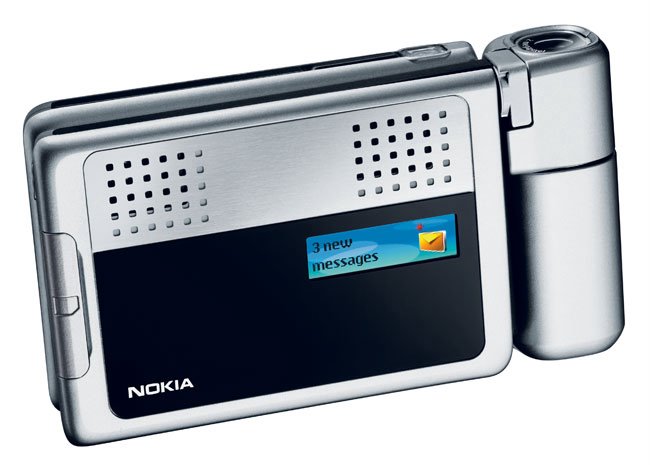
In terms of product design Nokia seems to have got its mojo back. The Nokia N92 handset seems like a really interesting piece of kit. The two pictures courtesy of Nokia that I have posted give two views of the same handset. Through clever design Nokia has managed to have a clam phone effortlessly hinge in two ways. Into the small package Nokia has squeezed a DVB-H digital receiver and a fully functioning smart phone with a camera.

It is also of interest that Nokia is looking to sell Bose noise cancelling headsets with the phone rather like what Motorola did in association with the Carphone Warehouse earlier this year. Someone needs to tell some of the phone manufacturers that Sennheiser make top notch noise cancelling headsets that also fold away to fit inside a suit jacket pocket without ruining the cut.

Wednesday, November 02, 2005

Absolut Marketing

One of the things that surprised me about the way in which the PSP was launched and marketed was that it did not play to Sony's Japanese roots.

The launch instead was bland. They launched a product not a cultural phenomena with a brand personality like the iPod or the original PlayStation.

The Absolut Metropolis campaign just gives an glimpse of what Sony could have, but failed to achieve.

Whilst the Sony has good engineers its marketers have proven themselves to be third-rate. This combined with a patchy developer relations programme will be the death of Sony in the gaming industry yet.


Tuesday, November 01, 2005

By the numbers

Michael Moe of ThinkEquity Partners has put together some interesting US statistics on the business of public holidays at AlwaysOn Network (registration required).

Especially interesting is the level of adult participation estimated to be at 30 per cent, with the number climbing to 50 per cent for the 16 - 24 year-old age band.

The most popular costume for children is a princess outfit, which outnumbers more traditional ghosts and ghouls by 2-to-1. Adults on the other hand take their cues from horror movies: a case of life imitating art.

Halloween is the sixth largest holiday by spending in the US:

  1. Winter holidays (Christmas, Hanukkah) 435 billion USD
  2. Valentines Day 13.2 billion USD
  3. Mothers Day 11.4 billion USD
  4. Easter 9.6 billion USD
  5. Fathers Day 8.2 billion USD
  6. Halloween 3.3 billion USD