Showing posts with label art. Show all posts
Showing posts with label art. Show all posts
Tuesday, November 21, 2006
Stussy World Tour trailer - freakin' awesome
Some of the biggest names real art including Futura himself in a documentary. The world series refers to Stussy's guest range of world series t-shirts, but the film is more than an advert; it captures the thoughts of dozens of artists and designers who've led the cutting edge in graphic and visual design for the past two decades.


Saturday, November 11, 2006
Photography exhibition
Steve and I were unwitting models for a high-brow photo shoot back in April by Berlin and London-based photographer Bernhard Deckert. Bernhard is having an exhibition in Elephant and Castle.

Saturday, April 22, 2006
KultureVulture
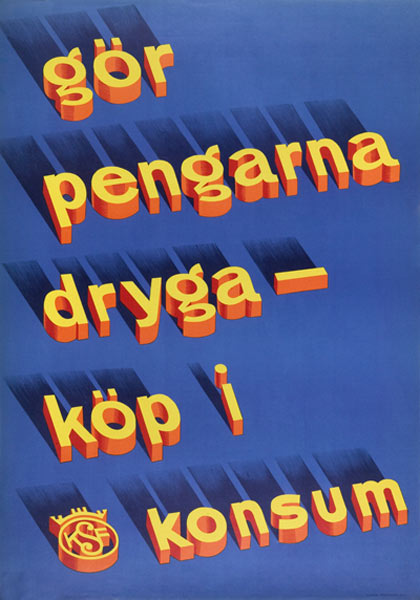
I went to the V&A in South Kensington with Stephen and David to check out the Modernist movement exhibition that is currently on.
Modernism: Designing a new world 1914 - 1939 speaks to a more continental European experience than a British one. Much of the modernist work that I most like (such as the work of Charles and Ray Eames) was post-war.
The exhibition has been well put together, highlights include an original Tatra saloon, though the exhibition is 'disrupted' by the exhibitors not wanting to address modernism in Fascist-era Europe. An exception to this is a statue that takes the profile of Musolini and rotated through 360 degrees so that it gives it an abstract but recognisable shape.
Saturday, April 01, 2006
A man walks into a hotel bar and asks a ballerina where he can find some refreshments

It sounds like a joke, but actually was the surreal climax of a cultural day out that Steve and I had.
We started off at the National Portrait Gallery and completed that in a surprisingly short time. The modern photography and painting was more interesting than the earlier dull-but-worthy material. Some of the most admirable material was actually the architecture of the building itself. There was a particularly good picture on display of Mo Mowlam.
We had a leisurely lunch at the ICA on Pall Mall and then headed over to White Cube.
White Cube was a disappointment. I hadn't realised how small a space it was. We wandered back to Liverpool Street station from a very quiet Hoxton Square and where stopped by what I assumed to be a chugger (charity mugger, someone who gets people to sign direct debits for charities on the street. These people are often aggressive as they're on commission,) or market researcher. Instead she was a photographer's assistant.
Stephen and myself were models in an art photo shoot for Bernhard Deckert where we sat around in the gallery bar of the Great Eastern Hotel and ignored a ballerina called Geida. Geida is a performance artist who does electro versions of cabaret classics: think Al-Naafiysh meets the Blue Angel.
Anyway midway through the shoot a well-dressed man walks up to Geida without batting an eyelid that she is in a tutu and ballet shoes and asks her where he can get refreshments.
She is able to give him directions as she used to organise the Electric Stew nights there. He then nips to the toilets and comes out a couple of minutes later as if everything was the most natural thing in the world.
I suspect that Steve and I will end up as blurs in the background, but that doesn't mean that we won't be milking our 'male model' status for all it was worth.
Sunday, March 12, 2006
Oprah Time

The Tain translated by Thomas Kinsella The book is is a translation of the Irish epic Tain Bo Cuailnge (in English known as the Cattle Raid of Cooley) which is a centre part of the Ulster Cycle.
Kinsella's translation is widely considered to be an accessible version of the tale. Kinsella's work is more focused than other works and I was inspired to hunt it out by reading Frank Delaney's novel Ireland which I reviewed here and Early Irish Myths and Sagas translated by Jeffrey Gantz which has an eclectic mix of Irish and Welsh content.
In addition to Kinsella's translation there are ink prints throughout the book by Louis Le Brocquy add perfectly complement the text.
The New Hibernia Review has a description of how Le Brocquy's images work with Kinsella's words in the original editions published by the Dolmen Press, which gave the images much more prominence. Unfortunately these change hands for a good deal of money, so I have to make do with the Oxford University Press edition.
Sunday, October 30, 2005


Subscribe to:
Posts (Atom)