Thursday, September 22, 2005

Shoot the marketing department

Dell recently launched its latest MP3 product the Dell DJ Ditty. It is designed by Dell to compete with the iPod Shuffle.

First of all the name, what kind of marketer would labour their 'cool' new product with the name ditty. You'd only go and ask for one at the counter if you wanted to win a bet against one of your mates or were very drunk. Now imagine that even if you where happy with the product how you would recommend it to one of your friends.

Then there is the 'inspired' product design. You've been had, its a rip-off of a cheap Ronson lighter from the Argos catalogue. Its not cool, its not ironic and it may sound better than a Linn hi-fi system, but it still says BAD TASTE.

I am sure Apple are already wondering how they are going to handle their haemorrhaging market share when this bad boy hits the market and turns the Apple Store on Regents Street into an empty shell.

Wednesday, September 21, 2005

Adium


Essential
Originally uploaded by renaissancechambara.
OK so you have your favourite IM service that you like to use, but its a free world and some people are just wrong and chose MSN instead. Or you have an ID for years on ICQ that some people still use. What do you do with them all?

When you have IM ID congestion you need Adium X. Adium is a multi-protocol messaging client that is slicker than an eel skin codpiece and full of open source goodness. There are funky themes and other extras with Adium, allowing you to customise it more than and a 1987 Vauxhall Nova. Its just a shame about the Orville the Duck icon they use to represent the application, instead here is some graffiti I photographed down by the Truman Brewery a while ago..

Tuesday, September 20, 2005

Toy Time

I passed the the model shop on High Holborn and spotted some gems that I will share on this blog over the next few entries. First up was a Scalextric set with a Ford Torino, a skittish handling toy car based on a skittish handling real one; talk about a marriage made in adult childhood heaven.
Viral Craicer

Not as easy as it seems, choose out of a list of names which one belongs to the My Little Pony range of childrens toys from the 1980s and which is the name or alias of a performer in an adult-orientated loop. Try your luck here.

More importantly which category would Christina Aguilera fit into: small horse or glamour model?

Sunday, September 18, 2005

The Trouble With Blogs....

Is that they are an ideal vehicle to fuel dissension. During the former cold war, one of the things that the CIA liked to do was to smuggle photocopy machines into the disident groups behind the Iron Curtain as a sort of DIY kit to create thought crimes. (Both football fanzines and the punk movement did a similar thing in the late 1970s and 1980s).

Organisations like Sun and Microsoft are both using blogs to reach out the hearts and minds of influencers and other stakeholders. Unfortunately the power of blogs can also amplify voices of dissent.

Using a service like Blogspot and having a privacy protecting software service like Tor, allows you to create a virtual ID with no traceability; providing you with a Dooce-resistant way of corporate dissension in a responsible manner.

They allow individuals or group to wage assymmetric information warfare campaigns against larger corporate organisations and their countermeasures such as slick corporate communications teams. Take MiniMicrosoft for instance. (Kudos to Charles Arthur for the link). Picture courtesy of SterlingArtz.

Sideline


Sideline
Originally uploaded by renaissancechambara.
James Gordon-Mackintosh of These 4 Walls and 77PR has finally set up his oft-discussed t-shirt business based around cutting graphic design. More accessible and better value for money than Futura the designs at Sideline are worth a visit. The picture gives a flavour of what to expect, don't be surprised to see them previewed on a Quark jockey near you sooner rather than later.

Letting the cat out of the bag


Cat not yet out of the bag
Originally uploaded by Terri.
Interesting post on Sun Microsystems CTO, Jonathan Schwartz blog asking Sun employees to refrain on queering the pitch for their PR people by leaking product details.

From a PR point of view, there are a number of things are interesting about his posting:

- The posting was driven directly by leaked information that had come out over the past few weeks
- Jonathan appealed to employees in a public forum, rather than an internal memo
- There was no mention of an employee blog policy, which many large companies have now implemented
- Its a soft pitch rather than the draconian slap down meted out by the likes of Apple, implying a trust-based system usually found in academic research labs (MIT used to give everybody root access so that they could delete or destroy other peoples work, to take away the achievement and challenge of hacking the security and inadvertently causing damage.) This by implication means that engineers, developers or researchers are likely to have been the whistleblowers

In A Simple Request to Sun Jonathan says: For the sake of your colleagues around Sun, please do not share Sun's confidential information. There have been a few instances in recent weeks where crucial data and photos were leaked from Sun. It probably sounds counterintuitive, but this actually harms Sun's business.

The way news or media cycles work, if any information is 'leaked' to the marketplace, it radically reduces our ability to garner broad top shelf coverage - most media outlets won't cover what's already been leaked. So leaks actually have the opposite effect of what you might think - they dampen coverage, lessen interest, and complicate helping the field drive business. They also prompt customers to put decisions on hold, and put at risk the credibility of our salesforce to be 'trusted advisors' to our most important partners and customers.

Tuesday, September 13, 2005


San Jose Mercury News technology blog SiliconValley.com has a week long online discussion going on here about the future of Apple Computer. Some of it makes interesting reading.

Monday, September 12, 2005


Black strap, the Sinn U2, metal bracelet the Sinn EZM3

A Bit of a Looker


Sinn is a German watchmaker who have a reputation of producing fantastically designed and produced watches. I've started to look around to add to my watch collection and paid particular interest to Sinn's latest model dive watch, the U2. It is made of specially hardened stainless steel and has an Indian rubber strap. The watch has an additional hand in red to provide an additional time zone. The legibility of the watch display is really well done.

Unlike most Sinn watches however it is a triumph of style over substance. The strap has no vents, cleats that would allow the watch users wrist to feel more comfortable in hot weather.

The crown is not protected. Most diving watches including Sinn's own designs have shoulders either side of the crown to protect it from damage. The watch forgoes a useful feature of other Sinn watches by putting the crown on the right-hand side of the case, it is more likely to catch on a shirt sleeve or a wet suit cuff.

This is one of the reasons why many divers wear their watch on their right hand even though they are not left handed. While the U2 is a great example of the watchmakers art, save your money and purchase their Einsatzzeitmesser 3 (EZM 3) model instead.
Design Classic

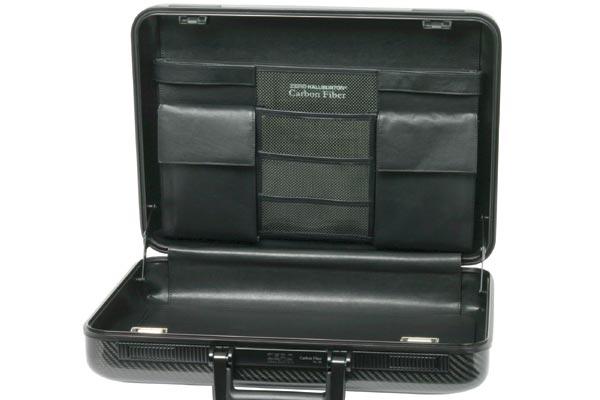
Halliburton is now a name entwined with the Bush Cheney government, usually to do with allegations of overcharging for services or the manner in which they have been awarded contracts.

The company had a long and proud history as a pioneer in the oil services industry. As with any pioneer, when the couldn't find appropriate supplies they made them themselves.

Erle Halliburton founded the New Method Oil Well Cementing Company that later became Halliburton in 1960. One of the problems he faced in the 1930s was finding robust instrument cases and briefcases that would stand up to the rigors of the international oil business, from bouncing in the back of a pickup truck through the Texas oilfields to international air travel.

From this need the Zero Halliburton case company was born. Erle sold up his involvement in the case company in 1952, but they kept his founding ethos. The cases were made from the wonder material of the time - aluminum - which was finding use as a light high-strength metal in the aviation industry. The case also benefited from aluminum's even heat dissipation properties to protect its internal contents.

Move forward to the 21st century and Zero Halliburton Stealth case has moved on with the launch of a carbon fibre case which retails for about 2000 USD. The use of carbon fibre gives this design classic a new feel and aesthetic whilst keeping true to Erle's vision of a high performance case. If this sounds too rich I can recommend one of their traditional aluminium cases.


Jargon Watch

NSFW - Not Suitable For viewing at Work. I saw this first on Wired News columnist Regina Lynn's article discussing the popularity vintage adult entertainment content.

While the subject matter was a reasonable discussion on a trend within the online media industry, some of the links off the page could get you fired.

E85 - A fuel mix of 85 per cent ethanol and 15 per cent petrol that is now cheaper than regular petrol in some parts of the States. Alcohol fuelled vehicles has been around for a good while. Brazil was one of the main pioneers, running cars off alcohol made from sugar cane.

E85 is now becoming a popular alternative fuel in parts of the states that grow a lot of corn, which is ideal for making alcohol (just ask Jack Daniels). While fuel companies are reluctant to carry alternatives to petrol since it fosters more competition; tax breaks, government subsidies, high oil prices and a large number of compatiable vehicles is seeing a small but significant number of filling stations now pumping E85.

Kudos the New York Times The New Prize: Alternative Fuels by Danny Hakim. For more information on alternative fuels including biodiesel and the bio/petroleum diesel blend B20 go to Altfuels.org, which is a good primer.

Sunday, September 11, 2005

The 37 Paths to Wisdom & Other Cool Web Firms

Salon.com has an interesting article about 37 Signals a Chicago based software company that is making waves. The company has developed lean, responsive web-service based software applications for project management and personal productivity.

Odeo is a way of making podcast publication and consumption much easier, it has the ease-of-use that one would expect from one of the founders of Blogger.


Viral Craicers

A great viral from Liquid Generation showing how sexualised pop culture has become.

Spot the adult entertainment performers from the people with no decernable talent (its not as easy as you think).

At Chez RC, we scored a respectable 40 per cent and were told that we needed to watch more porno, and who are we to disagree, after all it's on the net so it must be true.

Open Art Surgery

Many people have been impressed by the svelte nature of the new Apple iPod nano. This Japanese site is the first one to disassemble one.

From the left:

The first picture is the inside of the back case. It has some sort of foam insert to protect the circuitry and make sure that nothing rattles about. It would rest on the back of the main circuit board. The foam is cut away to leave room for the battery pack, the back could also act as a heat sink for the battery to dissipate the heat generated as it discharges. The round spot is a piezo electric loudspeaker for operational signals like a low battery.

Next up is the flash memory module. It is encased inside the black chip packaging at the middle of the board. In this case its a Samsung made 4GB module. This board is attached to the front of the main board with a couple of screws.

The most prominent feature of the main circuit board is the lithium ion polymer battery which takes up a third of the space. This is connected to the circuit board by soldered cables rather than a clip-in connector making it not not user servicable for the average man in the street. At the bottom of the board is the connector for power, headphone socket and data exchange between the iPod and the iTunes enabled Mac. One of the ways that Apple has managed to make the device so small is by putting all these connectors together at the bottom of the iPod nano rather than a headphone socket at the top and everything else at the bottom. There is some usability issues in doing things this way, but Apple must have felt that these were more than worthwhile in order to produce the end product.

The scroll wheel is connected to the circuit board by a ribbon connector, since it is sold state it takes up virtually no space. It is held in place and given a solid feel by a metal backing plate mounted to the back of the device facia (this is on the bottom right of the picture below the colour LCD screen.

The device has a low component count, helping to keep costs down partily by having a very sophisticated design.

Kudos to Impress Corporation for the teardown photo.

Saturday, September 10, 2005

Return of the Texan bar

Recycling of intellectual property is something that companies have been doing for a while. How many Marvin Gaye, Roy Orbison or Jimi Hendrix compilations can the world take from the music industry?

Sports clothing brands Adidas and Puma both know the value of raiding classic designs in their archive.

Defunct arcade and console games like Atari have been resurrected on mobile phones and gaming controllers that come up to 30 games using modern electronics.


Now Nestle seem to have learned from this trend with their re-release of the Texan bar. Above is a picture I took of one in the wild. Its chew texture and toffee goodness makes a welcome return to sweet-shop shelves.

Whilst we are on the issue of Nestle, what about the irony of their involvement in the Charlie and the Chocolate Factory film remake? Nestle are releasing lots of Willy Wonka branded chocolate and candy to coincide with the film. Where it gets interesting is that Roald Dahl's book (and the film for that matter) is critical of big corporate confectioners who squeezed out the small independents and were alleged to have violated intellectual property rights of these smaller companies.

Jargon Watch

Bumvertising - the use of sign-holding homeless people as an advertising medium.

This was used to promote PokerFaceBook.com in the Seattle area.

In return for food and water the Bumvertising representative must be enthusiastic, willing, and appreciative. For more information go here.

Friday, September 09, 2005


The Hedgehog rides again

Ron Jeremy, porn superstar, hero and all-round good guy has graced a self-mocking PETA campaign. Kudos to Ad Rag.
Crude Addiction

I watched an interesting news story over the web regarding how petrol prices varied across the US as the effects of hurricane Katrina registered on the forecourt.

Katrina damaged eight refineries on the Gulf coast. The state of California is looking into price gouging allegations against the oil companies and there is pressure being brought on the Governator to bring in emergency laws to protect their constitutional right to dirt cheap gas prices.

View the full news report
here.

Thursday, September 08, 2005


Holy Mackerel! Apple Launches Worst Kept Secret In Tech Sector! And a Really Cool iPod Which Is Way Better!

Apple has finally announced the first iTunes phone in association with Motorola. The ROKR allows you to play music, and answer calls. Cingular is the first carrier to go with it.

On to the real news, Apple has finally got around to fixing the biggest problem with the iPod Mini, its got rid of the hard drive and the clueless looking candy colours. It uses flash memory instead and has emerged from its chrysalis as the beautiful iPod nano (four-letter words is obviously the latest vogue in tech market nomenclature. Probably designed to appealed to a younger audience brought up on instant messaging and SMS texts.)


Product porn picture courtesy of Apple.
The Predators Ball

While I was busy worrying about the right adidas tracksuit top to wear, where I could get the latest Street Sounds electro album, and how to avoid going into school the US stock market was been shaken up by green mailers and heavily leveraged buyouts. The theory goes something like this, business were not being worked hard enough to deliver a return on investment. So professional investors would look to buy up companies at below the sum of their assets.

This purchase would be paid for with debt, selling off assets or by cutting costs (people) within the business. They would do away with non-core activities like R&D or employee benefits.

Often the management of the 'prey' corporation would pay off the investor to go elsewhere in a crude shakedown called greenmailing. The debt aspect is more interesting. Apparently the high level of debt in a business would motivate the management by fear to deliver better returns than previously achieved. Broadly speaking there is two types of company debt that can be purchased and traded:
  • Investment grade debt - where a company is considered to be good for the money and a low to no risk by a ratings agency like Standard & Poors. This allows companies to borrow at a lower rate because low risk requires lower rewards
  • High-yield debt - so called junk bonds where the company is given a 'junk status' by the ratings agency. This can be a solid company with low growth that may be underperforming relative to its sector. It does not mean that it will disappear in a puff of smoke.
Michael Milken and investment bank Drexel Burnham were the past masters at selling junk bonds. Milken realised an essential truth in the markets - that junk bonds were often not at the level of risk that their repayments would indicate. This discontinuity provided an excellent investment opportunity, which is what Milken sold to his investors. When he had a willing pool of investors Milken could then shovel out junk bond issues.

This helped stoke the fires of the 1980s buyout boom. Milken and his driven personality along with peer Ivan Boesky defined Wall Street to the media influencing Michael Douglas' performace as Gordon Gecko and eventually making them marked men for an attorney general on the rise with politics on his mind (former New York mayor Randoph Giuliani.


I managed to complete the Predators Ball: The iside story of Drexel Burnham and the junk bond raiders by Connie Buck, which provided a good primer on this time. Milken came across as the puppetmaster moving companies and people around the board like chess pieces to provide maximum return for him. You can find it on Amazon here.

Wednesday, September 07, 2005

80s fetish meets ultra-violence

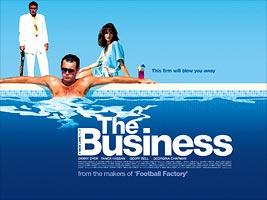
I got to see Nick Love's follow-up to The Football Factory - The Business. It is brilliant and crap at the same time. It manages to encapsulate all the things I loved and hated about the 1980s and then uses the scenery of Southern Spain to pump it up a 1000. Highlights, leisure suits, rubiks cubes, GMTV, Margaret Thatcher and Duran Duran define the plebian culture that permeates throughout the film. No matter how rich the characters get, they drag themselves down.

Its a classic gangster flick of a young lad in way over his head. He becomes a villain by inches and makes mistakes which he eventually learns from along the way. Some of the crims are straight out of The Sweeney and then some.

The plot is well played out and is a cracking watch...

Tuesday, September 06, 2005

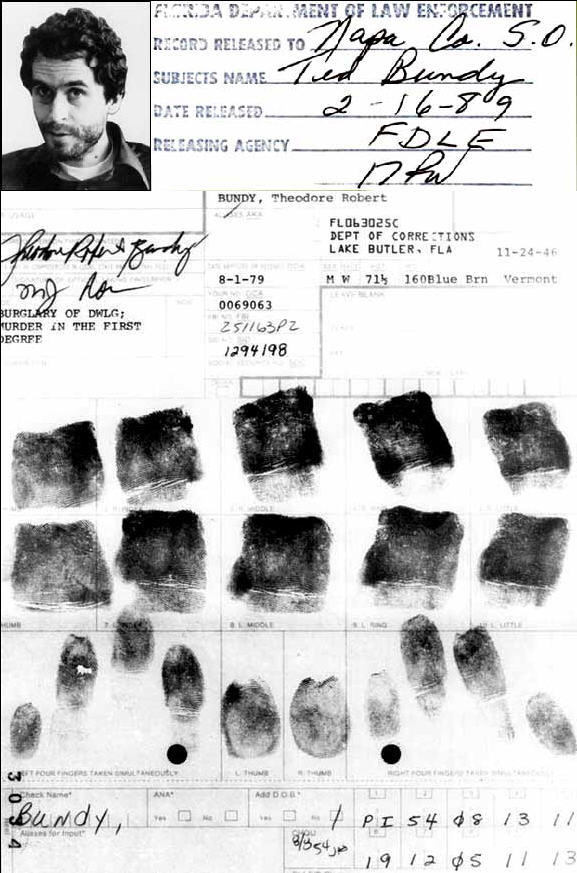
PowerPoint: the Ted Bundy of Software?

There has been a bit of buzz on some of the blogs and email lists that I subscribe to about a Washington Post report PowerPoint: Killer App? by Ruth Marcus. Key outtakes from the article:
  • The nature of the way information is delivered on PowerPoint obscured some of the most serious risk factors surrounding the space shuttle Columbia
  • It encourages providing data without supporting information / back-up documentation
  • It encourages a lack of depth in thought as all concepts are broken down to bullet points
It even moved sufficiently far out of techy circles to be commented on by Matt Drudge on his site The Drudge Report. This isn't the first time that PowerPoint has been attacked in this way. Information guru Edward Tufte wrote PowerPoint is Evil for Wired magazine (it can be found here).

Tufte believes that PowerPoint
:
  • Induces stupidity
  • Makes presentations boring
  • Wastes time
  • Degrades both the quality and credibility of communication

And that's not even including the shocking clip art.

Skeptical? When you write a document in Word, have you ever started in the middle or moved chunks of text around like Lego building blocks? Its much harder to write in this style in paper, Word by its nature can encourage more creating but unstructured writing. You throw down everything first and then sift through it discarding some pieces and reordering the rest. The same can happen with emails or any other text requiring editing.

Monday, September 05, 2005

Jargon Watch

Dooced - to get fired because of your personal website. Heather Armstrong (nee Hamilton) worked in Los Angeles as a web designer. She catalogued her work experiences on her website, some of these postings her employer found to be objectionable and negative. This cost Heather her job

She now blogs about her experiences as a stay-at-home Mum in Utah with a certain wit and style.

Heather's advice on blogging about work: Never write about work on the internet unless your boss knows and sanctions the fact that YOU ARE WRITING ABOUT WORK ON THE INTERNET. If you are the boss, however, please don’t be a bitch and talk with your hands. And when you order Prada online, please don’t talk about it out loud, you rotten whore.

You can read the offending blog posts here.

Sunday, September 04, 2005

Employee Discounts Mystery

While I was over in the US on business, I noticed that there were four types of adverts that seemed to crop up all the time across the television channels:
  • Perscription drugs and treatments (because your Doctor doesn't know best)
  • 50 hymns on a CD that can be ordered direct from the supplier
  • The usual consumer finance advertisements that blight television all over the free world, so we can buy yet more Chinese-made goods
  • Employee discounts for everyone on a new car

I was surprised that there had been no apparent consideration given to the idea of using 'employee discounts' as a marketing tactic and the messaging around these consumer discounts.

If I was an employee how would I feel about being promised a discount and then finding out that everyone gets as good a deal as me whether they work for the company or not - had I been sold a product (by my own company under false pretences?). Many years ago, I used to work for a large chemical combine where employees were invited to buy shares at 10 per cent above the market price through a company share purchase scheme, they thought that we wouldn't notice as the price was quoted in Dutch guilders, I know how this can leave a bitter tasted in the mouth.

From a consumers point of view, does the extension of the employee discount programme mean that the car companies have been screwing me over for a long time - that they can now afford to drop their pants like this and give discounts out like candy? Why not wait some more until the big three car companies (Ford, General Motors (Vauxhall & Opel to Eurotrash like me) and Chrysler (as in the American car company Mercedes bought)) get really desperate. Listen to the pips squeak.

On an unrelated note Opel have an interesting car as canvas for art section to their web site.
You can be sure of Dell

Slate has an interesting article that addresses why technology sector overachiever Dell is getting kicked in the teeth by the markets. In Is Dell Dying? - What's wrong with America's greatest computer company Daniel Gross outlines the following factors:
  • Quarterly results released on August 11, 2005 showed growth of 15 per cent versus 16 - 18 per cent projected numbers
  • Over the past five years Dell's stock has underperformed the NASDAQ and only kept pace with the S&P500
  • Dell had a large amount of bad publicity form a well read blogger who complained about the bad customer service experience that he had received
  • Dell is having to jump a continually higher fence. Maintaining 18 per cent growth in a company that large and in a market of continually declining margins
  • Dell is relying on new markets like China for growth that are less recptive to the companies magic sauce
  • Dell is in a mature marketplace and has tried to branch into new fiercely competitive markets for hot consumer electronics products.
This too is unlikely to give the same growth numbers, it looks like Dell will have to support its share price via share buy backs or a dividend like grown-up companies do.

What the article fails to address is the vacuous nature of consensus numbers on predicting profit. For more information on this concept in more depth read here and get Alex Berenson - The Number from Amazon.

Saturday, September 03, 2005


Jargon Watch

Jumping the couch - the nadir, things couldn't get any worse. Jumping the Shark came from what fans of Happy Days considered the worst ever episode. The Fonz jumped over a shark whilst wearing a set of water-skis. Jumping the couch is down to Tom Cruise's I'm so in love" behaviour on Oprah earlier this year. Thanks to celebrity scandal email newsletter Popbitch

Friday, September 02, 2005

Pirates of Silicon Valley

During the technology bubble the media suddenly caught on to the riveting back stories in the tech sector that Bob Cringely and Co. had been banging on about for years. HBO came out with a particularly good adaption of one such back story - Steven Paul Jobs versus William H Gates III. While purists may be concerned about the consolidation of characters and all them other truthful details that get in the way of a good film the rest of you can get the film on DVD on Amazon.

Thursday, September 01, 2005

Technology companies unable to pmp their wares to consumers

Market analyst firm Instat has come out with a report that says the market for personal media players will remain 'disappointing'.

From their press release:

A recent report by In-Stat found the following:
  • Early adopters will remain the primary market for PMPs this year
  • The mass market is not yet willing to pay the hefty price tag for PMPs, which is approximately $400 to $500.
  • PMPs are competing with other converged devices such as handheld gaming devices, smarter PDAs, and portable DVD players
  • By 2009, In-Stat forecasts that worldwide PMP shipments will reach 7.5 million units.

The report title Video Content Availability Will Be A Key Factor in Portable Media Player Growth basically is an admission that PMPs are currently a device without a use. Think about it, whats the point of going through the hassle of ripping a video off a DVD to watch it on an awkward iPod type device that is more expensive than a portable DVD player hmmm.

In addition video is an immersive format so the scope to use it is less than listening to audio devices like the Apple iPod.

So it looks like iRiver won't be selling all that many PMPs, even with a fine young lady draped across the screen like the picture above.
Jargon Watch

Chigger - Young people in Hong Kong who wear hip-hop clothing, listen to mainstream R&B and idolise triad movies. Kind of a Kowloon Chav. Courtesy of the Future Laboratory summer newsletter.

Wednesday, August 31, 2005

Interesting Web Services

When I worked during the dot.com boom I briefly used a great free document management service called FireDrop to manage approvals from press releases to appraisal forms for my team. There has seldom been a web service that has impressed me since, however BaseCamp looks like it might do that.

Unlike many web services offerings that I won't name (RightNow Technologies, Groove Networks) it is truly platform-agnostic.

Monday, August 29, 2005


Loose connected networks

My friend Heather and I were pod (as in cubicle) neighbours at the same agency for 2 1/2 years. The last time we worked together was almost five years ago. However we have managed to keep in touch over the past five years via email on an irregular basis, the occasional phone call and kept up to speed with the happenings in each others lives.
Heather is a classic example of a loose connection within my network.

One which would not have been realistically possible without the benefit of email. This network maintenance with people who I have known through different phases of my life is a key example of how the Internet has altered our social fabric and social networks such as LinkedIn, SoFlow and Orkut have tried to codify this process.


The value of this connection to me is very tangible, Heather met me at San Francisco airport, gave me a tour of Silicon Valley and on my one night off, took me to the Sunnyvale town market and custom car show.

Being in a strange place and being able to kick back with a friend who is a local, but at the same time gets where you are coming from was priceless. Being able to find a bar with a proper Irish fry up with black and white pudding makes her even more valuable!

I got to see a more human personal Silicon Valley than some of my peers who dismiss the place as being dull.
Certainly Sunnyvale felt small, but then why wouldn't it when most of the major employers provide most of lifes requirements on giant campuses and you can buy everything else at the out-of-town Walmart or Target store. Being a European I was reminded of the small town mythology perpertrated in US films like American Grafitti, Back the Future and ET. Having been to Sunnyvale it all made sense.

Saturday, August 27, 2005


Back to '88: Utah Style


Utah, land famous for dry salt lakes, mob financiers and polygamy has appeared in the buzz on the blogosphere following on an email sent to the Interesting People email list. A rave was broken up by camoflaged men who turned out to be the local SWAT team (what a bunch of grown men lurking in the bushes in the middle of the night with various animals were actually doing is anyone's guess).

It reminded me of the efforts of the British police back in the day to stamp out the house music movement back in '88, instead it has mutated and spread all over the world.

Here is a live video of the event, the local TV news network's coverage and here is the promoters side of the story.

Friday, August 26, 2005

Quality not piracy is the issue

Audience figures at cinemas have dropped in the US and the movie industry is working out what it can do about it. Michael Lyndon, chairman of Sony Pictures Entertainment told the New York Times: "Part of this is the fact that the movies may not have lived up to the expectations of the audience, not just in this year, but in years prior," said Michael Lynton, chairman of Sony Pictures Entertainment, which had some flops this summer, including the science fiction action movie "Stealth" and the romantic comedy "Bewitched." "Audiences have gotten smart to the marketing, and they can smell the good ones from the bad ones at a distance."

Thursday, August 25, 2005

Interesting Business 2.0 Wireless Report: Mobile Content Goes Mainstream (US media companies wake up to it) live from San Francisco airport


Interesting Business 2.0 Wireless Report: Mobile Content Goes Mainstream (US media companies wake up to it) live from San Francisco airport


I found this email newsletter article from Business 2.0 very interesting as a from my Europeam perspective, the ship has already left the pier. For example I promoted Endemol and Channel 4's Big Brother video content on mobiles via Vemotion a few years ago.

However you cannot ignore the power of US programming (such as Lost, CSI, 24) and the creativity the US media companies bring. It will be interesting to see how the likes of Time Warner catches up to and competes with European mobile media players.

Wireless Report: Mobile Content Goes Mainstream

Big media wants to deliver content through your mobile phone. At least that's what can be gleaned from Tuesday's announcement that Time Warner (parent company of Business 2.0) made a strategic $7.5 million investment in Glu Mobile during its most recent round of venture funding. Glu, based in San Mateo, Calif., is one of the pioneers in the burgeoning mobile entertainment market. Since it was founded four years ago, Glu has pushed the wireless platform as a standard for consuming rich media with its collection of videogames, ringtones, and sports applications for cell phones.

The investment from Time Warner is significant for two reasons. First, it provides the company with additional cash to help finance its ongoing global expansion.

Second, and more important, it opens the doors for Glu to make popular Time Warner content deliverable over mobile devices. While the investment doesn't guarantee access to Time Warner's stable of brands, it's a sterling endorsement. Glu has already established licensing agreements with Time Warner's Cartoon Network and will launch additional products based on the network's popular "Adult Swim" programs later this year. Glu chief executive Greg Ballard sees it as a precursor of deals to come. "It gives us access to their corridors," he says, "and should lead to some very interesting products."

In exchange Time Warner receives something equally important: a clear view into the mobile industry. As part of the agreement, which took a year to hammer out, Turner Broadcasting System president Andy Heller will receive a seat on Glu's board of directors. From this perch Heller can see firsthand just how complicated it is to bring a product to market across thousands of different handsets and hundreds of carriers. In Glu, Time Warner gets a partner that has established distribution agreements with nearly 90 wireless carriers worldwide and has developed a reputation for being able to bring products to market quickly. "This business is incredibly complex," Ballard says. "At this point it would be very complicated to start from scratch."

It's the size of the market that makes it impossible for media companies to ignore. For the foreseeable future, the cell phone will remain primarily a tool for making phone calls. Eventually, however, it will become a platform that serves many different forms of media, from music to movies. By 2008 more than 2 billion people around the world will own mobile phones. If just 10 percent of these cellular owners use their phones to view news clips, play games, listen to music, or consume any other form of media, that's a multibillion-dollar opportunity for media companies and mobile content publishers alike. "Nobody wants to miss this," Ballard says.

Other media moguls are certain to follow Time Warner's move. Barry Diller and John Malone are said to be looking at potential investments. They are both seeking ways to extend their existing properties -- Expedia.com or Match.com, in Diller's case -- and the mobile platform is a logical next step. No other product in the world is as ubiquitous as the mobile phone; it's one of the few devices consumers carry with them everywhere. News Corp. and Disney have already made strategic investments of their own. Fox Mobile Entertainment is working with another mobile content publisher, I-Play, to bring the hit television show 24 to subscribers' mobile phones. Meanwhile, Disney has set up its own wireless division to find ways for Mickey Mouse and other popular characters to make their way onto handsets. In other words, it's only a matter of time before consumers will be offered their favorite media content on their cell phones.

©2004 Business 2.0 Media Inc.

Sent with Snapper Mobile Mail

www.snappermail.com

Monday, August 22, 2005

Trip to Silicon Valley

The 10-hour flight was not something that I looked forward to as I don't like flying at the best of times, I did manage to catch bits of the first two episodes of Lost and the remake of Flight of The Pheonix on the inflight entertainment system, which I thought was ironic.

I was picked up by my friend Heather, I found Silicon Valley itself quite strange. Firstly the light is a lot brighter to the UK and has a blueish tinge. The newness of everything you see around you, its like Milton Keynes or Telford. The real estate is expensive yet all the buildings are low rise, in this day and age Japanese cities built on similar earthquake faults manage to build higher.

The Apple campus in particular looked really non-descript, it was hard to believe that Apple products could spring from such an unpromising looking set of buildings.

Tipping is de rigeur in restaurants (add double the sales tax on to your bill). Prices for things like hotels generally don't quote sales tax.
American cars start ot make sense, when you see the space around them over here the cars look in proportion to their surroundings, Honda Civics look small and mean.
On television the advertisements are strangely compelling to watch, full of perscription drug adverts, consumer finance and the occasional order direct music collection of 50 greatest hymns.

Saturday, August 20, 2005

Retro Moment

Stussy have been bringing back some of their classic designs as part of their 25th anniversary. You can see some of them showcased on their new UK website here.

Whilst we are on the subject of retro, I wrote a brief contribution for Always On: the piece sprang out of my thoughts on what the killer app is for the internet. For me the primary benefit is email access via my broadband connection and on the move via my Treo, emails position as the must-have application has been the same for the past 10 years.

That got me thinking about what technologies are due a second stab at the big time now that broadband access has become commonplace, you can read the piece here.

Friday, August 19, 2005

CringelyVision

Mark Stephens aka Bob Cringely is one of the reasons that I have worked in the technology, media and telecoms sector for the past 8 years.

His book Accidential Empires: How the boys of Silicon Valley made their millions, battle foreign competition and still couldn't get a date gave me a good background in the area that seemed to impress the hell out of my colleagues for some bizarre reason.

A big lawsuit over the Cringely name and several years of web columns later, Bob is making the transition to rich media on the web.
Since he is well known within in the industry, he has attracted great guests on a downloadable video programme. The kind of people that move the world, but still won't be seen on the BBC.

Bob was the first person that I read to wake up to PayPal, not surprisingly, the programme will have an interview with the founder. You can watch more when NerdTV goes live on September 6th.
The Cobblers Son

The old saying goes that the cobbler's son is always the worst shod, so PR companies are often bad communicators when it comes to talking about themselves. A recent example of this is the way chris lewis of lewis pr has allegedly been screening all the derogatory comments about the means in which he has built the agency.

Blogs are the 'fresh meat' business opportunities that PR agencies think they can provide clients with 'value-added' services on (rather like webcasting, PR management extranets and internet press rooms 5 - 7 years ago). So agencies are now experts in the area of communicating via blogs (the buzz phrases to watch out for are micro media, the long tail, stakeholders, blogosphere, the viral nature of information).

As any agency would tell you, blogging is as much about developing a dialogue as opposed to one-way communication. Firstly look at chris' pristine blog post here and then the discussions about the mysteriously missing comments here. Hmmm (Kudos to Spin Bunny).

Tuesday, August 16, 2005

Peer-to-peer sneakernets

I remember reading once that Microsoft did research on the best way to move data around a business. Mass storage and a courier, 'the sneakernet' won.

Going through the latest series of TV show 24; despite the latest Cisco gear, the tech agents use CDs and DVDs to move data around the CTU facility.


So its no surprise that the RIAA has finally woken up to the fact that P2P networks aren't as huge a threat after all, but it was evil CD burners all along.

Copy protection is the only way to stop customers stealing from the music industry. The only way to protect consumers becoming criminals...

In the meantime, the music industry is being hollowed from the inside out as its campaign against downloaders has been a massive publicity stunt for Apple's iTunes Music Service; everyone now knows what an MP3 is and that it allows blank CD can now hold 64 CDs worth of pirated content.


"Burned'' CDs accounted for 29 percent of all recorded music obtained by fans in 2004, compared to 16 percent attributed to downloads from online file-sharing networks, said Mitch Bainwol, chief executive for the Recording Industry Association of America.

The data, compiled by the market research firm NPD Group, suggested that about half of all recordings obtained by music fans in 2004 came from authorized CD sales and about 4 percent from paid music downloads.

``CD burning is a problem that is really undermining sales,'' Bainwol said in a phone interview before addressing about 750 members of the National Association of Recording Merchandisers in San Diego on Friday.

Sunday, August 14, 2005

Are you an innovator, achiever or consumer?

I came across a consumer profile test called VALS (values and lifestyles) which was designed to better understand consumer behaviour. The test factors in issues such as demographics and earnings but since the test is based around two key axis of resources and innovation, my guess is that the results will be skewed; an individuals resources and what they do with them are likely to be affected by the social trend of massclusivity (a combination of technology changes, the economics globalisation and consumer demands that has put a lot of 'exclusive goods' in the grasp of the everyman).

VALS was developed by SRI Business Intelligence (as in the same Stanford Research Institute that Doug Engelbart worked for and invented modern computing in the mid-to-late 1960s).

Find out your VALS type here.
Geek Stuff

Bill Gurley of top-tier VC fund Benchmark Capital has a dated but interesting overview of the market for multi-player online gaming environments here.

Gurley's article has some interesting statistics on how much the business is worth in different Asian communities. There has already been empirical evidence of how large this is based on the cultural impact of it. Like the Japanese wife who sold her husband's virtual posessions in the game as a way of getting revenge. The police prosecuted her, just they way the would have if she'd poured paint on his possessions or cut up his clothes. The Chinese man who went and killed another game player who would not return a magic sword that he had been lent, or the Korean man who keeled over and died after playing online for 50 hours straight.


I attended the Open Tech conference the other weekend. The organisers have put videos of the main lectures online in case that you missed something because of a clash of timings between the two streams that the presentations took, or didn't attend in the first place. Listen or view here.

Tech's favourite snake oil salesman and evangelist George Gilder is interviewed (complete with the obligatory podcast) on AlwaysOn (registration required). Tech ramblings absorbed from tech sector spin mixed with intelligent design and neo-conservatism.

Saturday, August 13, 2005

Why I'd like to see the Mac on Intel

Apple's announcement that it was moving the Mac platform to Intel processors offers a new opportunity to Apple users. Japanese users have long benefits from ultra-portable laptop like the Panasonic one pictured, it would be great to have a Mac device of the same size. Something Apple hasn't sold since the PowerBook Duo series a decade ago.

With the rise of the laptop as an indispenable student tool and Wi-Fi now available everywhere that you can buy overpriced coffee, a laptop that is the size and weight of a small text book has more appeal. In the same way that Apple opened up the market for MP3 players, even though Compaq and been there before, so it could open up the market for sub-notebooks beyond Japan.
Tuesday, August 09, 2005

This is the end my friend

In Apocalypse Now, you know things are coming to a conclusion with the droning soundtrack of The Doors droning on. In the case of Britain's North Sea oil fields we are well up the river past the Play Boy bunnies and into the heart of darkness. Production had peaked a while ago and Britain is now a net importer of crude oil and natural gas. However the departure from UK oil productionof Kerr McGee, one of the North Sea's pioneers and a stalwart in UK oil production for the past 30 years gave the signal to many that The Doors were droning through the speakers and Colonel Kurtz would soon be dead.

Pioneer producers are expected to move on to new offshore fields in the Far East, the Canadian oil sands and deep offshore fields in the Gulf of Mexico, leaving behind the oil industry hyenas like Apache or Talisman who specialise in getting the maximum financial return out of mature / declining field yields, feeding on the morsels left behind.

Every food chain needs its hyenas, but there is the fear of who is going to pay the bill for the environmental repair when the well is spent?

Kerr McGee's departure was in part triggered by Carl Icahn the infamous 'greenmailer' who specialised in hostile takeover bids to improve shareholder value and is often associated with the junk bond funded excesses of the 1980s along with his peers including the likes of Ivan Boesky and Michael Milken. Kerr McGee bought Icahn off, benefiting none of the other shareholders and turning their own stock to junk status. In order to reduce its debt exposure a departure from the UK was required.

The name Kerr McGee has a solidity about it that traditional US oil industry companies had like Kellogg, the Hughes Tool Company, the Hamilton Brothers Petrolite or ARCO. Their logotype and design reflecting solidity like a Paul Rand design. The kind of solidity that John Wayne portrayed on screen as Chance Buckman of the Buckman Company, 'Oil Well Fire and Blowout Specialists' in The Hellfighters. The machismo, silver suits and fire of this film when I was a kid inspired me to work in the oil industry. Weedy names and insipid logos like Beyond Petroleum wouldn't have attracted me to the industry and represent a business where the vitality is now largely dissapated.
The rational consumer

When I was at college I did economics modules. The hypothetic models build by economists assumed that consumers made rational choices all the time. This was a marketing degree and the consumer behaviour aspect of the course dispelled this assumption. However, according to Trendwatching.com this economist view of the world may not be too far off at all.

Hygienia is a modern marketplace of mature consumers who know where what all the hygiene factors are for any good or service that they purchase. This tends towards what economists call 'perfect market knowledge' since if you can categorise the key attributes you can make a rational design based on price.

Consumers are able to cut a swath through corporate and marketing messages to get to the information that matters to their buying decision. In a way that was promised with Wired magazine's vision of the new economy, the internet has improved consumer knowledge and research. For instance gamers know that the likely European-specification Sony PSP is likely to have region-locked games and an inferior quality screen compared to the Japanese products so are using the web to buy parallel imports faster than Sony can close down their lines of supply.

Successful products and services fit into a continuum consisting of six different categories:

  • Free love - cheap to free - most of the web including Wikapedia or the Metro newspaper. The business problem this presents is when consumers become used to getting something for free how do you get them unwillingly to use a paid-for item? One of the few successes in this area would the iTunes Music Store, the New York Times Online is trying to square this circle now.
  • Cheap heaps - lowest of the low pricing - easyGroup products, Lidl, Aldi. Offerings based on discounts that are too good to be true
  • No Frills Chic - cheap but well designed - IKEA, H&M. Think cheap heaps with style and or humour.
  • Mass class - the new standard, based on products that would have been considered luxury such as Starbucks coffee, Ben & Jerry's ice cream. Whilst many brands believe this is where they sit, they often don't add up on the hygiene factors.
  • Massclusivity - the new standard for mass luxury such as adidas limited editions or personalised items like Warholised baby photos that seem to be popular with yummy mummies
  • Uber premium - Seriously rich products - Maybach limosine, a corporate charter jet and Audemars Paget watches

Monday, August 08, 2005

(Picture courtesy of Unilever)
Does my ass look like orange peel to you?

Dove's original UK execution of its campaign for beauty integrated marketing programme got a lot of criticism for voting boxes that allowed subversion of the advertising message, and was parodied by the likes of HolyMoly. Now the latest campaign for firming products based on the campaign for real beauty has prompted a great article on Slate how Dove's Campaign for Beauty, whilst pretending to be about empowering women and allowing them to define beauty for themselves merely replaces one insecurity for another.

Cellulite is a skin condition that affects skinny celebrities and bloated housewives alike, up to now it was a ' (insert celebrity name here) has it and so do I'. Heat and OK magazine thrived on bringing readers pictures of celebs as normal women. Now Dove moves the game, its ok to be curvy or old, but heaven help you if you have an orange peel bum.

From a PR perspective this messaging leaves Dove open to be criticised as hypocrites by the media and womens interest groups; empowering women as a message won't cut it, when the worm turns.

Saturday, August 06, 2005

New Citrus Technology Empowers Communications

According to news coverage of the latest campaign by Which Magazine, up to one in seven mobile phones break down within the first 12 months.


Nokia and Samsung were found to be the most reliable, Motorola and Sony Ericsson weren't. It was no surprise that mobile network 3, was found to be the most prone to defective handsets and service.


For 3's lamely spun but amusing rebuttal of the report findings go
here, for details on how to sort out your defective handset get advice here.

It was disappointing to see both Motorola and Sony Ericsson come off badly. I used to find the phones of pre-merger Ericsson used to be overengineered, robust and very reliable. In addition, I thought that Motorola had long ago turned the corner on quality from the time when they had the iconic but unreliable StarTac handsets.

Friday, August 05, 2005

Citizen Media

Its all very well talking about how blogging and cameraphones are making the average joe the new media, its another thing to build a business model around it and put your money where your mouth is. Now anyone can become a paparazzi or news photographer with Scoopt, a picture agency who promises to treat camera phone snappers the same way as professional photographers. Kudos to netimperative for the pointer.

Thursday, August 04, 2005

In The Mood For Tech

When I studied at college I was told that the chocolate manufacturers loved a recession. As people were insecure or depressed they bought more chocolate. According to News.com, Forrester Reseach has come to a similar conclusion about some gadgets. They have broken consumers down by income (high and low) and by the attitude to technology (optimistic or pessimistic). This seems to be a simplified model of their technographic profiles. The research is based on upon questioning the same sample for the past eight years on an annual basis.

I am sure that the product portfolios would shift around somewhat in Europe but what is interesting is way that the marketing channels to tackle all four groups are so delineated.
(Credit Forrester Research)
  • High-income optimists - word-of-mouth campaigns via podcasts, traditional tech hardware marketing with bulleted 'bits and bytes' lists of product features (sod the benefits) and low-cost search advertising

  • Low-income optimists - Marketers need to emphasize price and features to reach this group online or offline. Bought their PC at Aldi

  • High-income pessimists - Marketers pitch in with a simpler offer, a stronger brand and an offline approach; ideal segment for Apple then

  • Low-income pessimists - The most interesting and least rewarding in terms of average revenue per user. Marketers to target using television advertising; mainstream messages incorporating fear, greed or lust; and carefully manage their customer support costs. Does this mean that its wrong to use booth babes at tech conventions?

Wednesday, August 03, 2005

On Heavy Rotation Part Two

  • Trans Slovenian Express EP - Weird title, weird concept. Mute Records have got four Slovenian artists to record Kraftwerk cover versions. First off Laibach, who seem to have done their own Kraftwerkesque remix of one of their own tracks. The ace in the hole is Alinia - Home Computer, a definite floor filler in more jackin' clubs
  • Brett Johnson - Best intentions for failed inventions. Though the title on this release for Classic may convince you that you are buying the recording studio equivalent of the abortion bucket, you'd be wrong. Johnson has produced four tracks that have something to please everyone.
  • STLP15 - Stupendous Music - A mixed EP of dub and tech house that Worship Recordings would have been proud of.

  • Fazed Idjuts feat. Sally Rodgers - Dust of Life - First of all Sally Rodgers should need no introduction as the vocalist in a A Man Called Adam. Then if thats not enough deep house legend Joe Claussell has done the remix duties giving a piano and guitar led remix respectively.

Tuesday, August 02, 2005

On Heavy Rotation

The latest vinyl on the turntable at Chez Carroll:

  • Run Jeremy - Windowlicker - a reworking of the Aphex Twin classic so that it can be played in a house set.

  • This Ain't Chicago - Ride the rhythm - French record label Parisonic commissioned two re-tweaks of the early British house classic.... 'ride the rhythm, ride the floor, ride till you can't ride no more'

  • Incognito - Don't you worry 'bout a thing - Talkin Loud reissued this wedding standard for the 30-somethng generation, but the real gem is Out Of The Storm

  • Lovejuice - Ripped to the tits / Acid love - smiley for a record label, acid basslines. What more do you need?

  • Lorna - Jumpin jack flash - old school jack trax vocal samples put together for dancefloor mayhem by a bunch of German pranksters

  • Mario Fabriani / Majik J - Detour EP - West Coast label uses Kiwi and Italian talent to create stonking West Coast style house. I am sure there is something post-modern about this in a shipping coals to Newcastle kind of way


Monday, August 01, 2005

Something just doesn't add up

The web is now host to the world's fastest growing media format for advertising. It's what's blowing smoke up the ass of Google's share price. At the moment it accounts for a single digit percentage of advertising spend, but 15 per cent and growing of people's eyeball time.

  • Television revenues including advertising however are circling the plug hole prior to disappearing down the drain:
  • Proliferation of TV channels and transmission vehicles (digital terrestrial signals, satellite, cable)
  • Move away by marketers from brand building campaigns to direct response campaigns that produce more PowerPoint and Excel-friendly data
  • According to figures from the MPAA revenues from pay television have been declining
  • Pay-per-view demonstrating a very low growth rate in revenue according to the same MPAA

So it was with some interest that I read this Economist article Telecoms, television and the internet: the war of the wires on the way that telecoms companies are investing in IPTV as a big play to drive revenue. The figures tend to indicate that 'cable TV over phone lines' has a hard time entering ahead of it entering a mature marketplace. Telecoms companies have previously made a dogs dinner of handling media businesses, which is why they have often sought to partner with specialists in the area of online content provision. If the telecoms companes take a similar approach on IPTV then it is worth looking at the growth of the net as alternative guideline. If the previous growth of the net is anything to go by only 5 per cent of the people in the IPTV field is likely to be commercially successful with their offerings.

How will regulators handle and affect the marketplace for IPTV and how will the offering be subverted and used by early adopter consumers?

From a media company perspective IPTV is a double-edged sword, its a revenue stream, but it exasperates the 'shortening' of the window that media companies have to make money on a property. This picture becomes clearer when you read the Slate article Hollywood Death Spiral - the secret numbers tell the story.