Monday, August 29, 2005


Loose connected networks

My friend Heather and I were pod (as in cubicle) neighbours at the same agency for 2 1/2 years. The last time we worked together was almost five years ago. However we have managed to keep in touch over the past five years via email on an irregular basis, the occasional phone call and kept up to speed with the happenings in each others lives.
Heather is a classic example of a loose connection within my network.

One which would not have been realistically possible without the benefit of email. This network maintenance with people who I have known through different phases of my life is a key example of how the Internet has altered our social fabric and social networks such as LinkedIn, SoFlow and Orkut have tried to codify this process.


The value of this connection to me is very tangible, Heather met me at San Francisco airport, gave me a tour of Silicon Valley and on my one night off, took me to the Sunnyvale town market and custom car show.

Being in a strange place and being able to kick back with a friend who is a local, but at the same time gets where you are coming from was priceless. Being able to find a bar with a proper Irish fry up with black and white pudding makes her even more valuable!

I got to see a more human personal Silicon Valley than some of my peers who dismiss the place as being dull.
Certainly Sunnyvale felt small, but then why wouldn't it when most of the major employers provide most of lifes requirements on giant campuses and you can buy everything else at the out-of-town Walmart or Target store. Being a European I was reminded of the small town mythology perpertrated in US films like American Grafitti, Back the Future and ET. Having been to Sunnyvale it all made sense.

Saturday, August 27, 2005


Back to '88: Utah Style


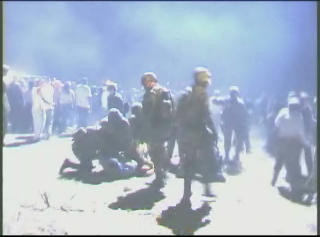
Utah, land famous for dry salt lakes, mob financiers and polygamy has appeared in the buzz on the blogosphere following on an email sent to the Interesting People email list. A rave was broken up by camoflaged men who turned out to be the local SWAT team (what a bunch of grown men lurking in the bushes in the middle of the night with various animals were actually doing is anyone's guess).

It reminded me of the efforts of the British police back in the day to stamp out the house music movement back in '88, instead it has mutated and spread all over the world.

Here is a live video of the event, the local TV news network's coverage and here is the promoters side of the story.

Friday, August 26, 2005

Quality not piracy is the issue

Audience figures at cinemas have dropped in the US and the movie industry is working out what it can do about it. Michael Lyndon, chairman of Sony Pictures Entertainment told the New York Times: "Part of this is the fact that the movies may not have lived up to the expectations of the audience, not just in this year, but in years prior," said Michael Lynton, chairman of Sony Pictures Entertainment, which had some flops this summer, including the science fiction action movie "Stealth" and the romantic comedy "Bewitched." "Audiences have gotten smart to the marketing, and they can smell the good ones from the bad ones at a distance."

Thursday, August 25, 2005

Interesting Business 2.0 Wireless Report: Mobile Content Goes Mainstream (US media companies wake up to it) live from San Francisco airport


Interesting Business 2.0 Wireless Report: Mobile Content Goes Mainstream (US media companies wake up to it) live from San Francisco airport


I found this email newsletter article from Business 2.0 very interesting as a from my Europeam perspective, the ship has already left the pier. For example I promoted Endemol and Channel 4's Big Brother video content on mobiles via Vemotion a few years ago.

However you cannot ignore the power of US programming (such as Lost, CSI, 24) and the creativity the US media companies bring. It will be interesting to see how the likes of Time Warner catches up to and competes with European mobile media players.

Wireless Report: Mobile Content Goes Mainstream

Big media wants to deliver content through your mobile phone. At least that's what can be gleaned from Tuesday's announcement that Time Warner (parent company of Business 2.0) made a strategic $7.5 million investment in Glu Mobile during its most recent round of venture funding. Glu, based in San Mateo, Calif., is one of the pioneers in the burgeoning mobile entertainment market. Since it was founded four years ago, Glu has pushed the wireless platform as a standard for consuming rich media with its collection of videogames, ringtones, and sports applications for cell phones.

The investment from Time Warner is significant for two reasons. First, it provides the company with additional cash to help finance its ongoing global expansion.

Second, and more important, it opens the doors for Glu to make popular Time Warner content deliverable over mobile devices. While the investment doesn't guarantee access to Time Warner's stable of brands, it's a sterling endorsement. Glu has already established licensing agreements with Time Warner's Cartoon Network and will launch additional products based on the network's popular "Adult Swim" programs later this year. Glu chief executive Greg Ballard sees it as a precursor of deals to come. "It gives us access to their corridors," he says, "and should lead to some very interesting products."

In exchange Time Warner receives something equally important: a clear view into the mobile industry. As part of the agreement, which took a year to hammer out, Turner Broadcasting System president Andy Heller will receive a seat on Glu's board of directors. From this perch Heller can see firsthand just how complicated it is to bring a product to market across thousands of different handsets and hundreds of carriers. In Glu, Time Warner gets a partner that has established distribution agreements with nearly 90 wireless carriers worldwide and has developed a reputation for being able to bring products to market quickly. "This business is incredibly complex," Ballard says. "At this point it would be very complicated to start from scratch."

It's the size of the market that makes it impossible for media companies to ignore. For the foreseeable future, the cell phone will remain primarily a tool for making phone calls. Eventually, however, it will become a platform that serves many different forms of media, from music to movies. By 2008 more than 2 billion people around the world will own mobile phones. If just 10 percent of these cellular owners use their phones to view news clips, play games, listen to music, or consume any other form of media, that's a multibillion-dollar opportunity for media companies and mobile content publishers alike. "Nobody wants to miss this," Ballard says.

Other media moguls are certain to follow Time Warner's move. Barry Diller and John Malone are said to be looking at potential investments. They are both seeking ways to extend their existing properties -- Expedia.com or Match.com, in Diller's case -- and the mobile platform is a logical next step. No other product in the world is as ubiquitous as the mobile phone; it's one of the few devices consumers carry with them everywhere. News Corp. and Disney have already made strategic investments of their own. Fox Mobile Entertainment is working with another mobile content publisher, I-Play, to bring the hit television show 24 to subscribers' mobile phones. Meanwhile, Disney has set up its own wireless division to find ways for Mickey Mouse and other popular characters to make their way onto handsets. In other words, it's only a matter of time before consumers will be offered their favorite media content on their cell phones.

©2004 Business 2.0 Media Inc.

Sent with Snapper Mobile Mail

www.snappermail.com

Monday, August 22, 2005

Trip to Silicon Valley

The 10-hour flight was not something that I looked forward to as I don't like flying at the best of times, I did manage to catch bits of the first two episodes of Lost and the remake of Flight of The Pheonix on the inflight entertainment system, which I thought was ironic.

I was picked up by my friend Heather, I found Silicon Valley itself quite strange. Firstly the light is a lot brighter to the UK and has a blueish tinge. The newness of everything you see around you, its like Milton Keynes or Telford. The real estate is expensive yet all the buildings are low rise, in this day and age Japanese cities built on similar earthquake faults manage to build higher.

The Apple campus in particular looked really non-descript, it was hard to believe that Apple products could spring from such an unpromising looking set of buildings.

Tipping is de rigeur in restaurants (add double the sales tax on to your bill). Prices for things like hotels generally don't quote sales tax.
American cars start ot make sense, when you see the space around them over here the cars look in proportion to their surroundings, Honda Civics look small and mean.
On television the advertisements are strangely compelling to watch, full of perscription drug adverts, consumer finance and the occasional order direct music collection of 50 greatest hymns.

Saturday, August 20, 2005

Retro Moment

Stussy have been bringing back some of their classic designs as part of their 25th anniversary. You can see some of them showcased on their new UK website here.

Whilst we are on the subject of retro, I wrote a brief contribution for Always On: the piece sprang out of my thoughts on what the killer app is for the internet. For me the primary benefit is email access via my broadband connection and on the move via my Treo, emails position as the must-have application has been the same for the past 10 years.

That got me thinking about what technologies are due a second stab at the big time now that broadband access has become commonplace, you can read the piece here.

Friday, August 19, 2005

CringelyVision

Mark Stephens aka Bob Cringely is one of the reasons that I have worked in the technology, media and telecoms sector for the past 8 years.

His book Accidential Empires: How the boys of Silicon Valley made their millions, battle foreign competition and still couldn't get a date gave me a good background in the area that seemed to impress the hell out of my colleagues for some bizarre reason.

A big lawsuit over the Cringely name and several years of web columns later, Bob is making the transition to rich media on the web.
Since he is well known within in the industry, he has attracted great guests on a downloadable video programme. The kind of people that move the world, but still won't be seen on the BBC.

Bob was the first person that I read to wake up to PayPal, not surprisingly, the programme will have an interview with the founder. You can watch more when NerdTV goes live on September 6th.
The Cobblers Son

The old saying goes that the cobbler's son is always the worst shod, so PR companies are often bad communicators when it comes to talking about themselves. A recent example of this is the way chris lewis of lewis pr has allegedly been screening all the derogatory comments about the means in which he has built the agency.

Blogs are the 'fresh meat' business opportunities that PR agencies think they can provide clients with 'value-added' services on (rather like webcasting, PR management extranets and internet press rooms 5 - 7 years ago). So agencies are now experts in the area of communicating via blogs (the buzz phrases to watch out for are micro media, the long tail, stakeholders, blogosphere, the viral nature of information).

As any agency would tell you, blogging is as much about developing a dialogue as opposed to one-way communication. Firstly look at chris' pristine blog post here and then the discussions about the mysteriously missing comments here. Hmmm (Kudos to Spin Bunny).

Tuesday, August 16, 2005

Peer-to-peer sneakernets

I remember reading once that Microsoft did research on the best way to move data around a business. Mass storage and a courier, 'the sneakernet' won.

Going through the latest series of TV show 24; despite the latest Cisco gear, the tech agents use CDs and DVDs to move data around the CTU facility.


So its no surprise that the RIAA has finally woken up to the fact that P2P networks aren't as huge a threat after all, but it was evil CD burners all along.

Copy protection is the only way to stop customers stealing from the music industry. The only way to protect consumers becoming criminals...

In the meantime, the music industry is being hollowed from the inside out as its campaign against downloaders has been a massive publicity stunt for Apple's iTunes Music Service; everyone now knows what an MP3 is and that it allows blank CD can now hold 64 CDs worth of pirated content.


"Burned'' CDs accounted for 29 percent of all recorded music obtained by fans in 2004, compared to 16 percent attributed to downloads from online file-sharing networks, said Mitch Bainwol, chief executive for the Recording Industry Association of America.

The data, compiled by the market research firm NPD Group, suggested that about half of all recordings obtained by music fans in 2004 came from authorized CD sales and about 4 percent from paid music downloads.

``CD burning is a problem that is really undermining sales,'' Bainwol said in a phone interview before addressing about 750 members of the National Association of Recording Merchandisers in San Diego on Friday.

Sunday, August 14, 2005

Are you an innovator, achiever or consumer?

I came across a consumer profile test called VALS (values and lifestyles) which was designed to better understand consumer behaviour. The test factors in issues such as demographics and earnings but since the test is based around two key axis of resources and innovation, my guess is that the results will be skewed; an individuals resources and what they do with them are likely to be affected by the social trend of massclusivity (a combination of technology changes, the economics globalisation and consumer demands that has put a lot of 'exclusive goods' in the grasp of the everyman).

VALS was developed by SRI Business Intelligence (as in the same Stanford Research Institute that Doug Engelbart worked for and invented modern computing in the mid-to-late 1960s).

Find out your VALS type here.
Geek Stuff

Bill Gurley of top-tier VC fund Benchmark Capital has a dated but interesting overview of the market for multi-player online gaming environments here.

Gurley's article has some interesting statistics on how much the business is worth in different Asian communities. There has already been empirical evidence of how large this is based on the cultural impact of it. Like the Japanese wife who sold her husband's virtual posessions in the game as a way of getting revenge. The police prosecuted her, just they way the would have if she'd poured paint on his possessions or cut up his clothes. The Chinese man who went and killed another game player who would not return a magic sword that he had been lent, or the Korean man who keeled over and died after playing online for 50 hours straight.


I attended the Open Tech conference the other weekend. The organisers have put videos of the main lectures online in case that you missed something because of a clash of timings between the two streams that the presentations took, or didn't attend in the first place. Listen or view here.

Tech's favourite snake oil salesman and evangelist George Gilder is interviewed (complete with the obligatory podcast) on AlwaysOn (registration required). Tech ramblings absorbed from tech sector spin mixed with intelligent design and neo-conservatism.

Saturday, August 13, 2005

Why I'd like to see the Mac on Intel

Apple's announcement that it was moving the Mac platform to Intel processors offers a new opportunity to Apple users. Japanese users have long benefits from ultra-portable laptop like the Panasonic one pictured, it would be great to have a Mac device of the same size. Something Apple hasn't sold since the PowerBook Duo series a decade ago.

With the rise of the laptop as an indispenable student tool and Wi-Fi now available everywhere that you can buy overpriced coffee, a laptop that is the size and weight of a small text book has more appeal. In the same way that Apple opened up the market for MP3 players, even though Compaq and been there before, so it could open up the market for sub-notebooks beyond Japan.

Tuesday, August 09, 2005

This is the end my friend

In Apocalypse Now, you know things are coming to a conclusion with the droning soundtrack of The Doors droning on. In the case of Britain's North Sea oil fields we are well up the river past the Play Boy bunnies and into the heart of darkness. Production had peaked a while ago and Britain is now a net importer of crude oil and natural gas. However the departure from UK oil productionof Kerr McGee, one of the North Sea's pioneers and a stalwart in UK oil production for the past 30 years gave the signal to many that The Doors were droning through the speakers and Colonel Kurtz would soon be dead.

Pioneer producers are expected to move on to new offshore fields in the Far East, the Canadian oil sands and deep offshore fields in the Gulf of Mexico, leaving behind the oil industry hyenas like Apache or Talisman who specialise in getting the maximum financial return out of mature / declining field yields, feeding on the morsels left behind.

Every food chain needs its hyenas, but there is the fear of who is going to pay the bill for the environmental repair when the well is spent?

Kerr McGee's departure was in part triggered by Carl Icahn the infamous 'greenmailer' who specialised in hostile takeover bids to improve shareholder value and is often associated with the junk bond funded excesses of the 1980s along with his peers including the likes of Ivan Boesky and Michael Milken. Kerr McGee bought Icahn off, benefiting none of the other shareholders and turning their own stock to junk status. In order to reduce its debt exposure a departure from the UK was required.

The name Kerr McGee has a solidity about it that traditional US oil industry companies had like Kellogg, the Hughes Tool Company, the Hamilton Brothers Petrolite or ARCO. Their logotype and design reflecting solidity like a Paul Rand design. The kind of solidity that John Wayne portrayed on screen as Chance Buckman of the Buckman Company, 'Oil Well Fire and Blowout Specialists' in The Hellfighters. The machismo, silver suits and fire of this film when I was a kid inspired me to work in the oil industry. Weedy names and insipid logos like Beyond Petroleum wouldn't have attracted me to the industry and represent a business where the vitality is now largely dissapated.
The rational consumer

When I was at college I did economics modules. The hypothetic models build by economists assumed that consumers made rational choices all the time. This was a marketing degree and the consumer behaviour aspect of the course dispelled this assumption. However, according to Trendwatching.com this economist view of the world may not be too far off at all.

Hygienia is a modern marketplace of mature consumers who know where what all the hygiene factors are for any good or service that they purchase. This tends towards what economists call 'perfect market knowledge' since if you can categorise the key attributes you can make a rational design based on price.

Consumers are able to cut a swath through corporate and marketing messages to get to the information that matters to their buying decision. In a way that was promised with Wired magazine's vision of the new economy, the internet has improved consumer knowledge and research. For instance gamers know that the likely European-specification Sony PSP is likely to have region-locked games and an inferior quality screen compared to the Japanese products so are using the web to buy parallel imports faster than Sony can close down their lines of supply.

Successful products and services fit into a continuum consisting of six different categories:

  • Free love - cheap to free - most of the web including Wikapedia or the Metro newspaper. The business problem this presents is when consumers become used to getting something for free how do you get them unwillingly to use a paid-for item? One of the few successes in this area would the iTunes Music Store, the New York Times Online is trying to square this circle now.
  • Cheap heaps - lowest of the low pricing - easyGroup products, Lidl, Aldi. Offerings based on discounts that are too good to be true
  • No Frills Chic - cheap but well designed - IKEA, H&M. Think cheap heaps with style and or humour.
  • Mass class - the new standard, based on products that would have been considered luxury such as Starbucks coffee, Ben & Jerry's ice cream. Whilst many brands believe this is where they sit, they often don't add up on the hygiene factors.
  • Massclusivity - the new standard for mass luxury such as adidas limited editions or personalised items like Warholised baby photos that seem to be popular with yummy mummies
  • Uber premium - Seriously rich products - Maybach limosine, a corporate charter jet and Audemars Paget watches

Monday, August 08, 2005

(Picture courtesy of Unilever)
Does my ass look like orange peel to you?

Dove's original UK execution of its campaign for beauty integrated marketing programme got a lot of criticism for voting boxes that allowed subversion of the advertising message, and was parodied by the likes of HolyMoly. Now the latest campaign for firming products based on the campaign for real beauty has prompted a great article on Slate how Dove's Campaign for Beauty, whilst pretending to be about empowering women and allowing them to define beauty for themselves merely replaces one insecurity for another.

Cellulite is a skin condition that affects skinny celebrities and bloated housewives alike, up to now it was a ' (insert celebrity name here) has it and so do I'. Heat and OK magazine thrived on bringing readers pictures of celebs as normal women. Now Dove moves the game, its ok to be curvy or old, but heaven help you if you have an orange peel bum.

From a PR perspective this messaging leaves Dove open to be criticised as hypocrites by the media and womens interest groups; empowering women as a message won't cut it, when the worm turns.

Saturday, August 06, 2005

New Citrus Technology Empowers Communications

According to news coverage of the latest campaign by Which Magazine, up to one in seven mobile phones break down within the first 12 months.


Nokia and Samsung were found to be the most reliable, Motorola and Sony Ericsson weren't. It was no surprise that mobile network 3, was found to be the most prone to defective handsets and service.


For 3's lamely spun but amusing rebuttal of the report findings go
here, for details on how to sort out your defective handset get advice here.

It was disappointing to see both Motorola and Sony Ericsson come off badly. I used to find the phones of pre-merger Ericsson used to be overengineered, robust and very reliable. In addition, I thought that Motorola had long ago turned the corner on quality from the time when they had the iconic but unreliable StarTac handsets.

Friday, August 05, 2005

Citizen Media

Its all very well talking about how blogging and cameraphones are making the average joe the new media, its another thing to build a business model around it and put your money where your mouth is. Now anyone can become a paparazzi or news photographer with Scoopt, a picture agency who promises to treat camera phone snappers the same way as professional photographers. Kudos to netimperative for the pointer.

Thursday, August 04, 2005

In The Mood For Tech

When I studied at college I was told that the chocolate manufacturers loved a recession. As people were insecure or depressed they bought more chocolate. According to News.com, Forrester Reseach has come to a similar conclusion about some gadgets. They have broken consumers down by income (high and low) and by the attitude to technology (optimistic or pessimistic). This seems to be a simplified model of their technographic profiles. The research is based on upon questioning the same sample for the past eight years on an annual basis.

I am sure that the product portfolios would shift around somewhat in Europe but what is interesting is way that the marketing channels to tackle all four groups are so delineated.
(Credit Forrester Research)
  • High-income optimists - word-of-mouth campaigns via podcasts, traditional tech hardware marketing with bulleted 'bits and bytes' lists of product features (sod the benefits) and low-cost search advertising

  • Low-income optimists - Marketers need to emphasize price and features to reach this group online or offline. Bought their PC at Aldi

  • High-income pessimists - Marketers pitch in with a simpler offer, a stronger brand and an offline approach; ideal segment for Apple then

  • Low-income pessimists - The most interesting and least rewarding in terms of average revenue per user. Marketers to target using television advertising; mainstream messages incorporating fear, greed or lust; and carefully manage their customer support costs. Does this mean that its wrong to use booth babes at tech conventions?

Wednesday, August 03, 2005

On Heavy Rotation Part Two

  • Trans Slovenian Express EP - Weird title, weird concept. Mute Records have got four Slovenian artists to record Kraftwerk cover versions. First off Laibach, who seem to have done their own Kraftwerkesque remix of one of their own tracks. The ace in the hole is Alinia - Home Computer, a definite floor filler in more jackin' clubs
  • Brett Johnson - Best intentions for failed inventions. Though the title on this release for Classic may convince you that you are buying the recording studio equivalent of the abortion bucket, you'd be wrong. Johnson has produced four tracks that have something to please everyone.
  • STLP15 - Stupendous Music - A mixed EP of dub and tech house that Worship Recordings would have been proud of.

  • Fazed Idjuts feat. Sally Rodgers - Dust of Life - First of all Sally Rodgers should need no introduction as the vocalist in a A Man Called Adam. Then if thats not enough deep house legend Joe Claussell has done the remix duties giving a piano and guitar led remix respectively.

Tuesday, August 02, 2005

On Heavy Rotation

The latest vinyl on the turntable at Chez Carroll:

  • Run Jeremy - Windowlicker - a reworking of the Aphex Twin classic so that it can be played in a house set.

  • This Ain't Chicago - Ride the rhythm - French record label Parisonic commissioned two re-tweaks of the early British house classic.... 'ride the rhythm, ride the floor, ride till you can't ride no more'

  • Incognito - Don't you worry 'bout a thing - Talkin Loud reissued this wedding standard for the 30-somethng generation, but the real gem is Out Of The Storm

  • Lovejuice - Ripped to the tits / Acid love - smiley for a record label, acid basslines. What more do you need?

  • Lorna - Jumpin jack flash - old school jack trax vocal samples put together for dancefloor mayhem by a bunch of German pranksters

  • Mario Fabriani / Majik J - Detour EP - West Coast label uses Kiwi and Italian talent to create stonking West Coast style house. I am sure there is something post-modern about this in a shipping coals to Newcastle kind of way


Monday, August 01, 2005

Something just doesn't add up

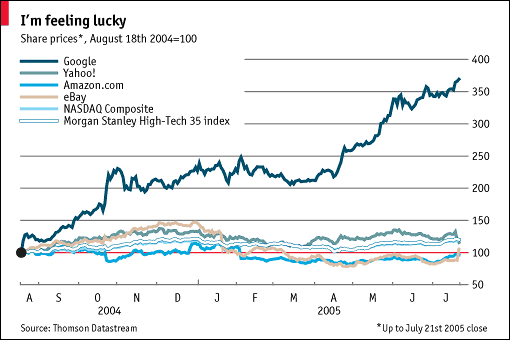
The web is now host to the world's fastest growing media format for advertising. It's what's blowing smoke up the ass of Google's share price. At the moment it accounts for a single digit percentage of advertising spend, but 15 per cent and growing of people's eyeball time.

  • Television revenues including advertising however are circling the plug hole prior to disappearing down the drain:
  • Proliferation of TV channels and transmission vehicles (digital terrestrial signals, satellite, cable)
  • Move away by marketers from brand building campaigns to direct response campaigns that produce more PowerPoint and Excel-friendly data
  • According to figures from the MPAA revenues from pay television have been declining
  • Pay-per-view demonstrating a very low growth rate in revenue according to the same MPAA

So it was with some interest that I read this Economist article Telecoms, television and the internet: the war of the wires on the way that telecoms companies are investing in IPTV as a big play to drive revenue. The figures tend to indicate that 'cable TV over phone lines' has a hard time entering ahead of it entering a mature marketplace. Telecoms companies have previously made a dogs dinner of handling media businesses, which is why they have often sought to partner with specialists in the area of online content provision. If the telecoms companes take a similar approach on IPTV then it is worth looking at the growth of the net as alternative guideline. If the previous growth of the net is anything to go by only 5 per cent of the people in the IPTV field is likely to be commercially successful with their offerings.

How will regulators handle and affect the marketplace for IPTV and how will the offering be subverted and used by early adopter consumers?

From a media company perspective IPTV is a double-edged sword, its a revenue stream, but it exasperates the 'shortening' of the window that media companies have to make money on a property. This picture becomes clearer when you read the Slate article Hollywood Death Spiral - the secret numbers tell the story.

Saturday, July 30, 2005

History in the Making

There are points in time that define society as we know it. The counterculture of the 1960s defined western culture in terms of individual achievement, respect for human rights, free speech. It pushed the bounds of visual culture and created whole new artforms in literature. A case in point is the ridiculous Howard the Duck cartoon character who was used by Steve Gerber to successfully lampoon 1970s America, post-Watergate and Vietnam through the counterculture mindset.

Some of the more surreal characters like Space Turnip and the giant bag of salt took their cue from 1960s psychedelic experiments. You can see more about Howard the Duck in this collection of the 1970s comics here in The Essential Howard the Duck.

History is a strange thing. The hippy San Francisco is now a sad psychedelic shopping mall of die dyed t-shirts and new age paraphernalia. The culture being blamed for everything from loosening modern moral values to the corrosive nature of materialism on society.

Having lived through and participated in the UK's rave culture in the late 1980s and early 1990s as a clubber, DJ and promoter, I have seen a similar kind of thing develop, however property developers have done the rave generation a back-handed favour by redeveloping their icons like the Hacienda into a different format that could not get trapped into the tourist circuit. The cash-ins have largely been quite sublime, such as Warp's very good collection of early house tracks 10+1 and 10+2. Matthew Collin's book Altered State for me remains the best written book about this era.

Now the dot.com era is looking as if it may be starting to define itself in a similar way. Wired magazine, the Whole Earth Catalog of its day for the net generation has a ten-year netrospective (geddit) in its latest issue (Wired 13.08: 10 years that changed the world). Fortune has an interesting oral history Remembering Netscape: the birth of the net. The participants are rushing in to define their own place in history knowing that these articles will be the ones used by authors in the future when they write about how the internet changed the world. Again having played a role in that time, as a PR consultant working on a 'new-chip to blue-chip' client base as we called it at the time, I got an interesting overview of the sector and inside view of some of the major players. I am sure the future will be viewing this history through distorted vision based on the tinted recollections in these articles.


Monday, July 25, 2005

From White Heat to Flickering Flame

It had been too long since I read Peter Cochrane's column on Silicon.com (which I noticed has changed descriptor from 'column' to 'blog' in line with the latest media fad).

In his July 14th posting he talked about the pace of innovation that has been running at break neck speed since before Harold Wilson's 'White Heat of Technology' electoral campaign in the mid 1960s through to the internet age.

Whilst Cochrane disagrees with the evidence about this decline, he links to some interesting reading that supports the hypothesis here. Richard Holway (of the Holway Report fame in IT journalism circles) of Ovum talks here about how innovation is cooling the technology sector innovation and market value.

Jargon Watch

Cold tech - issues and technologies that 'shrink the technology pie' such as 'free software', the runaway nature of Moore's Law creating computers more powerful than needed by busineses since software has failed to progress at the same rate and offshoring of jobs to developing economies. Credited to Pip Coburn of UBS based in the US by Richard Holway.

Sunday, July 24, 2005

Beyond the Low Riders

The New York Times has an interesting article about how Sean Coombes is trying quite successfully to walk his urban fashion label out the cliche it had become. Though his business is worth some 400 million USD annually, Coombs has seen the writing on the wall of the scene and rather than cater for the limited market of Ali G impressionists is trying to move more upmarket. The urban fashion scene has become as tired as the sound of R&B and rap music, in the way that 80's rock got into treading the same groove over and over again to make money.

In the US, labels like Ecko, Sean John and Phat Farm have been co-opted by preppie clientele. There is a certain irony in this as Phat Farm often aped preppie and collegiate looks for the hip-hop community. Now Phat Farm has been co-opted by desperate brands such as Motorola looking for a hook-up, Russell Simmons sold out leaving the company to an international conglomerate. Brands like Gap and Abercrombie and Finch have stolen much of the look and in Europe, genuine workwear brands like Carhartt and Dickies that were part of the real prison yard baggy look have combated the new pretenders by acknowledging their fashion customer base and participating in associated activities like music and extreme sports.

Coombs is using his womenswear range as a Trojan horse to get into the department stores that otherwise would not have carried his usual clothing range.
-
Reading the Tea Leaves

The Buttonwood
column in The Economist has some interesting takes on the current interest in internet stocks again. The column puts forward data from both the bull and bear point of view regarding internet stocks: Interesting take-outs:
  • Forrester Research figures quoted:
  • That in the US people spend about 35% of their media time online but that this attracts on 6% of advertising spending
  • Internet advertising in the US was worth about 12 billion USD in 2004, it is likely to grow by 25% in 2005 and tail off to single digit growth by 2010

Research quoted from the bear side of things indicated that:
  • People are less likely to give out their details online. Of the 30% who used online banking, many were now using it less and 14% had stopped using it for paying bills (GartnerGroup)
  • 18% of Internet users had stopped shopping online due to the fear of internet fraud (Financial Insights)
  • Even online dating is down in the US (Jupiter Research)

Saturday, July 23, 2005

Level 3 to Crooked E?

Totaltele.com had an interesting report from Dow Jones Newswire how Level3 the backbone network provider had been exhibiting Enronesque traits. Level 3's capital-intensive business model is questioned (subscription required) by Helen Draper highlights how Level3 is having to invest huge amounts of money to make just a little money back, hurting its working capital.

This was one of the factors that encouraged all the creative accounting at Enron. This is particularly interesting as Level 3 was both a supplier of capacity to Enron Broadband Services and at the same time its CEO James Crowe was a vocal critic of the Enron Broadband Services business model according to journalists that I had spoken to.

Friday, July 22, 2005

Smart Futures

AlwaysOn have a number of great webcasts from the AO Innovation Summit 2005 in Stanford. I was particularly interested in the discussions on smart phones.

Outtakes:
- I loved the description by one of the speakers about changing the names of smartphones to 'social computers'. Whilst this was true - its a computer that is used for socialising, the phrase tapped into the lingua franca for the latest technology hot topic 'social applications' from social networks to tagging impressed the spin doctor in me.

- Seagate spoke about the rise of having a hard drive in cellphones, which I thought I was quite interesting, I can see that the continuing reduction in price of Flash and keeping a decent battery life is going to squeeze the opportunity for hard drive manufacturers

Converging Functions
- Opportunity exists for both converged and dedicated products. Both will co-exist because of peoples different needs
- Simplicity and integration were considered to be two key drivers for successful converged devices

Storage
- Terabytes on the phone will be driven by the ubiquity of smartphones
- Smartphones is currently outsold by 'feature phones' by 10-to-1

The Killer App
- Trip Hawkins - social networking (IM, Blackberry, voice), benefit improving their social life

Monday, July 18, 2005

3 G games

A couple of interesting articles appeared on the Mobile Pipelines website that when read together paint an interesting picture about 3G services. First up InStat the analyst house had done some consumer research, basically only an eighth of consumers were interested in using mobile video services. Customers who were brand loyal to their carrier (ie: had the most long-term value, were also the ones who expressed the biggest disinterest in the mobile video.)

Secondly, mobile carriers are interested in getting MVNOs (mobile virtual network operators) on board. Content experts like Disney (confirmed) and Apple (speculative) to drive usage of their networks. This reminds me of work that I did back at the end of 2000 around a report called Developing Winning Strategies in a Connected Society. In the report, over a 100 CEOs questioned admitted that they thought broadband in its broadest sense important, but DIDN'T know what the killer applications would be that would drive adoption. In essence they were betting blind that technological progress wouldn't screw them over, not a particularly wise bet to make in the telecoms sector in recent years.

Mobile phone operators seem to find themselves in a similar position, by getting content MVNOs on board, they can defer the cost of rolling out 3G networks and observe how successful services can be developed (or not), as a kind of free skunk works. What is more the content experts take over some of the risk that the telecoms companies have found themselves lumbered with.

Sunday, July 17, 2005

Despite the dross, web still useful

The New York Times has an interesting article how consumers are simply replacing Windows PCs that are cluttered with spy/mal/ad-ware. The article Corrupted PCs find new home in dumpsters highlighted a number of cases included an internet industry professional, a doctor (who migrated to the Mac OS X platform), a stockbroker and a bank manager.

What is interesting is from the article is that:
  • The internet was still sufficiently useful that decided to use it inspite of their bad experiences. Not one of them questioned the benefit of using online services
  • Not one of them blamed the poor implementation of security on Windows (ie a product defect), they accepted that using IT equipment is a shoddy experience
  • An adequate PC for using the internet is now so cheap that it can be considered a disposable item, getting adequate tech support or software protection is too expensive to make it viable, which has got to be a bitch for people selling more secure products (Longhorn) or security products (Symantec, McAfee etc)
  • By inference there seems to be little upside for many consumers in paying a bit extra for a safer computer platform like the Macintosh
  • Consumers are putting relatively little value in the data that they have stored on their computer, if they are willing to just skip the old one and buy a new one like a toaster or a microwave
The UK can have a crack at the big time

When I first saw this Deloitte report talking about the opportunities available to the UK my immediate thoughts about the language and imagery used in both the title and the front cover, were that the authors were trying to invoke the promising loser status of British tennis players like Tim Henman.

The ball's in our court highlights the precarious nature of the UK technology sector, since the industrial age Britain has been on a decline in the global sense of technology leadership. We do have bright designers, made world changing developments and there are some bright sparks in the technology sector like Glaxo and ARM. However for every technological leadership success there are more high-profile failures: Thorn EMI, GEC/Plessey/Marconi and ICI to name but a few.

The report does not make surprising reading. Britain has been very successful in selling technology (which is essentially what Vodafone is), but hasn't developed its own Intel or Microsoft. Qinetiq is cited as one of only two organisations involved in IT research.

Whilst the UK has a developed financial industry that does invest in technology, the reports measured criticism of the sector in supporting the technology sector will be familiar to anyone who has read the criticism of the short-termist approach to capitalism in the UK by the likes of Will Hutton. Venture capitalist outfits come in for particular criticism, the report says that they could do much better if they had the required industry knowledge to complement their financial skills

The report cited a decline in the past five years of UK headquartered technology companies that contrasted with the performance of foreign based companies:

a growing cause for concern is the performance of UK-headquartered technology companies which, in cases, have fared poorly over the past five years. Simultaneous to a host of foreign-headquartered technology companies' strong growth, UK headquartered companies, have disappeared from the UK's public markets. Similarly, while there are many UK-based multinationals generating a billion pounds or more in revenue each year, only a small handful of UK-headquartered companies have managed this level of turnover (such as O2, BT, Capita, Sage and Vodafone).

You can read the full report here
Peak Oil goes mainstream

Hubbert's Peak Oil theory was developed by a geophysicist Marion King Hubbert to model how oil would run out. The issue has been discussed for a long time in oil circles, and widely accepted as truthful based on how Hubbert modeled the decline of US oil production based on a peak in the early 1970s. Hubbert had made this prediction back in 1956. The Peak in question is the top of a 'bell curve' (see picture) used to model production, the model can only provide approximate values because the oil production data available is usually estimates and can vary considerably in accuracy. Interestingly the combination of Middle East instability and the rise of the Chinese economy has brought the discussion of 'Peak Oil' into the mainstream culture. Rolling Stone magazine (yes, that Rolling Stone) has an article here called 'The Long Emergency'. The article moves beyond Hubbert's Peak to explain what a post-oil US economy may look like and it ain't pretty.

Pretty good book review of Hubbert's Peak by Kenneth Deffeyes can be found here. The book can be bought on Amazon here.

More information on Hubbert's Peak can be found online here.

Thursday, July 14, 2005

Movie Companies Surprised That The Pips Didn't Squeak Despite Squeezing Customers

Business Week has a great article onlinethat suggests that movie companies have not learned the lessons of the music industry. DVD sales are declining because the format is too expensive according to evidence provided by Business Week readers. Both Dreamworks and Pixar have noticed a decline in disc sales. Box office hits like The Incredibles have underperformed in the retail environment.

Substitute products including cheap rentals is threatening the film studios licence to print money, expensive DVDs and a proliferation of 'special editions' are leaving customers feeling ripped off and shy of making the same mistakes in the future.

Wednesday, July 13, 2005

Y U Consume?

Knowledge@Emory has an interesting article for marketers about targeting consumers. Sounding like something out of the 1950s 'Tactics To Tackle The Teen Market' has some interesting case studies and common sense outtakes.

In summary:
  • US 'generation Y' consumers (born late 1980s and 1990s) were responsible for spending 169 billion USD
  • A lack of parental time is driving up the amount of money that teens have to spend as overworked folks resort to cheque-book caring
  • Teens are trendsetters defining tomorrows hit products
  • Teens don't liked to be treated by brands in a condescending manner
  • Teens want 'truthful' advertising
  • Teens willingness to experiment offers an opportunity to new market entrants
  • Online advertising is a more important media to reach teens
  • Don't try and BS them

Tuesday, July 12, 2005

The Coolest Smartphone You've Never Seen

Singapore-based technology company Qool Labs Pte Limited is a PalmSource licencee who makes a really sexy looking PalmOS powered smart phone called the QDA 700. Ok, their branding needs work, but their product design certainly doesn't. The phone has a spec that would shame a Treo and doesn't look like half a house brick and as you can see from the advertisement the QDA 700 has a built-in sultry babe magnet making the owner instantly irresistable.

Get this, they DON'T sell it in the UK or in the rest of Europe from what I can see. Not even Asian import specialists like Expansys sell it. It sells in Singapore for about 649USD. In addition, they have not licenced synching software for the Mac, like as if someone who likes their technology that stylish would use a PC?

The call to action, help Qool Labs help themselves

Send a polite email to Ms Edna Ng on this email address explaining that you are interested in the QDA 700, you are based in the UK and would like to synch it with a Mac.

I reckon once they are convinced of the market demand the rest will follow naturally. Even if they don't know it, Qool Labs need and deserve all the help they can get to bring this product West as part of a successful push for smartphone worldwide domination. Abuse or praise in the comments section please :-)

So Simple Anybody Could Have Thought of it....

But they didn't. Coca Cola is a brand that is an icon, the visual language of the logo font is instantly recognisable. It also harks back to the 30-year old campaign of I'd to buy the world a Coke. So why these haven't adverts haven't been run before is beyond me.

Last year's Coke adverts were made up of those oversized illustration doodles that seem to be de rigeur amongst shop window designers at Harvey Nichols and Top Shop.

This execution was photographed in Tottenham Court Road tube station, I have also seen it on 48-sheet poster sites. Budding advertising critics can comment below.

Monday, July 11, 2005

Its Spring Time

Japanese watch nut Seiya Kobayashi has an interesting new Seiko model on his website.

While the dial and case design looks like a dogs dinner, the spring drive at the heart of the watch is an interesting answer to the question of making a mechanical watch as accurate as a quartz watch.

I contributed an explanation of how it works to Wikipedia
here.

Each movement is hand made by one of 10 trained technicians, which the main reason why it costs an eye-watering 2,598USD so don't expect down Ernest Jones or H Samuel just yet.

e-Commerce grows up

The New York Times 'A Retail Revolution Turns 10' feature is a concise warts-and-all history of how Amazon grew to become the dominant player in e-commerce. Bezos unlike his contemporaries has not been replaced as the head of his company is shown to be a major issue and a major asset at the same time.

The New York Times graphic above shows how the business expanded based on a 2 billion USD bank loan via a business strategy that reads like a high-finance game of chicken.

Sunday, July 10, 2005

Gadget Cooldown

The growth in the PC market has been driven by the latest items that are the new hotness that will be old news in a matter of months. This PC-style economics has driven its way into the consumer electronics market over the past few years with items like the iPod and digital cameras.

For a while there has been a bit of a counter-culture against it with things like 'low fi' music making that takes advantage of older computer gear (check my friend Thomas Margolf's site here for more information). In graphic design old style cut and paste collages, hand drawn illustration and 8-bit computer graphics are used to reference older and 'cooler' ways of doing things. Vinyl is the music format that refuses to die despite the best efforts of the record labels and has seen a resurgence through people like Simply Vinyl. It is with a certain amount of schadenfreude that I have observed over the past few years how record companies have alleged that digital piracy is hollowing out their business, when they gave away the keys to the vault in the 1980s by trying to force everyone to upgrade to CD in the interest of leaching every last penny from their back catalogue.

Publications like Make by O'Reilly Publications in the US has tapped into a pent up demand for people to be able to get back into their sheds and start tinkering about with their stuff again, something that the modern iPod or digital camera design does everything to discourage.

If Tony Glover is to be believed in his article 'Sanyo Hit As Buyers Snap Up Second-Hand Cameras' for The Business there is a mainstream gadget backlash underway as consumers have tired of gadgets that are passe in a matter of months.

The pace of product replacement cycles has been set by the IT industry and there is a danger this will result in customer fatigue. Consumers are unenthusiastic about replacing expensive handheld products almost before they have learned to use them.

Evidence of this trend emerged last year with many consumers preferring to buy second-hand products such as vinyl records instead of CDs. Some retailers say the trend has begun to spread to digital cameras, with a growing number of customers buying second-hand classic cameras in preference to the latest digital marvel.

Conclusion: As my friend Heather would have put it: sucks to be a gadget-centric company like Sanyo and Casio (whose Casiology brand campaign is a painful exercise in trying to re-engage with the yoof market). It is good news for 21st century flea markets like eBay and Amazon's Marketplace service.

I am not too sure if this consumer fatigue will stop at the latest techno-toys, I had lunch with some friends today. They are by anybody's standards well-off. My friend was wearing a fake Panerai chronograph, so well made you could not tell the difference that he had bought from a replica watch website. He already owns a Rolex, and being able to afford the real thing was not the issue. It was more a kind of anti-consumerism, I have one good watch I find it hard to justify to myself why I should buy another?

Leave a comment and let me know what you think.

Saturday, July 09, 2005


Technology Rally of 2007 apparently

John Dvorak has written an interesting article on Marketwatch. In the article John does a critique of why the technology market is currently stagnant and outlines what he believes will be the main drivers to kick it into action in 2007.

I have summarised some of his ideas below and added my own comments as well, (please feel free to post your thoughts in the comments section).

Wireless - Bit of a no brainer this one, new variants of 802.11 and WiMax will be key drivers. I don't know what its like in the US, but in the UK public Wi-Fi hotspots are damn expensive, this will need to come down to spur adoption further. Corporate users in their own offices are expected to be key adoptees 802.11N according to Dvorak. WiMax is expected to compete with broadband in a more cost effective manner, creating a new range of alternative telcos. Pretty much the same claims for other technologies like free space optics etc.

Processor technology - Bit of a dichotomy here, but first of all Dvorak puts the sluggish sales of PCs and laptops down to the fact that computers are 'way too powerful for typical mundane use' except by CAD/CAM operators and Photoshop jockeys. Then he goes on to talk about how multi-core processors are going to be one of the drivers that pushes the tech rally of 2007. Go figure

IPTV - video delivered via IP networks. This is a big buzz phrase with technologists. In the UK, it has been rolled out by Homechoice, whilst technologists get all utopian about content being free and ubiquitous, network management technologies and government regulations will act to stop traditional media businesses from being swept away. Microsoft sees this as a way to get ahead in the set-top box business.

VoIP - again a no-brainer, Dvorak pays lip service to the inevitable move away from circuit switching to packet switched voice networks. This will lower the price of voice calls and lower the barriers to competition, but will be stymied by telcos increased ability to control their IP networks, expect telecoms OSS companies to offer telcos the opportunity to apply old-style billing models on these new services and adversely affect the QoS of competitors like Skype trying to piggie-back on your existing broadband connection. Again government regulation will also work to control VoIP.

Microsoft Longhorn - 'triggering an upgrade cycle that will be doubly powerful as the MacOS becomes a threat to Microsoft, forcing it to become more competitive'. Dvorak makes three bad assumptions with this statement:
- Longhorn will be a must-have upgrade for business and consumer PCs. This is not as clear cut as it seems because Longhorn's most vaunted features are being cut to make the product ship broadly on time
- The MacOS will sudden become more of a threat to Microsoft. Dvorak assumes that Apple will overnight change its business model to a Microsoft software business and that the likes of Dell and Sony would fall over themselves to distribute it as an OEM product. Ventures like Be Systems and even the Linux distributors will tell you what an uphill battle this is
- Speaking of Linux, Dvorak's statement implies by omission that open source competition will no longer be a competitive factor. Dvorak has missed out on the social factors that ensure software adoption. Microsoft's dominant position is helped by the Microsoft Certification Scheme for IT people. Linux is increasingly becoming part of the professional IT persons skillset, BSD and MacOS X doesn't have the same skills base in business to spur adoption in the same way

New video compression standards triggering even greater enthusiasm for file sharing of movies and TV programmes. Well I guess that this could increase broadband take up and consumer storage requirements, but not too sure that it will be spurring a technology rally, especially after the US high court's ruling on the recent Grokster case

Location based services because of the GPS modules which will be widely embedded in new phones, expect a nightmarish scenario rather like Tom Cruise in Minority Report where personalised adverts respond to him as he moves through a shopping mall. Gee thanks, that sounds appealing.


The
B-Boy Posting

Like trouble, great websites often come along in threes. Over the past few weeks I have found three great sites.

Bournemouth based breaking crew and record label Second To None have a great web site that you can view here. The site also includes MP3s of mixes done by DJ Junk, you can buy the vinyl directly from them a lot cheaper than other shops and their service is the business.
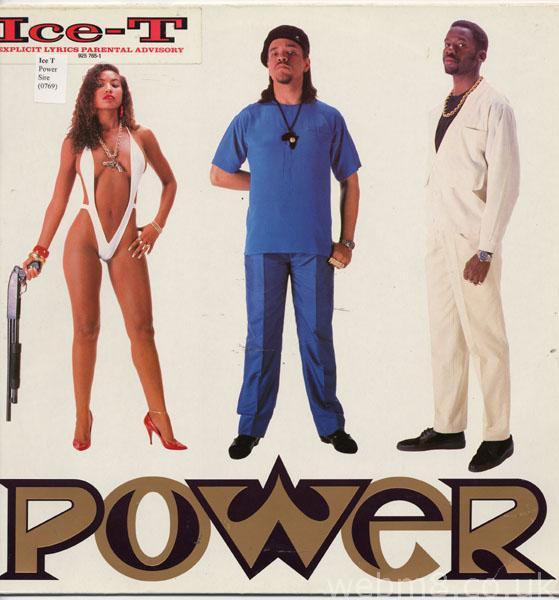
I had to share this cover with you which is a parody of Ice T's break out album Power (which pretty much wrote the book on gangster rap, even though Ice T meant it to be social commentary as satire).

Power Moves has some funky ass tunes on it based on classics like Hijack's Style Wars and Hardnoise's Untitled.


Talking of Hijack, DJ Supreme the scratchmaster who gave their records an unparalleled sound has his own site. It features clips from his forthcoming DVD history of Hijack; a live performance from the Montreaux Jazz Festival and an old pirate radio set with Kamanchi Sly laying down lyrics over the top.


Finally Richcolour has pulled together a fantastic collection of old mixes and pirate radio adverts on this site featuring the likes of Steinski, Froggy, Les Adams and a very young Tim Westwood.

Friday, July 08, 2005

Jargon Watch
Terror task - a mindless, highly interruptible background activity that's possible to perform and feel vaguely useful since you're sure as hell not doing any real work while responding to the stream of "are you OK?" emails & SMSs, and refreshing RSS on various news sources. Kudos to Paul Makepeace

Wednesday, July 06, 2005

Podcasting - only for the headstrong

Following the integration of podcasting in iTunes 4.9, the Wall Street Journal's famous technology writer Walter Mossberg investigated how hard it would be to make a podcast. It ain't easy enough for the average joe to do, in addition new podcasts can take up to four days to show up on iTunes.

Interestingly Mossberg's article on this was also syndicated on TotalTele.com; a news service aimed at the telecoms industry outside the U.S.

Tuesday, July 05, 2005

Revolution Postponed

I don't visit Red Herring online as much as I used to, but noticed today that they had decided to finish their blog on June 23rd. The blog had been running for the last year. I checked on Yahoo! News, Google News and there was not one article about the blog being shut down, nor did anything come up on Technorati. Unread or unloved? I don't know, but it is interesting that the media business heads in their wisdom decided to terminate this experiment after giving it a reasonable amount of time to mature and develop.

Is this just another part of the puzzle showing that blogging is not the media revolution its 'long tail' evangelists would have you believe?

Monday, July 04, 2005

eBowed

In an interesting turn of events both Wired News and equity analyst Safa Rashtchy of Piper Jaffray in the latest issue of its Silk Road newsletter wrote articles that showed the success story of eBay is starting to develop cracks.

Power Sellers are looking to alternative outlets, onerous fees, online fraud, a desire for a differentiated shop window and declining margins have made the online marketplace lose some of its appeal.

Is eBay still the daddy, or is it showing its age?
Gaming the System

The FT has a review of Buzzmarketing by Mark Hughes. Hughes was a marketer at a dot.com (Half.com) who managed to avoid blowing their money on brand building ads, relying instead on creating a buzz through marketing stunts.

Reviewer Gary Silverman takes the review in an unusual direction as he uses it to critique the media industry and its reliance on traditional advertising as its main source of revenue. Silverman recognises that this is an ever shrinking pot and rather than helping journalists with compelling stories, buzz marketing techniques are undermining the business of journalism.

Meanwhile the New York Times has got a great article that shows how the very innovation that helped grow Silicon Valley is now aiding competitors. Despite improvements in profits and growth for valley companies, the number of jobs in the region has fallen by 10,000 since last year. Software engineering being hardest hit.